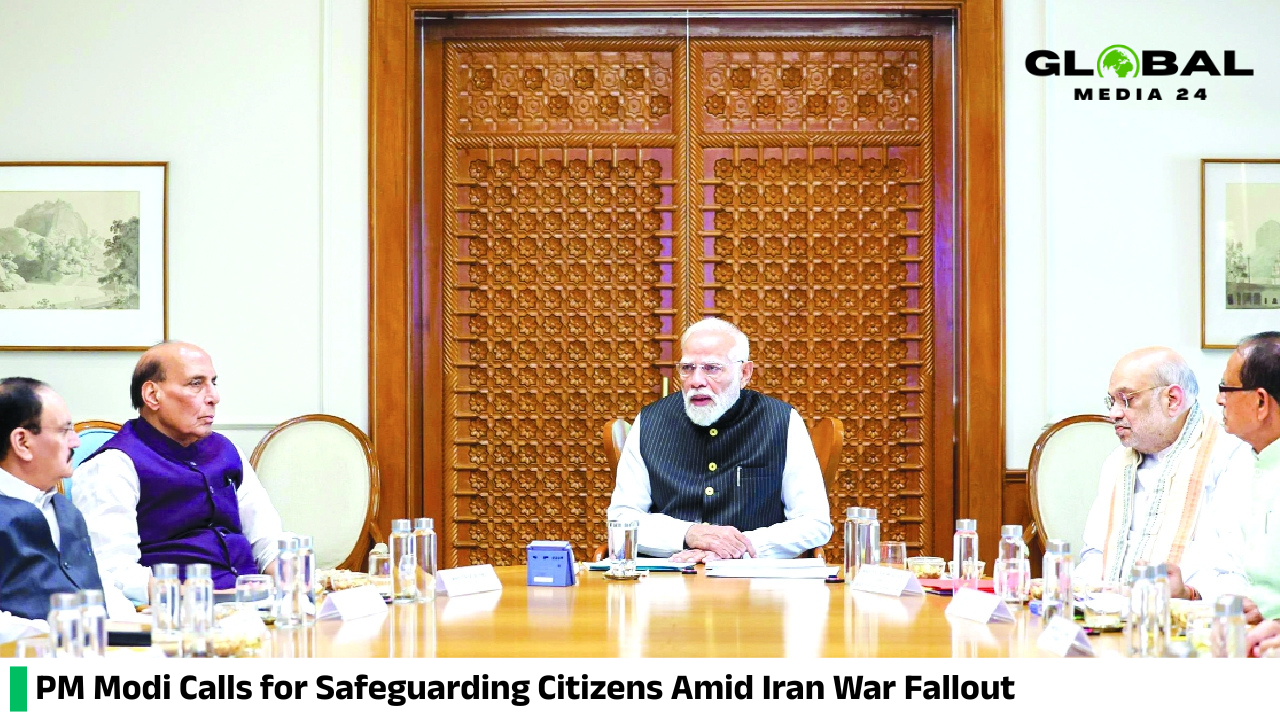
India’s Cabinet Committee on Security (CCS), led by Prime Minister Modi, includes Defence Minister Rajnath Singh, Home Minister Amit Shah, Finance Minister Nirmala Sitharaman, and External Affairs Minister S. Jaishankar.
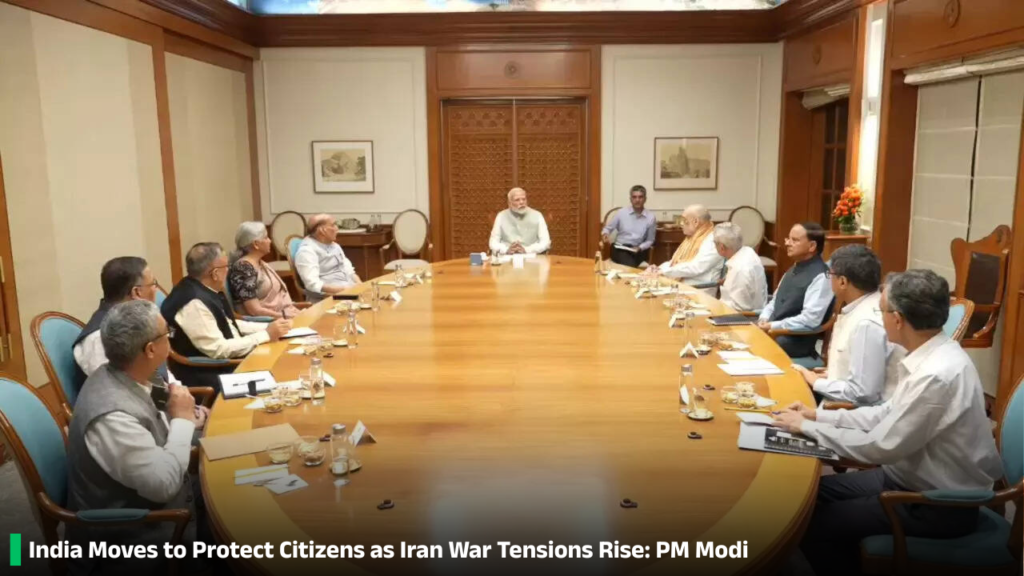
Prime Minister Narendra Modi convened a meeting of the Cabinet Committee on Security (CCS) to discuss short- and long-term measures aimed at ensuring the supply of essential commodities and energy security in light of the ongoing conflict in the region.
The CCS—the country’s apex decision-making body on security and strategic matters—conducted a detailed assessment of the availability of essential commodities for the common citizen, including food, energy, and fuel security.
PM Modi observed that the conflict represents an evolving situation with global ramifications. In such a scenario, every effort must be made to shield citizens from the impact of this conflict.
In a statement, the government noted that, regarding energy security, the CCS decided to maintain adequate coal stocks at power plants to prevent any electricity shortages.
Other measures were also discussed to diversify sourcing for the petrochemical, chemical, pharmaceutical, and other industrial sectors.
Efforts to ensure a steady supply of fertilizers will contribute to bolstering food security. With a view toward the future, alternative sources for fertilizers were also deliberated upon.
In a post on X, PM Modi stated: “Chaired a meeting of the CCS to review relief measures in the wake of the ongoing conflict in West Asia.
We discussed in detail short-, medium-, and long-term measures, including ensuring the continuous availability of fertilizers for farmers, diversifying import sources for key sectors, promoting exports to new markets, and much more. We remain committed to protecting our citizens from the impact of this conflict.”
Looking ahead, the committee also discussed new export destinations to promote Indian goods to be developed in the future.
A government statement noted, “The Cabinet Secretary gave a detailed presentation on the global situation, the steps taken thus far, and the measures being planned by all relevant ministries/departments of the Government of India.”
The statement further added, “The impact on agriculture, fertilizers, food security, petroleum, power, MSMEs, exporters, shipping, trade, finance, supply chains, and all affected sectors—as well as the steps taken to mitigate these effects—were discussed. ” The overall macroeconomic scenario in the country and the steps to be taken moving forward were also deliberated upon.”
The government stated that PM Modi, who chaired the meeting, directed that a group of ministers and secretaries be constituted to address the fallout from the conflict in the Middle East.
Defense Minister Rajnath Singh, Home Minister Amit Shah, Finance Minister Nirmala Sitharaman, and External Affairs Minister S. Jaishankar are members of the CCS, which is headed by PM Modi.