
In response to Trump’s ultimatum, Iran’s military warned it would strike all US-linked energy, technology, and desalination facilities across the region.
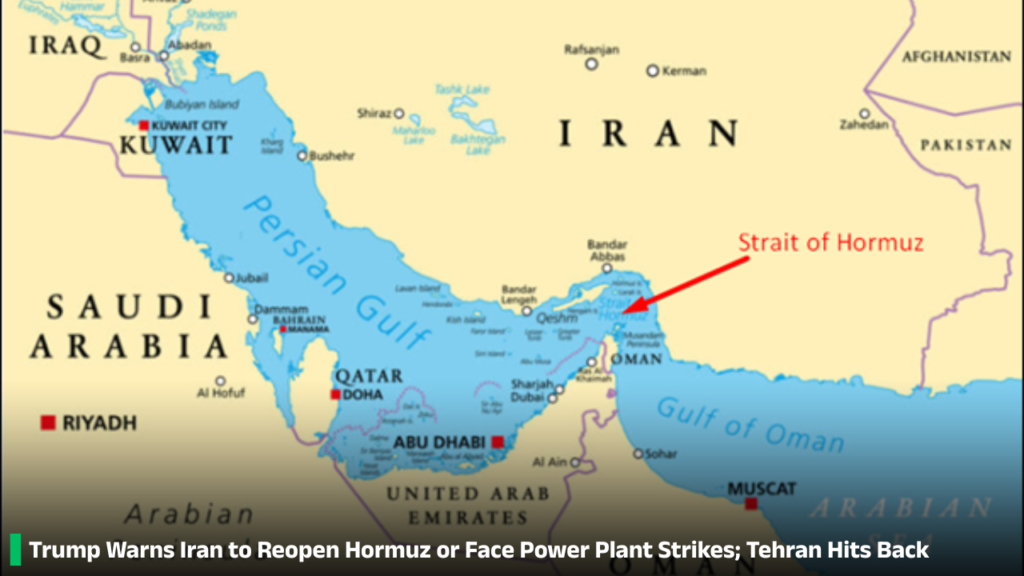
US President Donald Trump has threatened to “obliterate” Iran’s power plants if Tehran does not reopen the Strait of Hormuz to shipping traffic. The Strait of Hormuz accounts for approximately one-fifth of the world’s oil supply.
In a post on Truth Social, Trump issued a 48-hour deadline to Tehran—effective “right this moment”—to “fully reopen” the Strait of Hormuz. He posted the message on Truth Social at 5:14 AM (IST), giving Tehran until Tuesday morning to comply.
He stated, “If, within 48 hours from this moment, Iran does not fully reopen the Strait of Hormuz—without any threats—the United States of America will attack their various power plants and obliterate them, starting with the largest plant first!”
In response to Trump’s ultimatum, the Iranian military threatened to target all US energy, technology, and desalination infrastructure located in the region.
According to a report by the news agency AFP, the Iranian military’s operational command, Khatam al-Anbiya, stated: “Following previous warnings, should the enemy strike Iran’s fuel and energy infrastructure, all US and government-related energy, information technology, and desalination infrastructure in the region will be targeted.”
These threats have escalated abruptly just one day after Trump spoke of “de-escalating” the conflict.
Closure of the Strait of Hormuz
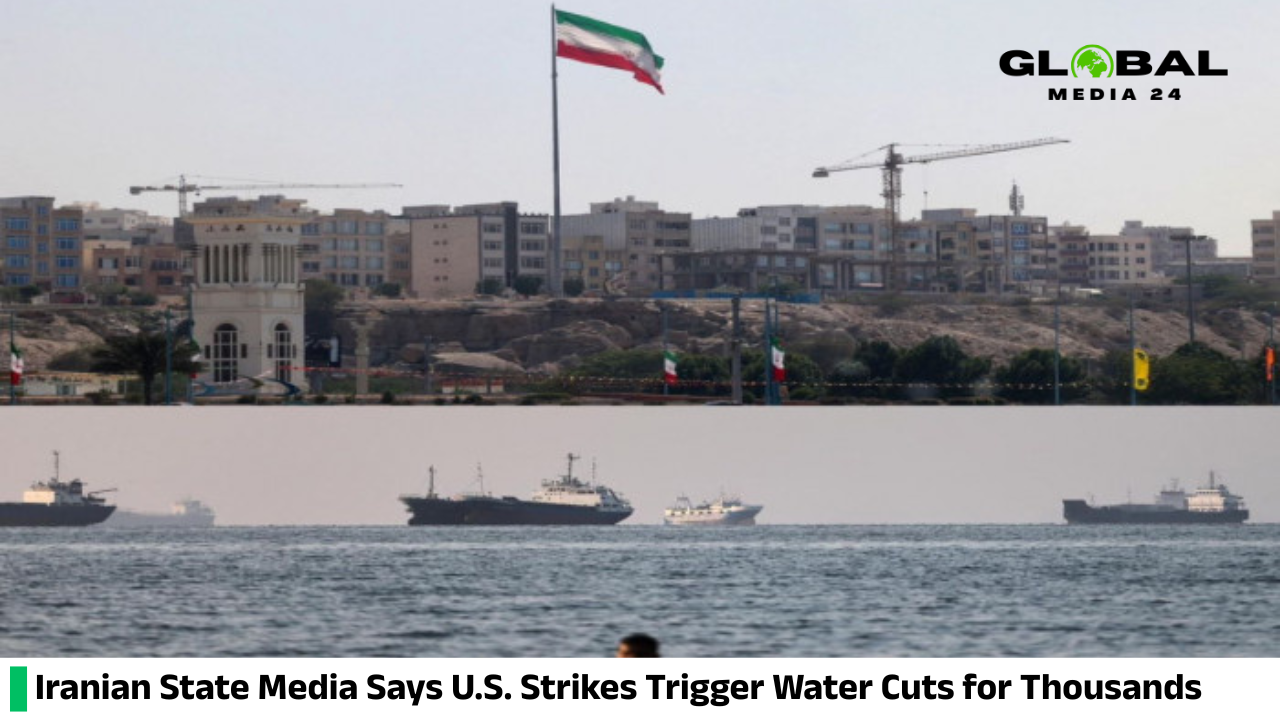
Since February 28—following joint US-Israeli attacks on Tehran—Iran has closed the Strait of Hormuz to most shipping traffic, particularly for vessels belonging to nations involved in the attacks against Iran.
Approximately one-fifth of the world’s crude oil and liquefied natural gas passes through this strait. Due to this closure, countries dependent on shipping lanes are being forced to seek alternative routes and tap into their reserves.
Consequently, crude oil prices are skyrocketing, raising concerns among governments that the longer the conflict persists, the more inflation will rise.
Iran’s Attempted 4,000 km Strike Raises Major Questions About Undisclosed Capabilities
Several nations—including the UK, France, Italy, Germany, South Korea, Australia, the UAE, and Bahrain—have condemned the “de facto closure of the Strait of Hormuz by the Iranian military.”
Iran’s Parliament Speaker, Mohammad-Bagher Ghalibaf, had previously warned that “the Strait of Hormuz will not return to its pre-war status.”
Larkin-Malone stated, “Even in the best-case scenario, a full reopening will take many months. Unexploded ordnance is floating in the vicinity. There may be minefields, and security forces on both sides will be on edge.”
Attack on Nuclear Facility
Amidst the escalating situation, Iran’s Natanz nuclear enrichment facility came under an airstrike on Saturday—marking the second such incident since the outbreak of hostilities. Iran’s state-run news agency, Mizan, reported that there were no reports of any radiation leakage.
Satellite imagery revealed that the site had been attacked previously as well, resulting in damage to several buildings.
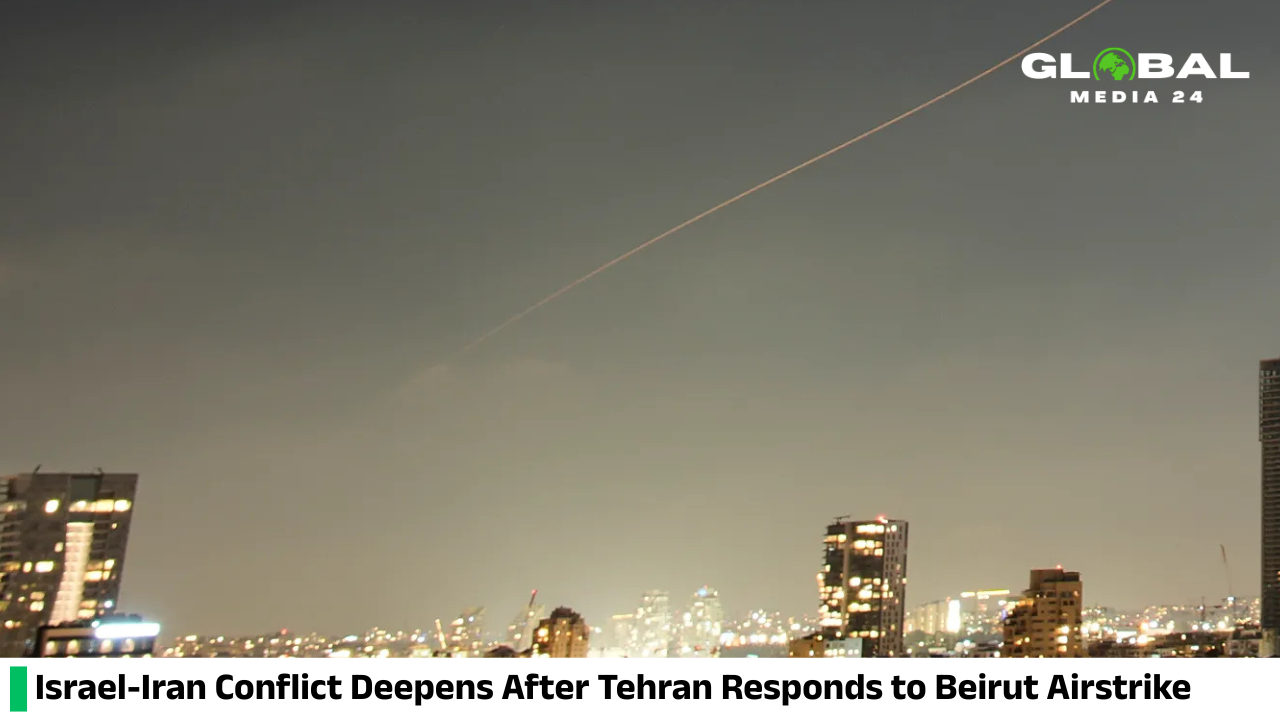
In a tit-for-tat response, Iran launched missile attacks on the Israeli cities of Dimona—home to a nuclear facility—and Arad, injuring more than 100 people.
According to an AFP report citing the Israeli military, Dimona sustained a “direct missile hit on a building.”