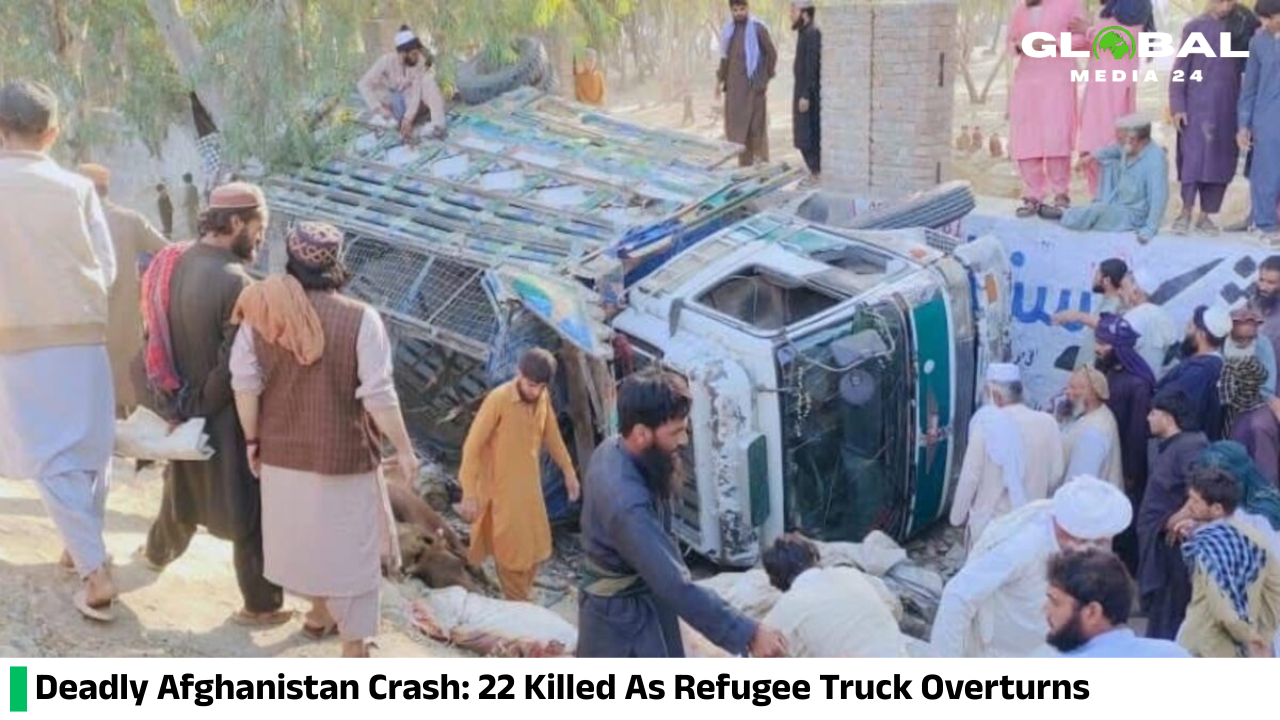
A tragic truck accident in Afghanistan claimed 22 lives, including children and women, after a vehicle carrying refugees from Pakistan overturned in Nangarhar. Get the latest updates, casualty details, rescue efforts, and regional refugee crisis developments.
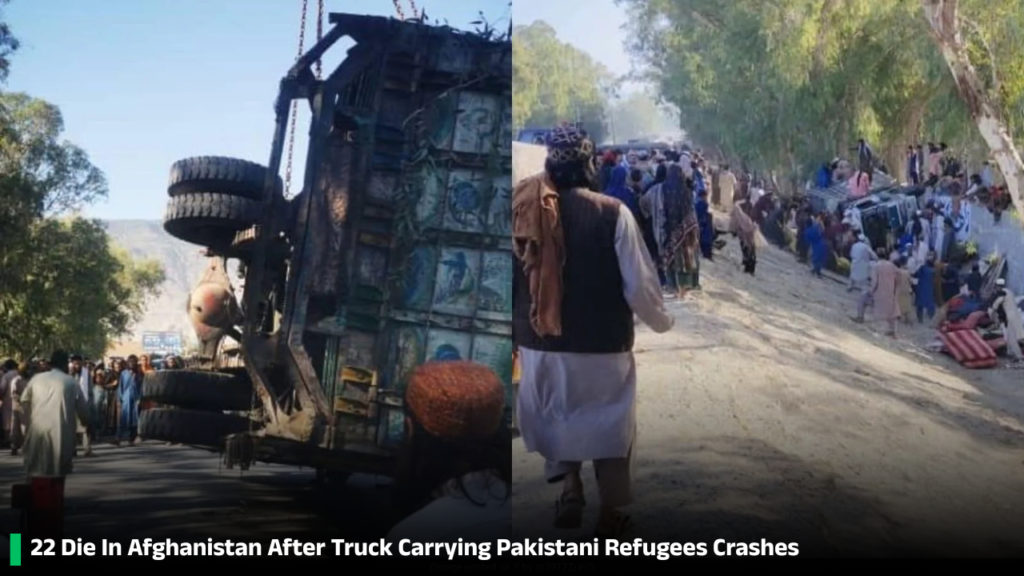
A devastating road accident in eastern Afghanistan has claimed the lives of at least 22 people and left dozens injured after a truck carrying Afghan refugees overturned on a major highway. The victims were among thousands of Afghans who had recently returned from neighboring Pakistan amid ongoing deportation campaigns and migration crackdowns.
The tragic incident occurred on Saturday in Laghman province along the busy Kabul-Nangarhar highway, one of the country’s most important transportation routes. Officials reported that many of the victims were women and children, highlighting the human cost of the growing refugee crisis affecting Afghanistan.
Deadly Accident on Kabul-Nangarhar Highway
According to local authorities, the truck was transporting Afghan families who had recently crossed back into Afghanistan from Pakistan. The vehicle reportedly lost control and plunged into a roadside ditch after the driver fell asleep while driving.
Emergency responders rushed to the scene and transported injured passengers to nearby medical facilities in Nangarhar province. Officials confirmed that at least 22 people died in the crash, while approximately 36 others sustained injuries ranging from minor wounds to critical conditions.
Among those killed were 10 children and five women, making the accident one of the deadliest road tragedies involving returning refugees in recent months.
Returning Refugees Among the Victims
The passengers involved in the accident were part of a large wave of Afghan refugees returning home after Pakistan intensified efforts to remove undocumented migrants. Since 2023, Pakistan has implemented strict immigration measures that have led to the deportation and voluntary departure of hundreds of thousands of Afghans.
Many of the returning families had spent years, and in some cases decades, living in Pakistan. Some individuals were born there and had never previously lived in Afghanistan. Despite their long-term residence in Pakistan, changing immigration policies have forced many to return to their homeland.
The sudden return of large numbers of refugees has placed additional pressure on Afghanistan’s already fragile economy and infrastructure. Families often travel long distances under difficult conditions, increasing the risk of transportation-related incidents.
Growing Challenges for Returning Afghan Migrants
Afghanistan continues to face significant humanitarian and economic challenges. Returning refugees frequently struggle to find housing, employment, healthcare, and educational opportunities.
Humanitarian organizations have repeatedly warned that the influx of returning migrants could create additional burdens for communities already dealing with poverty and limited public services.
For many families, the journey back to Afghanistan is emotionally and financially difficult. They often travel in overcrowded vehicles with limited safety measures, making accidents more likely on the country’s dangerous roads.
The latest truck crash serves as a reminder of the hardships faced by displaced Afghan families attempting to rebuild their lives after returning from neighboring countries.
Afghanistan’s Road Safety Crisis
Road accidents remain a serious concern throughout Afghanistan. Poor road conditions, inadequate vehicle maintenance, driver fatigue, and weak enforcement of traffic laws contribute to frequent crashes across the country.
Many highways and rural roads suffer from years of neglect, making travel particularly dangerous. Drivers often face long working hours and difficult driving conditions, increasing the risk of fatigue-related accidents.
Authorities stated that the driver of the truck involved in the Laghman province crash reportedly fell asleep behind the wheel before losing control of the vehicle. Driver fatigue is considered one of the leading causes of major transportation accidents in the region.
Safety experts have repeatedly called for stronger road safety regulations, improved infrastructure, and better driver training programs to reduce the number of fatalities on Afghan roads.
Another Accident Reported in Nuristan Province
In a separate incident, authorities reported another road accident in eastern Afghanistan. A vehicle reportedly veered off a mountain road and plunged into a river in Nuristan province during the night.
Officials confirmed that the driver survived with injuries, while four passengers remain missing. Rescue teams have been deployed to search the area and locate the missing individuals.
The incident further highlights the transportation challenges faced in Afghanistan’s mountainous regions, where difficult terrain and poor road conditions often contribute to deadly accidents.
Humanitarian Concerns Continue to Grow
The latest tragedy comes at a time when Afghanistan is witnessing one of the largest refugee return movements in recent years. Both Pakistan and Iran have increased efforts to expel undocumented Afghan migrants, resulting in millions of people returning to Afghanistan.
International aid organizations have expressed concern about the capacity of local communities to absorb such large numbers of returnees. Many families arrive with limited financial resources and face uncertainty about their future.
The loss of life in the Laghman province truck accident underscores the urgent need for improved transportation safety and greater support for returning refugees.
Conclusion
The deadly truck crash in eastern Afghanistan has left 22 people dead and around 36 injured, with women and children accounting for many of the casualties. As thousands of Afghan refugees continue returning from Pakistan and other neighboring countries, the risks associated with long-distance travel remain a major concern.
The tragedy not only highlights Afghanistan’s ongoing road safety challenges but also reflects the broader humanitarian difficulties facing returning migrant families. With millions of Afghans rebuilding their lives after displacement, ensuring safer transportation and stronger support systems will remain essential in the months ahead.