Iranian Missile And Drone Offensive Strikes US Military Assets In Gulf, Damaging Al-Udeid Satellite Hub And Patriot Defence Batteries In Bahrain And Kuwait
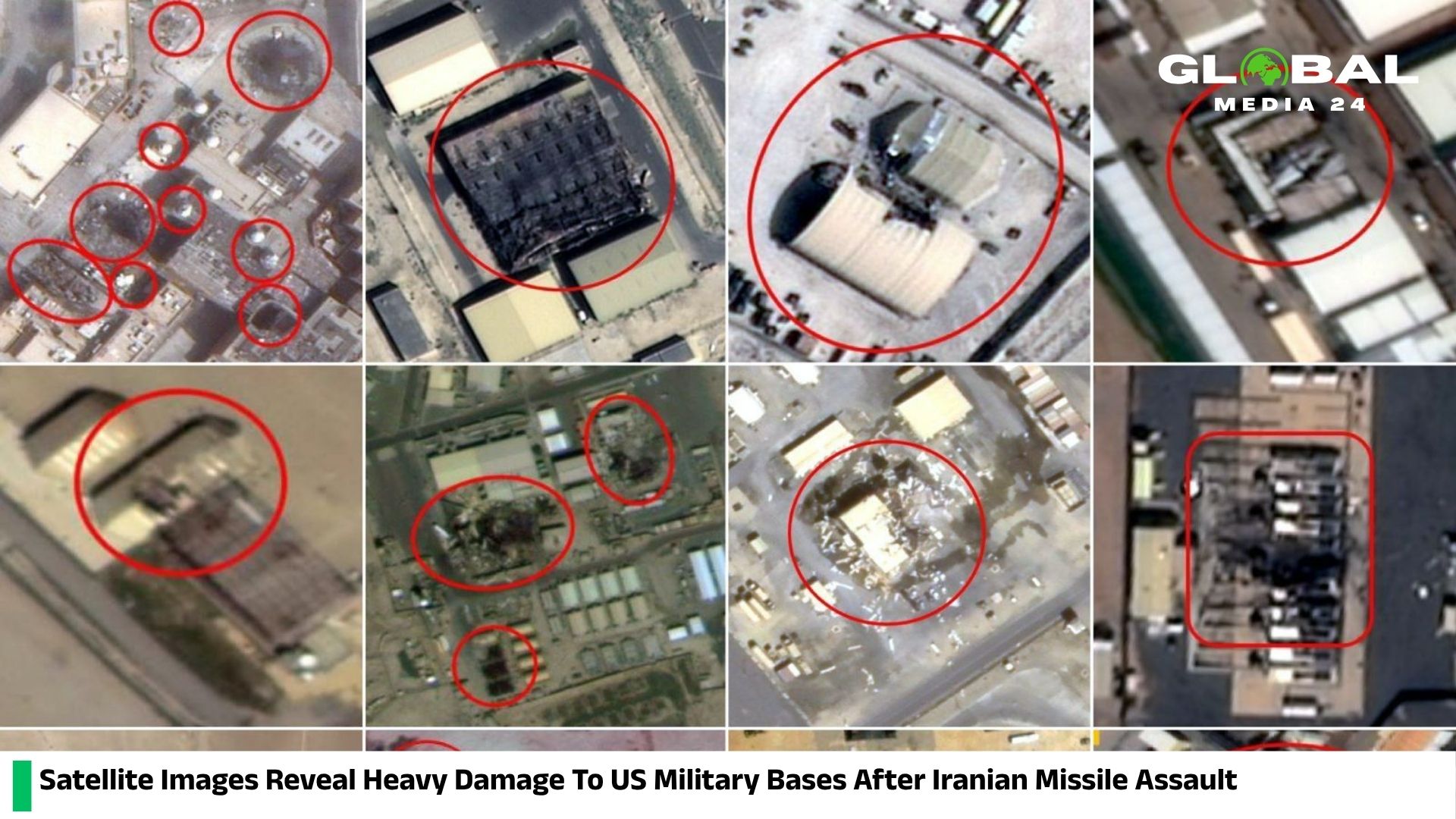
Tehran : Satellite imagery released by Iran’s state media has revealed that Iranian airstrikes on US military bases in the Middle East caused far more damage than acknowledged by the Donald Trump administration in the United States. An investigation by The Washington Post corroborated the Iranian claims, finding that since the conflict began on February 28, Tehran’s attacks have damaged or destroyed at least 228 structures or pieces of equipment at US military sites across the Middle East.
The Iranian targets identified through satellite imagery analysis included hangars, barracks, fuel depots, aircraft, and critical radar, communication, and air defense systems located at US bases in the Middle East.
The US outlet reported that the scale of the damage was far greater than what the US government had previously acknowledged. Citing US officials, the report stated that some US bases in the region had become too dangerous for normal staffing levels, and commanders had moved most personnel out of the range of Iranian fire once the conflict began.
Since the start of the conflict, at least seven US soldiers have been killed in Iranian attacks in the Middle East. Of these, six were killed in Kuwait and one in Saudi Arabia. More than 400 other soldiers have also been injured.
Narrative Control
Since mid-March, obtaining satellite imagery of the Middle East has become difficult, as two major satellite firms—Vantor and Planet Labs—are complying with US government requests to “limit, delay, or permanently withhold” imagery of the region while the conflict is ongoing. The US government is the largest consumer of satellite imagery, making it the biggest client for both Vantor and Planet.
Issued less than two weeks after the conflict began, this directive has made it difficult—or even impossible—for the media to assess the impact of Iran’s retaliatory strikes. However, since the outbreak of the conflict, Iran’s state-run media has been regularly publishing high-resolution satellite imagery of the region on social media. Yet, due to concerns regarding potential fabrication, these images received limited coverage.
The Investigation
In its investigation, The Washington Post (WaPo) examined hundreds of these images. By comparing them with low-resolution imagery obtained from the European Union’s satellite system—as well as high-resolution imagery from Planet, where available—the publication was able to verify the authenticity of 109 of these images.
The investigation uncovered no evidence suggesting that the Iranian images had been tampered with. In aggregate, the report found that across the region, at least 217 structures and 11 pieces of equipment were damaged or destroyed across 15 U.S. military sites.
Experts who reviewed WaPo’s analysis stated that the damage sustained at these sites indicates that the U.S. military underestimated Iran’s targeting capabilities, failed to adequately adapt to the realities of modern drone warfare, and left certain bases insufficiently protected.
Mark Cancian—a senior advisor at the Center for Strategic and International Studies and a retired Marine Corps colonel—told the publication, “The Iranian strikes were precise. There are no random craters suggesting a miss.”
Which Sites Were Targeted?
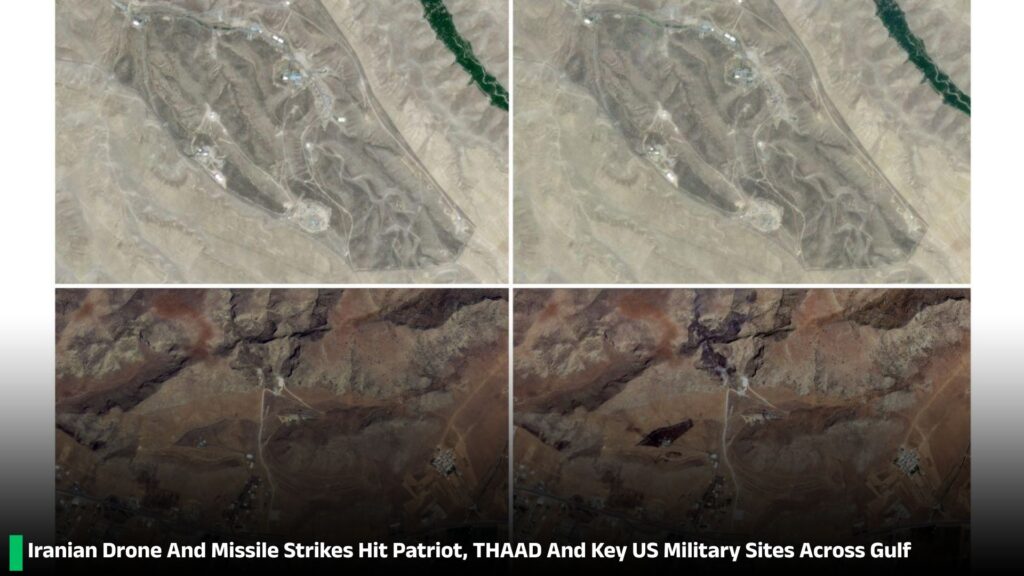
Among the sites damaged during Iran’s missile and drone attacks was a satellite communications facility located at Al Udeid Air Base in Qatar. Patriot missile defense systems stationed at bases in Bahrain and Kuwait were also targeted.
The analysis further revealed that a satellite dish at the U.S. Navy’s 5th Fleet headquarters in Bahrain sustained damage. Additionally, attacks were launched against a power plant at Camp Buehring in Kuwait, as well as fuel storage facilities located at several bases. Meanwhile, Iranian imagery revealed further damage, including to radomes at a base in Kuwait and at the 5th Fleet Headquarters.
Iran has claimed that THAAD missile defense systems in Jordan and the United Arab Emirates also sustained damage, as did a second satellite site in Qatar, along with an E-3 Sentry aircraft and a refueling tanker in Saudi Arabia.