
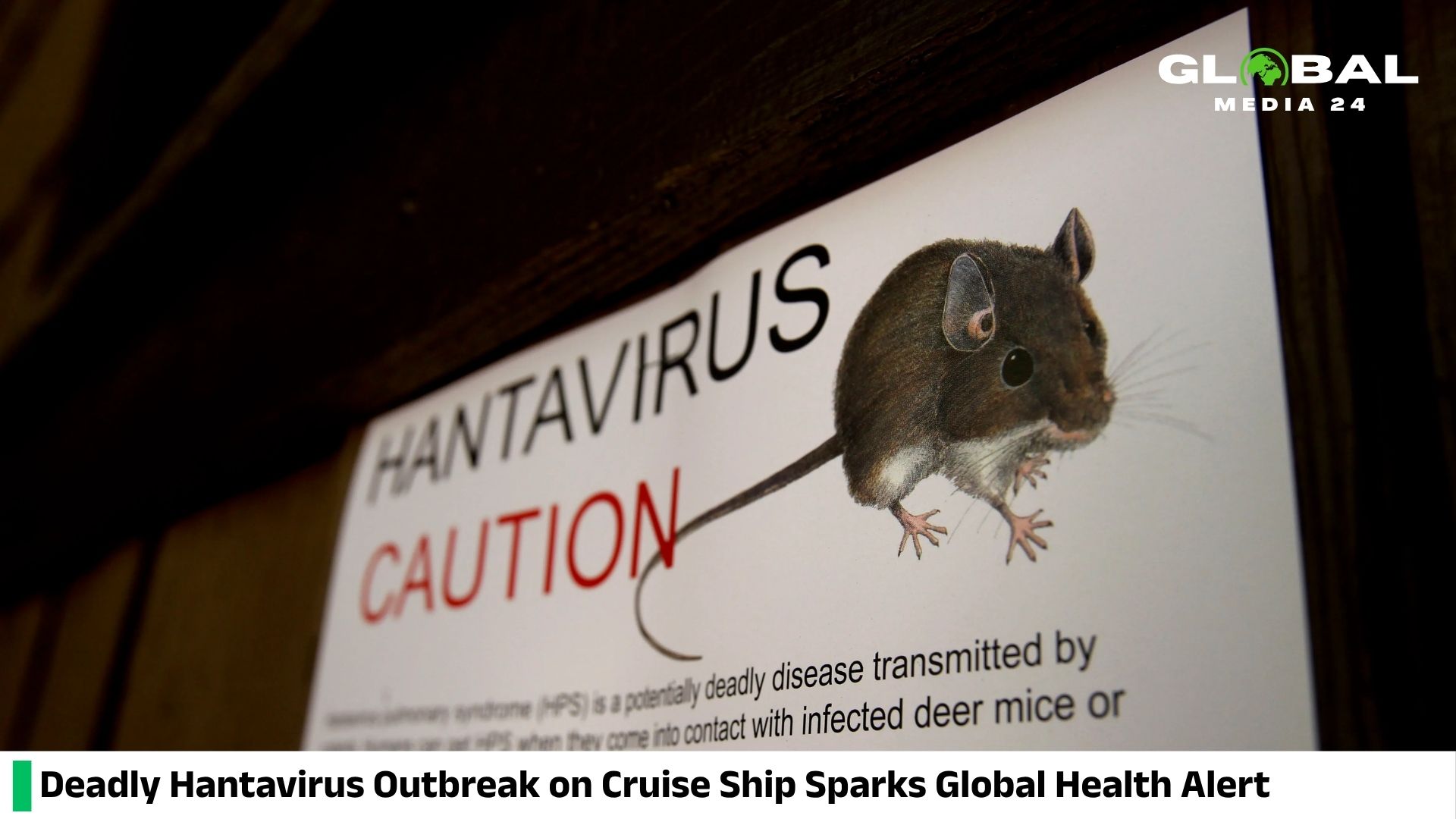
Health authorities across four continents Thursday were tracking and monitoring passengers who disembarked a hantavirus-stricken cruise ship before its deadly outbreak was detected.
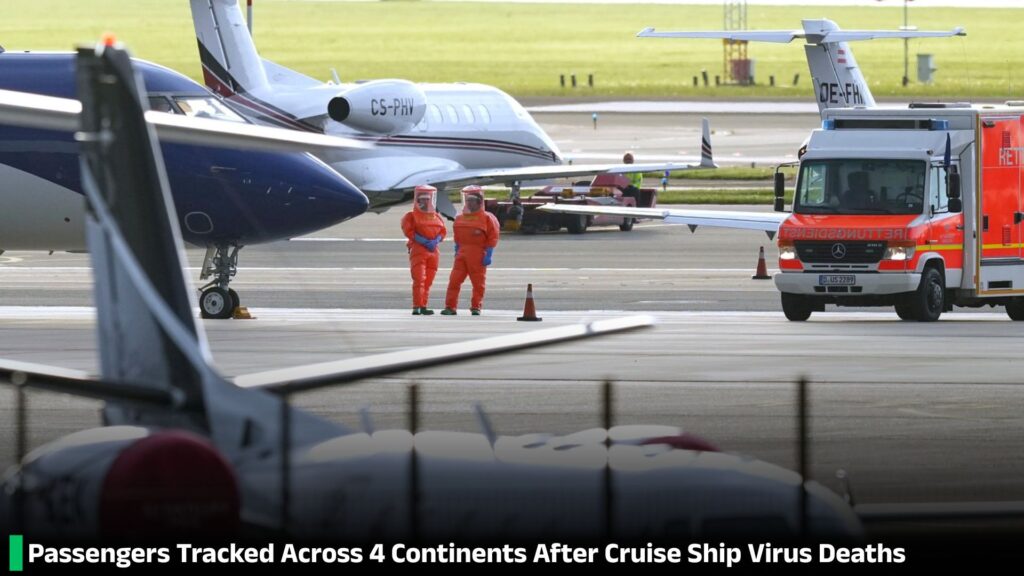
On Thursday, health officials across four continents were tracking and monitoring passengers who had disembarked from a cruise ship afflicted by Hantavirus—before the deadly outbreak was detected—and were attempting to locate others who may have come into contact with them since then.
In Argentina, a team of investigators has not yet departed for the southern city where they suspect the disease originated, officials from the country’s Health Ministry told the Associated Press on Thursday. Argentine investigators suspect that a Dutch couple may have contracted the virus while on a bird-watching trip prior to boarding the cruise ship.
The ship’s operator and Dutch officials reported on Thursday that on April 24—approximately two weeks after the first passenger died on board—more than two dozen people from at least 12 different countries disembarked from the vessel without undergoing contact tracing.
The outbreak has claimed the lives of three passengers—a Dutch couple and a German national—and left several others ill. Symptoms typically manifest between one and eight weeks after exposure.
Oceanwide Expeditions, the Dutch cruise ship company operating the vessel, stated on Thursday that none of the remaining passengers or crew members currently on board are exhibiting any symptoms.
The World Health Organization (WHO) maintains that the risk to the general public remains low. Hantavirus is typically transmitted through the inhalation of airborne particles from rodent droppings and does not spread easily from person to person.
“We believe that if public health measures are implemented and all nations demonstrate solidarity, this will remain a limited outbreak,” Dr. Abdirahman Mahamud, the WHO’s Director of Alert and Response, said on Thursday.
On Wednesday, three individuals—including the ship’s doctor—were evacuated while the vessel was near the West African island nation of Cape Verde and were transported to specialized hospitals in Europe for treatment. On April 24, the body of the first Dutch man to die on board—on April 11—was disembarked at the remote South Atlantic island of St. Helena, at which time his wife also left the ship. A day later, she traveled to South Africa, where she subsequently passed away.
The ship’s operator stated on Thursday that a total of 30 passengers—including the deceased Dutch man and his wife—disembarked at St. Helena. The Dutch Ministry of Foreign Affairs has cited this figure as approximately 40. The company had not previously disclosed that dozens of other people had disembarked on April 24. For some passengers, this stop marked the scheduled conclusion of their cruise.
The WHO reports that, as of May 2, health officials had confirmed a case of Hantavirus in a ship passenger for the first time. This case involved a British man who was medically evacuated to South Africa three days after the stop in St. Helena. He was tested in South Africa and is currently in intensive care there.
On Wednesday, it emerged that a man in Switzerland tested positive for Hantavirus after disembarking at St. Helena, although his exact movements in the interim remain unclear.
On Thursday, health officials in Singapore announced that they are monitoring two individuals who disembarked at St. Helena, traveled to South Africa, and subsequently returned home. Officials stated that the two individuals arrived in Singapore at different times; they have been placed in isolation and are undergoing testing.
Officials in St. Helena—the volcanic British territory in the South Atlantic where the passengers disembarked—stated that they are monitoring several individuals identified as “high-risk contacts.” The St. Helena government announced that these individuals are being asked to remain in isolation for 45 days. The Dutch Ministry of Health stated on Thursday that a flight attendant on a plane briefly boarded by an infected cruise passenger in South Africa is displaying symptoms of Hantavirus and will undergo testing in the isolation ward of an Amsterdam hospital. The cruise passenger—a Dutch woman whose husband had died on board the ship—was too ill to take an international flight to Europe; she was disembarked from the aircraft in Johannesburg, where she subsequently passed away.
If the Dutch flight attendant tests positive, she could become the first known individual not present on the MV Hondius to contract the infection during this outbreak.
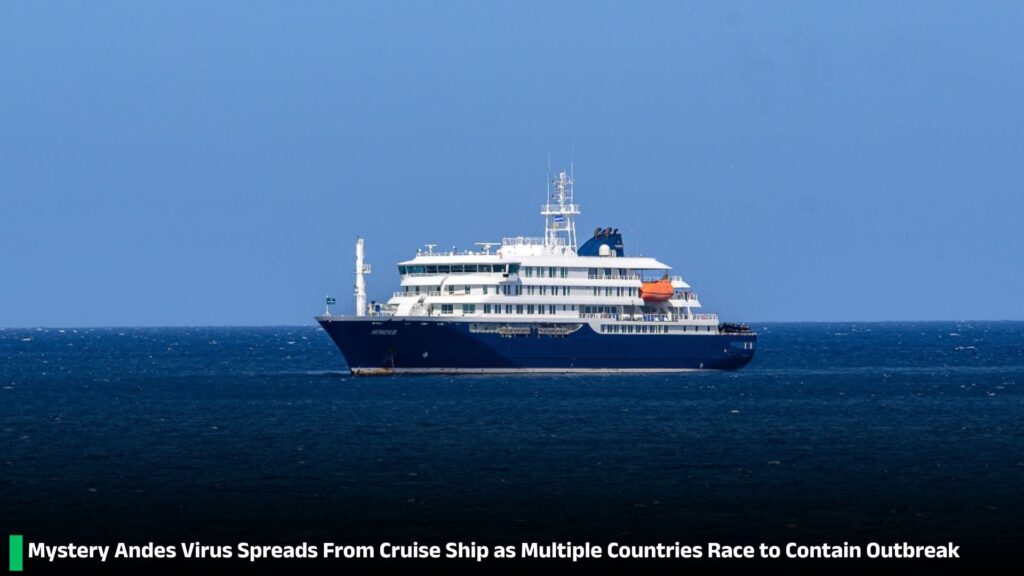
The ship is currently en route to Spain’s Canary Islands, where it is expected to arrive on Saturday or Sunday, and it still has more than 140 passengers and crew members on board.
WHO Director-General Tedros Adhanom Ghebreyesus stated on Thursday that he had been in regular contact with the ship’s captain, and that morale had improved once the vessel resumed its voyage.
Authorities in South Africa are also attempting to trace the contacts of passengers who had previously disembarked from the ship. They have focused primarily on a flight from Saint Helena to Johannesburg on April 25—the day before the passengers were scheduled to disembark there.
In a statement issued on Thursday, the French Ministry of Health announced that a French national exhibiting “mild symptoms” has been placed in isolation and is undergoing medical testing. This individual was identified after coming into contact with a passenger from the ship—who had flown from Saint Helena to Johannesburg on April 25—and in whom Hantavirus infection was subsequently confirmed.
Officials stated that the Dutch woman from the cruise ship—who subsequently died in South Africa—was on a flight from Saint Helena to Johannesburg. It remains unclear how many other passengers were among the 88 people aboard the cruise; however, flights from Saint Helena to South Africa are infrequent, typically operating only once a week.
The third fatality involved a German woman who died on May 2; her body also remains on board the ship.
Tests have revealed that at least five people on the ship were infected with a hantavirus found in South America, known as the Andes virus. This is the only hantavirus known to be transmissible from human to human. This hantavirus can cause a severe and often fatal lung disease known as Hantavirus Pulmonary Syndrome.
The ship departed from Argentina, and the investigation into the source of the outbreak is currently focused there.
The WHO stated that the Dutch couple—who presented the first two cases—had traveled through Argentina, Chile, and Uruguay prior to boarding the ship. They visited locations where the rodent species responsible for transmitting the Andes virus is present.
According to a written statement provided to the AP, Argentina’s Ministry of Health has focused its investigation on the city of Ushuaia, though they have not yet dispatched a team to the area. The statement noted that scientists from the state-funded Malbrán Institute plan to travel to Ushuaia “in the coming days.”
Officials explained that upon arriving in Ushuaia—a 3.5-hour flight from Argentina’s capital, Buenos Aires—experts will examine rodents found in local waste dumps to determine whether they carry the Andes virus.
The WHO is working in conjunction with health officials in Argentina to trace the couple’s movements and has arranged for the shipment of 2,500 diagnostic kits from Argentina to laboratories across five different countries. Argentina’s Ministry of Health stated that 28 deaths occurred due to Hantavirus last year, whereas the average death rate over the preceding five years was 15. It added that approximately one-third of the cases last year were fatal.