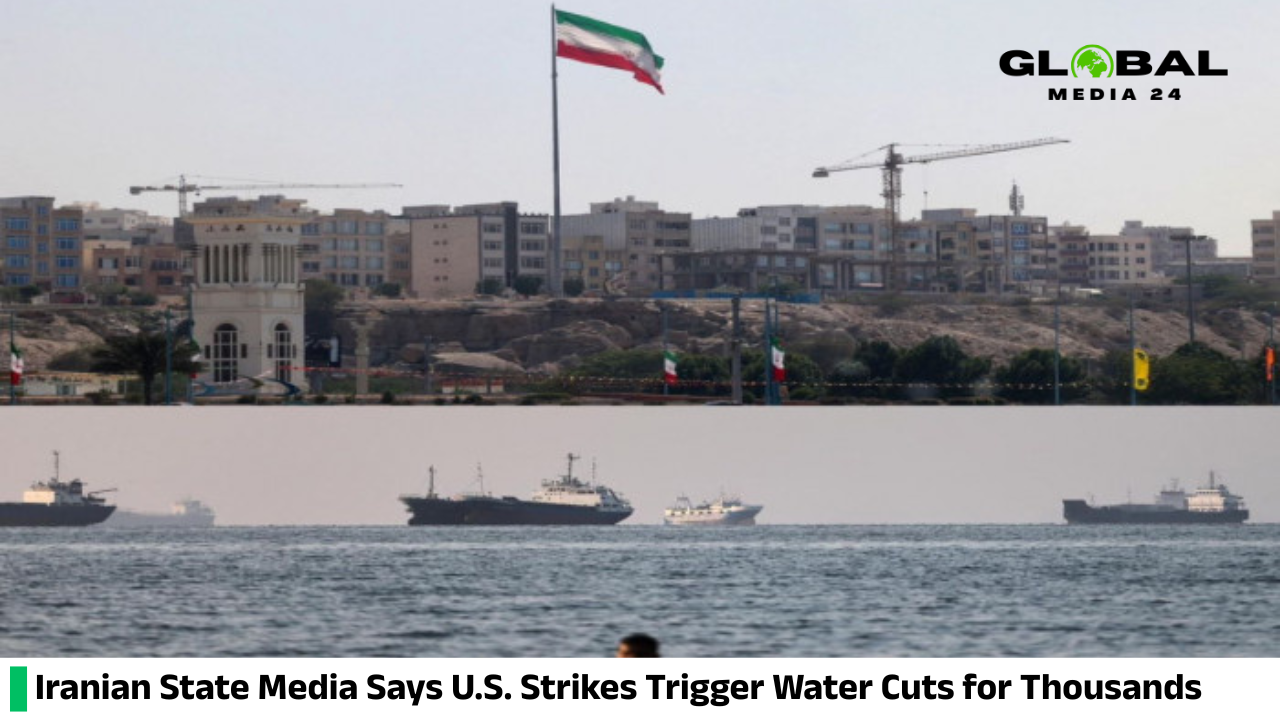
One person was killed in the attacks that followed Iran’s warning that it would set ablaze any ships attempting to pass through the Strait, a route that normally carries about 20% of the world’s oil supply.

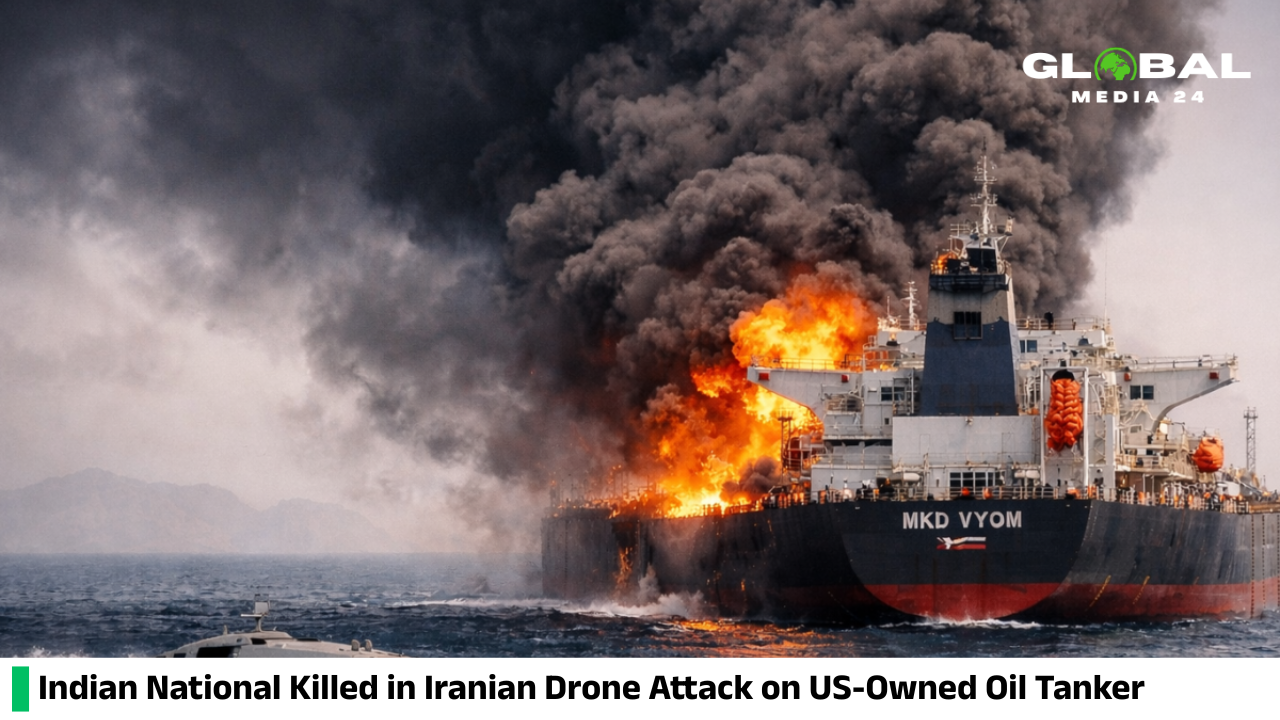
Iran attacked the US crude oil tanker, the Safesi Vishnu, near Basra, Iraq, yesterday, killing one Indian crew member.
The Indian Embassy in Baghdad stated that the remaining 15 Indian crew members on board the ship have been evacuated and taken to safety.
Another oil tanker in the Persian Gulf also caught fire following the attack in Iraqi waters.
According to Iran’s state broadcaster IRIB, Iran claimed responsibility for the attacks, saying that an underwater drone attack “blew up two oil tankers in the Persian Gulf.”
The ships attacked were the Maltese-flagged Zephyros and the Marshallese-flagged Safesi Vishnu. The Safesi Vishnu is owned by the US company Safesi Transport Inc., while the owner of the Zephyros lives in Greece.
The Indian Embassy stated that it is in regular contact with authorities in Iraq and the rescued Indian sailors.
On March 11, 2026, the US crude oil tanker Safesea Vishnu, operating under the Marshall Islands flag, was attacked near Basra, Iraq, unfortunately resulting in the loss of one Indian crew member. The remaining 15 Indian crew members have been evacuated to safety.
Earlier, a CNN report claimed that an Iranian suicide boat laden with explosives may have hit both ships, and an investigation is underway.
At least three commercial vessels have been attacked by “unknown projectiles” in the Strait of Hormuz, the world’s busiest oil shipping route, as the US-Israel conflict with Iran continues to strain the oil-rich Gulf region amid global energy concerns.
One ship collided off the coast of the United Arab Emirates (UAE), and another caught fire north of Oman, forcing its evacuation; a third was damaged northwest of Dubai, according to UK Maritime Trade Operations (UKMTO).
Previously, Iran had said it would “set fire” to any ships attempting to pass through the strait, through which approximately 20 percent of the world’s oil typically passes. Despite Tehran’s threats, very little traffic has continued through this route.
Meanwhile, in the US, the Donald Trump administration said its military had “destroyed” 16 Iranian mine-laying vessels in the strait.
The US-Israeli campaign against Iran is now in its 12th day, with no end in sight, and has severely reduced maritime traffic and sent oil prices soaring worldwide.
What is the Strait of Hormuz, and why is its closure important?
The Strait of Hormuz is a 55-kilometer-wide channel of water between Iran and Oman, separating the Persian Gulf from the Arabian Sea. It is a particularly important piece of global real estate for the energy sector and one of the world’s busiest and most strategically important shipping routes. Typically, approximately 13 million barrels of oil pass through these waterways each day—about 31 percent of global oil shipments.
The closure of the Strait will impact major ports in Iraq, Kuwait, Saudi Arabia, and the United Arab Emirates, as well as Iran itself. For many of these countries, the Strait is the main route through which oil reaches the global market.
The blockage could further increase the prices of goods and services worldwide, especially oil, and impact some of the world’s largest economies, such as China, India, and Japan, which are the largest importers of crude oil through the waterway.
The temporary closure of parts of the Strait in February 2025 also led to a six percent increase in oil prices.