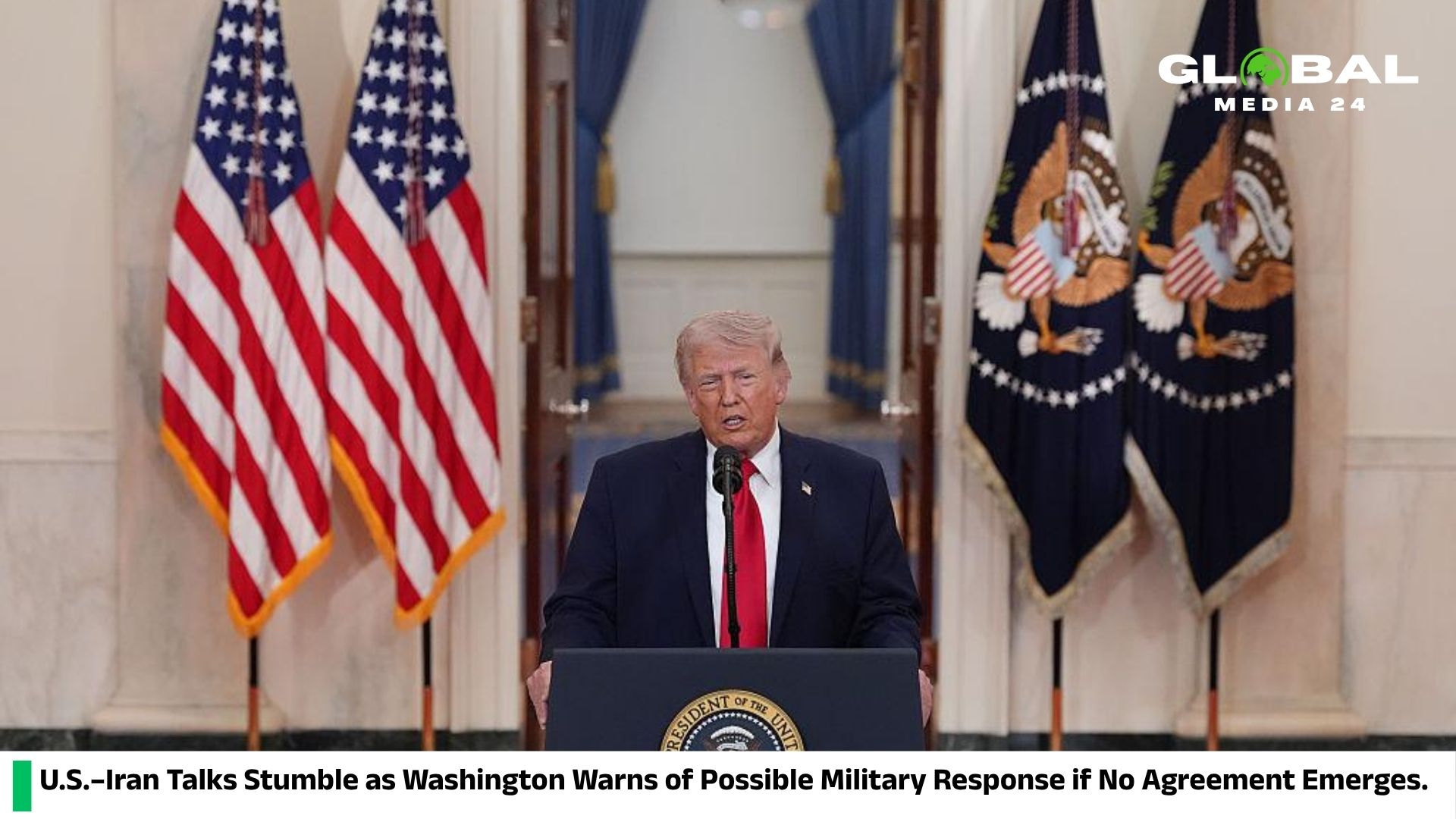
Direct U.S.–Iran talks held last weekend ended without a breakthrough, as both sides failed to reach agreement on Iran’s nuclear program and other issues.
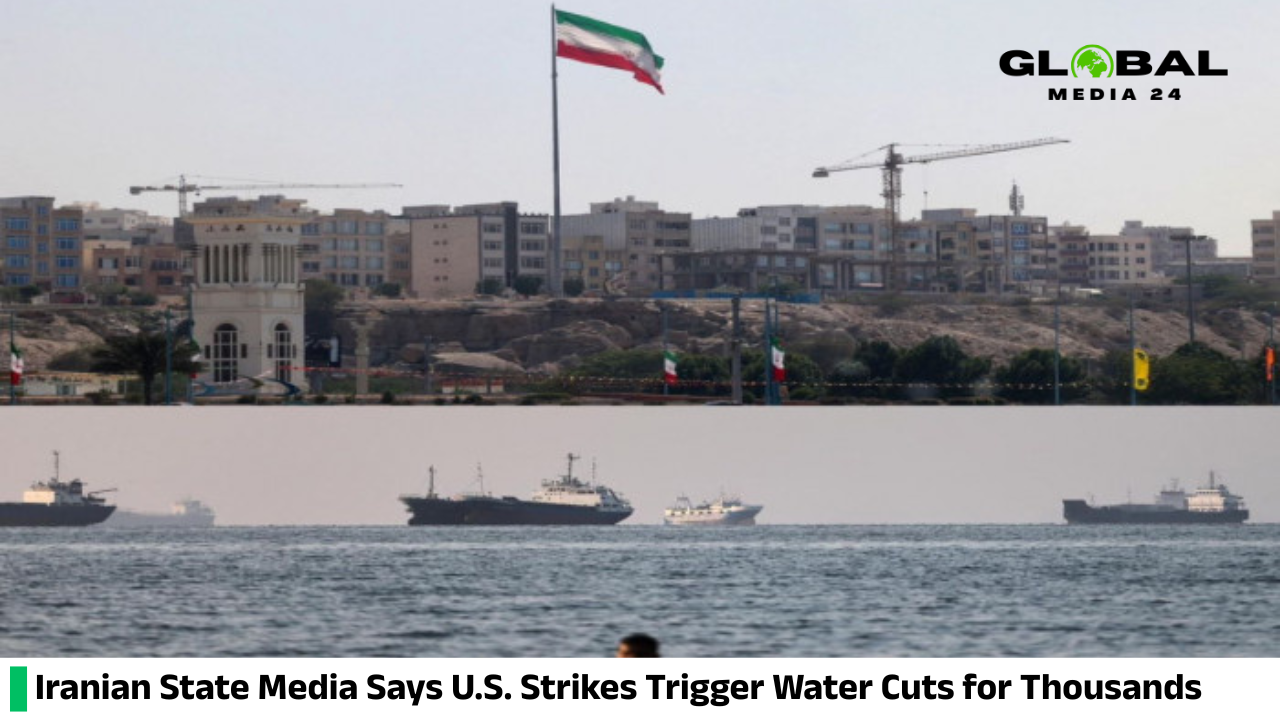
Iran stated that it has fully reopened the Strait of Hormuz to commercial shipping; however, questions lingered on Saturday regarding the actual freedom of movement for vessels navigating this route, as Tehran maintained its grip on ships passing through the strait and threatened to close it once again if the U.S. continued its blockade against Iranian vessels and ports.
On Friday, Iran announced the reopening of this critical waterway, through which 20% of the world’s oil is transported. This announcement came at a time when a 10-day ceasefire between Israel and the Iranian-backed Hezbollah militant group in Lebanon appeared to be holding.
Meanwhile, U.S. President Donald Trump declared that the American blockade would “remain fully in effect” until Tehran reached an agreement with the U.S., specifically addressing its nuclear program.
When a reporter asked Trump on Friday night what he would do if no deal were reached by the time the ceasefire expires next week, he replied, “I don’t know… but I probably wouldn’t extend it; so you would have a blockade, and unfortunately, we would have to start dropping bombs again.”
However, speaking to reporters aboard Air Force One while en route to Washington, he also asserted that an agreement “will happen,” and he flatly dismissed the notion of Iran imposing restrictions or tolls on the Strait of Hormuz.
Trump had earlier celebrated Iran’s announcement, posting on social media that the strait was “fully open and fully ready for transit.”
Yet, just minutes later, he issued a follow-up post stating that the U.S. Navy’s blockade would persist “until our transaction with Iran is 100% complete.” Iran’s Foreign Minister, Abbas Araqchi, posted on X that vessels would utilize routes designated by the Islamic Republic in coordination with Iranian authorities—an indication that Iran plans to maintain a degree of control over the channel. It remained unclear whether or not vessels would be required to pay tolls.
Iranian officials stated that this blockade constitutes a violation of the ceasefire agreement reached between Iran and the U.S. last week. On Saturday morning, Iran’s Parliamentary Speaker, Mohammad Bagher Ghalibaf, posted on X that if the blockade were to persist, the Strait would “not remain open.”
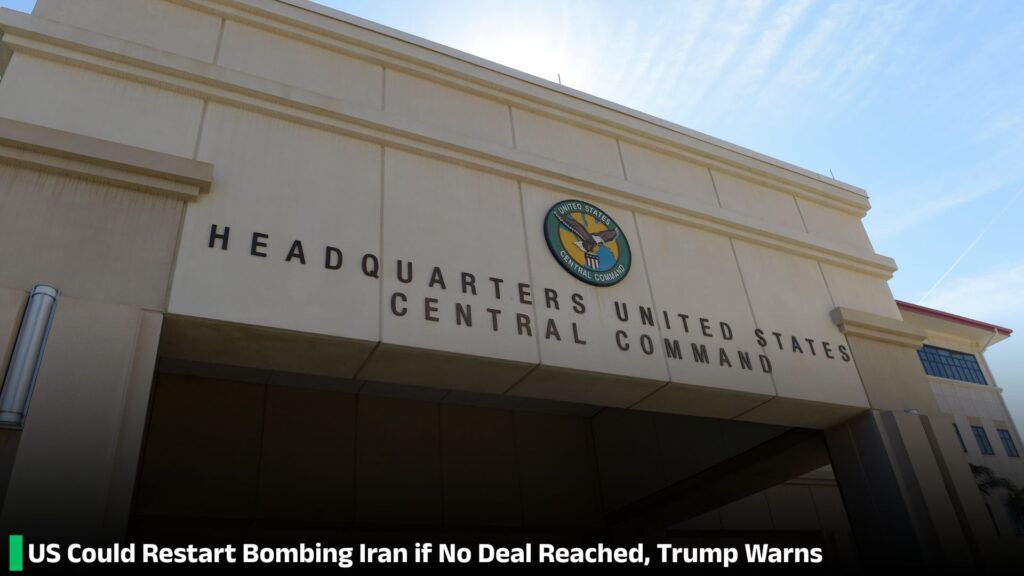
Kepler, a data analytics firm, reported that maritime traffic through the Strait is currently restricted to specific corridors requiring Iranian authorization. U.S. Central Command stated on X that since the blockade commenced on Monday, U.S. military forces have turned back 21 vessels bound for Iran.
Trump imposed this blockade as part of an effort to compel Iran to reopen the Strait and to adhere to the ceasefire—brokered through Pakistani mediation—in order to bring an end to the conflict that has been raging for nearly seven weeks between Israel, the U.S., and Iran.
The President’s decision to maintain the blockade despite Iran’s announcement appeared aimed at sustaining pressure on Tehran, given that the outcome of the two-week ceasefire agreed upon last week remains uncertain.
Direct negotiations between the U.S. and Iran held last weekend ended inconclusively, as the two nations failed to reach a consensus regarding Iran’s nuclear program and other contentious issues.
Trump suggested that a second round of negotiations could potentially take place this weekend.
In a brief telephone interview with the news outlet Axios, he remarked, “The Iranians want to meet. They want to make a deal. I think there will probably be a meeting this weekend.”
Oil prices declined on Friday amidst hopes that the United States and Iran were nearing a diplomatic agreement. The head of the International Energy Agency warned that if the strait does not reopen, the energy crisis could worsen further.
Two of Iran’s semi-official news agencies challenged Araghchi’s announcement regarding the strait.
Considered close with Iran’s powerful Revolutionary Guard, the Fars News Agency—considered to be close to Iran’s powerful Revolutionary Guards—issued several posts on X stating that there is no clear information regarding the decision to reopen the waterway, and noting a “strange silence on the part of the Supreme National Security Council and the negotiating team.”
Iran’s Supreme National Security Council has recently functioned as the country’s de facto highest decision-making body, amidst uncertainty regarding the status of the new Supreme Leader, Mojtaba Khamenei, who was reportedly wounded at the onset of the war.
The Mehr News Agency also stated that the decision to reopen the Strait requires “clarification” and necessitates the approval of the Supreme Leader.
A ceasefire in Lebanon could remove a major obstacle to a potential agreement between Iran, the United States, and Israel aimed at ending the war. However, it remained unclear to what extent Hezbollah would adhere to a deal in which it played no part—and under which Israeli forces would occupy a portion of southern Lebanon.
In a separate post, Trump stated that the U.S. has “restrained” Israel from launching further attacks on Lebanon, declaring that “enough is enough” in the Israel-Hezbollah conflict.
The State Department clarified that this restraint applies solely to offensive attacks, not to actions taken in self-defense.
Shortly before Trump’s post, Israeli Prime Minister Benjamin Netanyahu announced that Israel had agreed to a ceasefire in Lebanon “at the behest of my friend, President Trump,” but emphasized that the campaign against Hezbollah was not yet complete.
He claimed that Israel had destroyed approximately 90% of Hezbollah’s missile and rocket stockpile, adding that the Israeli military had “not yet finished” the task of dismantling the group.
In Beirut, celebratory gunfire rang out as the ceasefire went into effect. Displaced families began making their way toward southern Lebanon and the southern districts of Beirut, despite official warnings advising them not to return to their homes until it became clear whether or not the ceasefire would hold. The Lebanese army and UN peacekeepers in southern Lebanon reported sporadic artillery shelling in parts of the region just hours after a ceasefire went into effect.
Lebanon’s Health Ministry reported on Friday that an Israeli strike in the Qounine area struck a car and a motorcycle, killing one person and injuring three others, including a Syrian national. This marked the first reported airstrike and the first fatality since the ceasefire took effect.
There was no immediate response from either the Israeli military or Hezbollah.
Ending Israel’s fighting with Hezbollah was a key demand of Iranian negotiators, who had previously accused Israel of violating last week’s ceasefire by attacking Lebanon. Israel had stated that Lebanon was not included in the deal. The conflict has claimed the lives of at least 3,000 people in Iran, more than 2,290 in Lebanon, 23 in Israel, and over a dozen in Arab Gulf nations. Thirteen U.S. service members have also been killed.