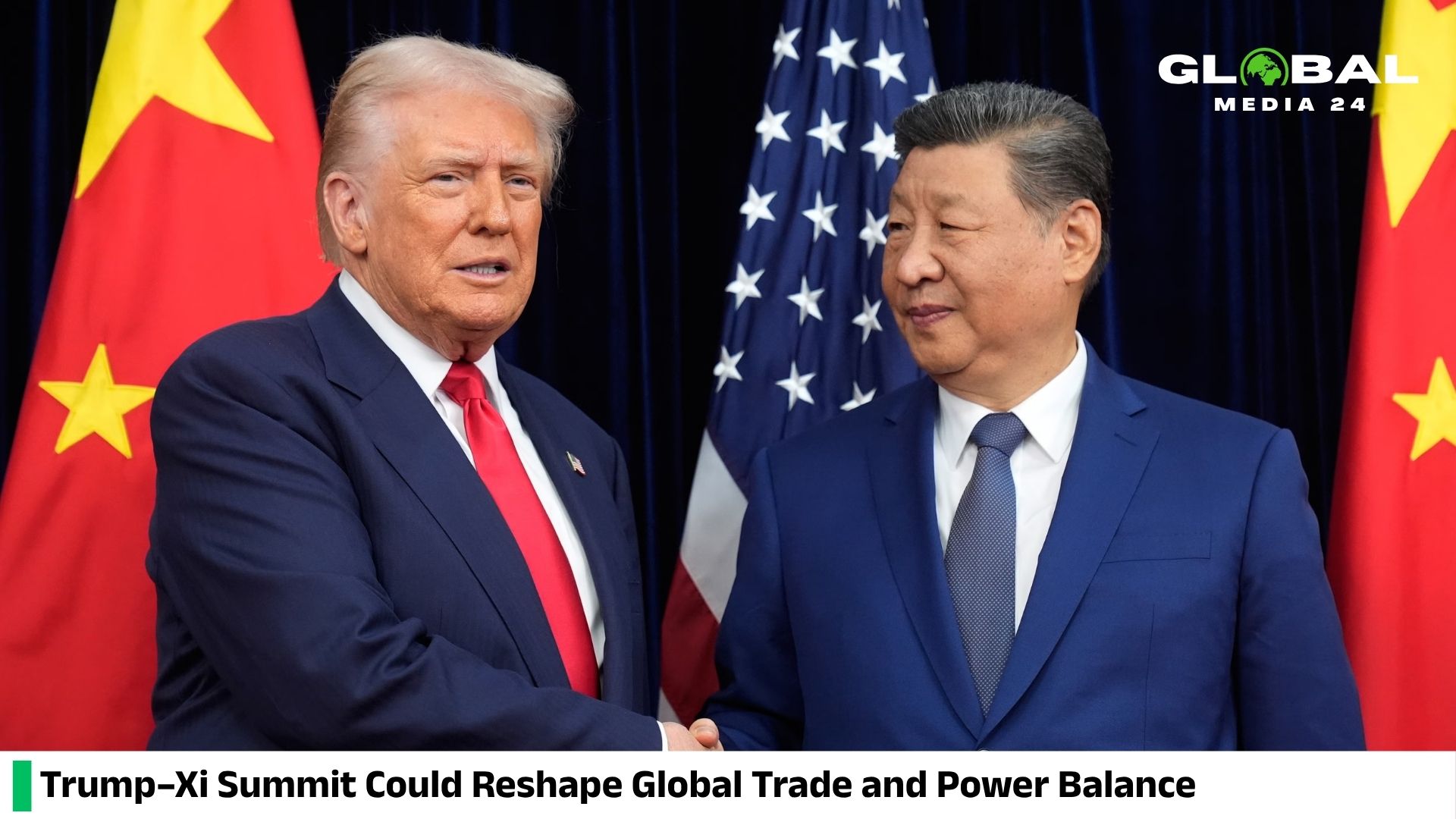
Donald Trump and Xi Jinping are set to enter talks with a broad agenda covering trade, Taiwan, the Iran conflict, and more. The summit’s outcome could carry significant implications for global commerce, geopolitics, and the international rules-based order, analysts say. Any cooperation between the U.S. and China on reopening the Strait of Hormuz could provide short-term relief for oil prices and ease broader energy market pressures.
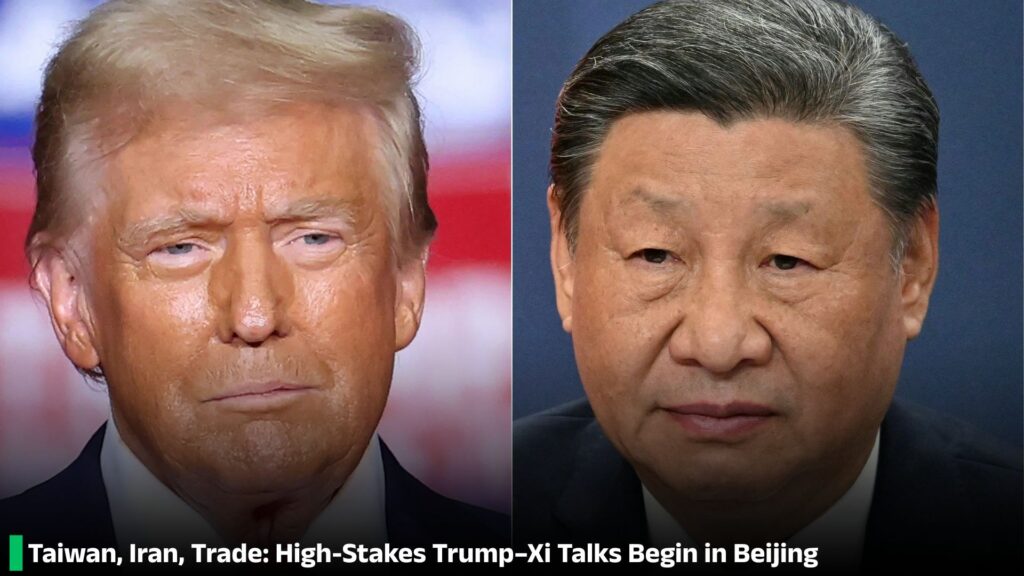
Singapore – When U.S. President Donald Trump and China’s Xi Jinping meet in Beijing on Thursday, they and their teams will determine outcomes on a range of potential issues.
The agenda includes trade, technology, rare earth export controls, Taiwan, the conflict in Iran, and artificial intelligence. China’s decision to restrict exports of various rare earth elements and associated magnets—coupled with a ban on semiconductor sales to Nexperia China—has upended critical supply chains for automakers worldwide, triggering political and economic repercussions across Europe, Japan, and South Korea.
“Almost everyone has a stake in the outcome of this meeting,” said Chad Bown, a senior fellow at the Peterson Institute for International Economics.
This also implies that other world leaders and interested parties will be watching closely—even if they are not physically present in the room when decisions with potentially far-reaching consequences for them are being made.
Ahead of the summit, both sides are ratcheting up the pressure: Washington has accused Beijing of conducting an “industrial-scale” campaign to steal U.S. AI technology, while China has instructed companies to disregard U.S. sanctions on Iranian oil, even as it hosted a visit by Iran’s Foreign Minister. The future trajectory of this relationship—whether it steers toward cooperation or confrontation—will have profound implications for the global economy.
“The entire world is hoping that the two leaders can reach an agreement on at least some issues… and find ways to prevent tensions from escalating further on the remaining ones,” Eswar Prasad, a professor of economics at Cornell University, The outcome could have a major impact on global trade, geopolitics, and “the preservation of the rules-based order.”
Prasad noted that a contentious summit that exacerbates tensions could prolong economic and geopolitical volatility, potentially stalling global trade and growth. This meeting was originally scheduled for March but was delayed after Washington became embroiled in a conflict with Iran—an event that has delivered the biggest energy shock in history to the world. Trump has signaled his intention for Xi to visit Washington later this year, which would mark the Chinese leader’s first visit to the U.S. capital in a decade.
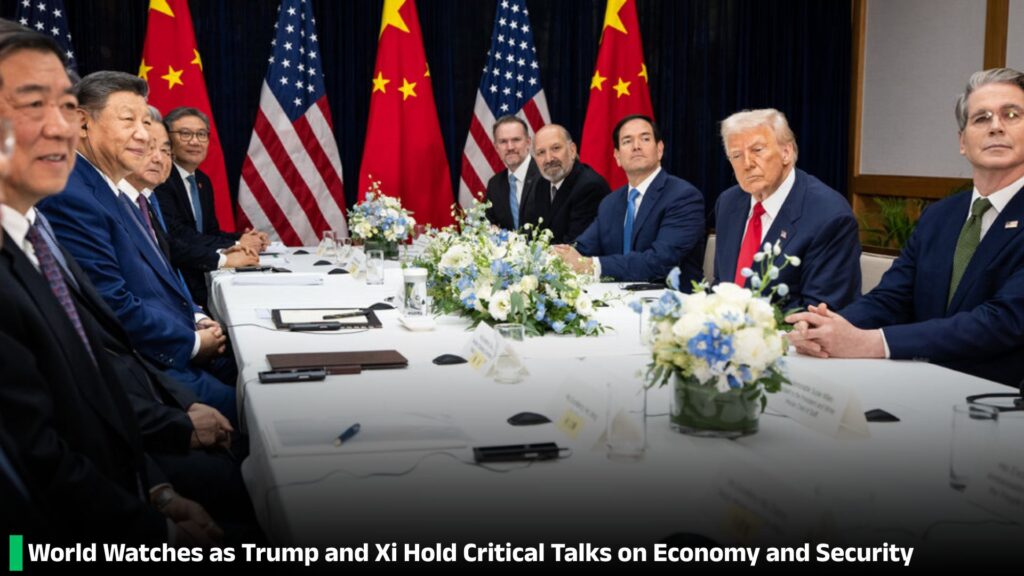
The entire week could be packed with events. Ahead of the Beijing summit, top officials—including Chinese Vice Premier He Lifeng and U.S. Treasury Secretary Scott Bessent—are set to meet in South Korea on Wednesday to discuss economic and trade issues.
Gabriel Wildau, Managing Director at the political risk consultancy Teneo, noted that the officials may wish to ensure that recent escalations—including U.S. sanctions on Chinese refineries purchasing crude oil from Iran, as well as unprecedented retaliatory measures taken by Beijing—do not derail the agreement reached in South Korea last year.
Taiwan Tensions
Both the U.S. and China have stated that Taiwan will remain at the very top of the agenda.
Reports suggest that Beijing has pressured the Trump administration to scale back its security commitments and alter official U.S. policy regarding the island. China claims this democratically governed island as its own territory—a claim Taiwan rejects—and has long criticized U.S. arms sales to Taipei.
Bonnie Glaser, Managing Director of the Indo-Pacific Program at the German Marshall Fund of the United States, stated that any softening on Trump’s part—even if not explicitly articulated—would be the “most destabilizing outcome” of the summit.
Glaser stated, “A tacit or explicit bargain in which Washington appears to cede a sphere of influence over Taiwan to Beijing in exchange for concessions elsewhere” could encourage China to take more aggressive steps to erode Taiwan’s autonomy.
On April 30, during a call with U.S. Secretary of State Marco Rubio, China’s top diplomat, Wang Yi, identified Taiwan as the “biggest risk point” in the relationship between the two nations, and urged Washington to “honor its commitments and make the right decisions to create new space for China-U.S. cooperation.”
He added, “Both countries understand that witnessing any destabilizing event in that part of the world is not in the interest of either of us.”
The Delicate Balance of Southeast Asia
Stephen Olson, a Senior Visiting Fellow at the ISEAS–Yusof Ishak Institute, stated that Southeast Asian governments will closely monitor any major changes in U.S. tariffs on Chinese goods relative to their own exports.
“If tariff levels on Chinese exports fall,” he noted, “the business rationale for shifting production from China to countries like Vietnam will also diminish.”
The Strait of Hormuz also remains a major issue for the region. Heavily dependent on Gulf oil, Southeast Asian nations have borne the brunt of the energy shocks stemming from conflicts in the Middle East. Singaporean officials have repeatedly warned of potential economic fallout and have called for unimpeded passage through the Strait.
If Trump and Xi agree to work together to facilitate the reopening of the Strait, it could offer swift relief from energy shortages—though some analysts suggest that such an outcome remains unlikely at this juncture.
Japan and the EU: Potential Losses
The success of the summit could, in reality, spell trouble for Brussels and Tokyo.
Matt Gertken, Chief Strategist at BCA Research, noted that a potential energy deal—under which Beijing agrees to purchase larger quantities of U.S. oil and natural gas—could drive up global commodity prices.
He further added that, beyond this, any progress on trade—including a commitment from China to make direct investments in the U.S. economy—could erode the market share currently held by Japanese and European firms.
Russia Waits and Watches
The summit will also be closely watched in Moscow, where China’s support has become increasingly vital. Following the previous face-to-face meeting between Trump and Xi in October, Russian officials moved swiftly to reaffirm Moscow’s alliance with Beijing. Dennis Wilder, a former U.S. intelligence official and professor at Georgetown University, stated, “Russia is likely to be nervous about an overall improvement in U.S.-China relations.” Wilder added that one potential outcome of this summit could be a reduction in China’s support for Russia’s war in Ukraine.
Just days after Trump’s departure, Russian President Vladimir Putin is expected to visit Beijing next week.