
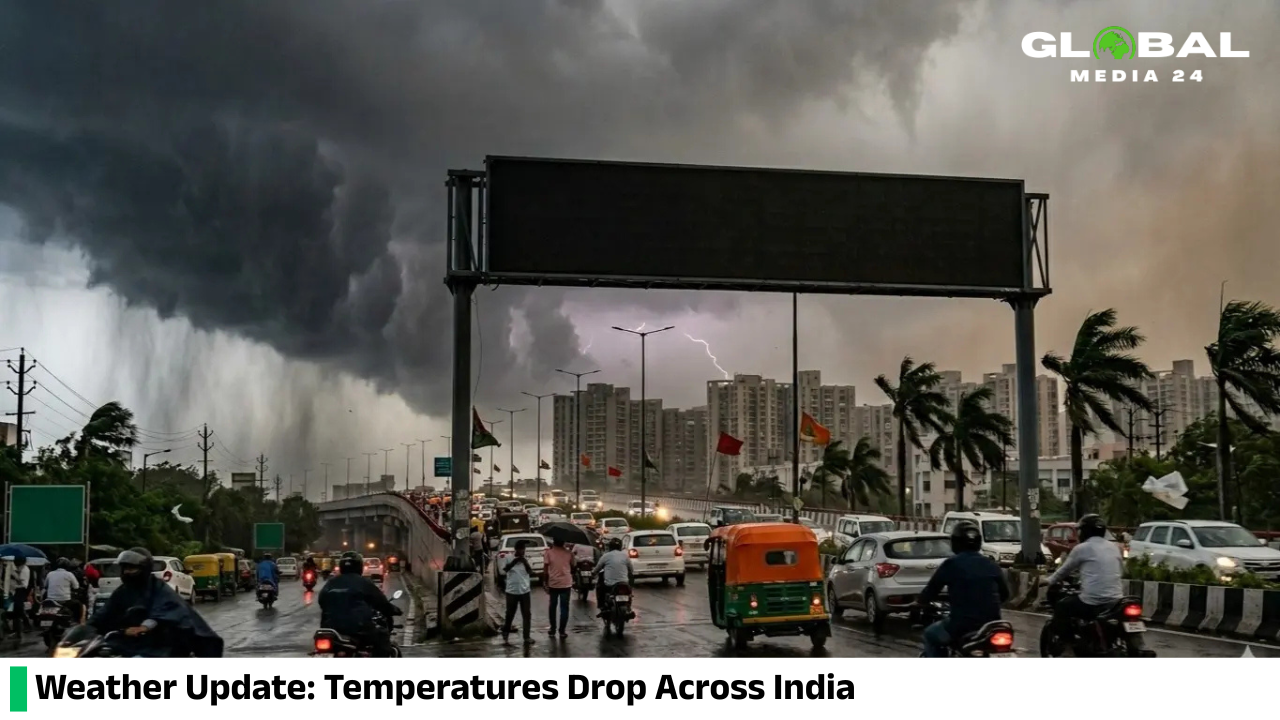
Stay updated with the latest weather news as Delhi records its coolest daytime temperature in 21 days under cloudy skies. The IMD predicts rain, thunderstorms, and temperature changes across Punjab, Himachal Pradesh, Uttar Pradesh, Uttarakhand, and other North Indian states. Get live weather updates, rainfall forecasts, monsoon alerts, and regional weather conditions today.
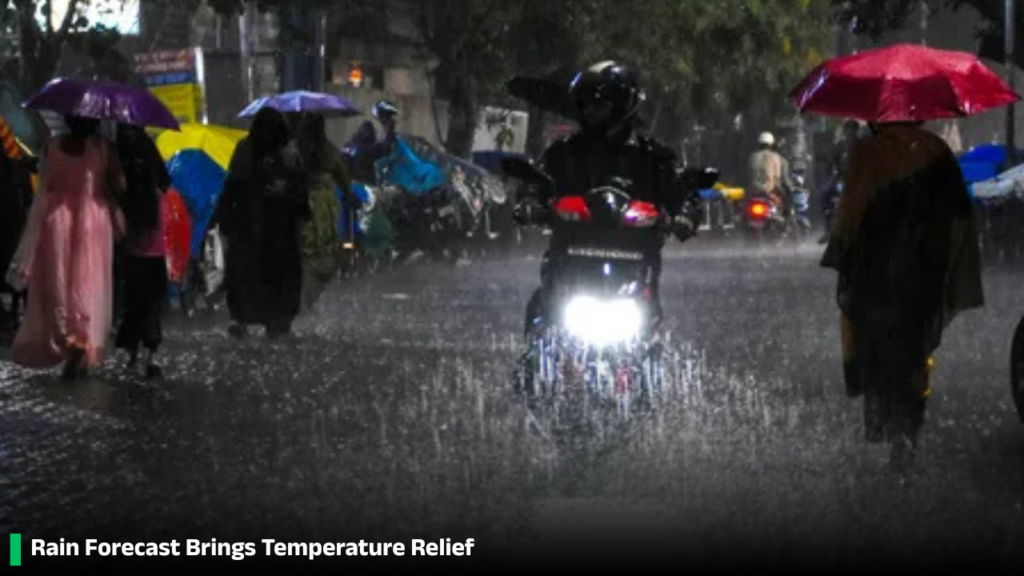
India‘s weather pattern is witnessing a significant shift as the southwest monsoon approaches the country. After weeks of intense summer heat, several states have started experiencing relief with falling temperatures, increased cloud cover, and forecasts of rain and thunderstorms. According to the latest updates from the India Meteorological Department (IMD), many northern states are likely to receive rainfall over the coming days, while the monsoon is expected to reach Kerala soon.
The changing weather conditions are bringing relief to millions of people across the country. However, parts of Rajasthan continue to struggle with severe heatwave conditions, highlighting the stark contrast in weather across different regions of India.
Delhi Records Lowest Maximum Temperature in 21 Days
The national capital witnessed cloudy skies throughout the day, leading to a noticeable drop in temperature. According to weather observations, Delhi recorded its lowest maximum temperature in the last 21 days, offering much-needed relief from the scorching heat that had gripped the city for weeks.
The cooler conditions were largely driven by cloud cover and changing wind patterns ahead of the monsoon season. Residents experienced more comfortable weather compared to previous days, and forecasts indicate that rain and thunderstorms could further improve conditions in the coming days.
Meteorologists believe that these weather changes signal the gradual transition from the peak summer season toward the monsoon period, which typically brings widespread rainfall across northern India.
Rain and Thunderstorm Alert Issued for North India
The IMD has forecast rain and thunderstorm activity across several northern states, including Punjab, Haryana, Himachal Pradesh, Uttar Pradesh, and Uttarakhand. These regions are expected to experience varying intensities of rainfall along with gusty winds and occasional lightning.
The expected rainfall could help lower temperatures further and provide relief to residents who have been enduring prolonged periods of heat. Agricultural communities are also likely to benefit from the increased moisture levels, which can support pre-monsoon farming activities.
Weather experts suggest that western disturbances combined with moisture-laden winds are contributing to the changing weather conditions across the northern plains and hilly regions.
Rajasthan Continues to Battle Extreme Heat
While many states are witnessing a drop in temperatures, Rajasthan remains under the grip of intense heat. Several cities in the state continue to report temperatures in the mid-40s degrees Celsius, creating difficult conditions for residents.
The western and northwestern parts of Rajasthan have been particularly affected by heatwave conditions. High daytime temperatures, dry winds, and limited cloud cover have contributed to the ongoing weather challenges in the region.
However, there is some good news for residents. The IMD has indicated that thunderstorm and rainfall activity is likely to increase across Rajasthan in the coming days. If the forecast materializes, temperatures could begin to decline significantly, offering relief from the prolonged heat spell.
Monsoon Expected to Reach Kerala Soon
One of the most anticipated weather developments is the arrival of the southwest monsoon over Kerala. According to the IMD, the monsoon is likely to reach the Kerala coast within the next seven days.
Kerala serves as the gateway for the monsoon season in India. Once it arrives, the monsoon gradually advances across the country, bringing rainfall to different regions over the following weeks.
The progress of the monsoon is closely monitored because it plays a crucial role in India’s agriculture, water resources, and overall economy. A timely monsoon is often considered essential for maintaining agricultural productivity and ensuring adequate water availability.
IMD Projects Below-Normal Rainfall This Season
Despite the expected arrival of the monsoon, the IMD has projected that rainfall during the June-to-September monsoon season could remain below the long-period average (LPA).
According to the forecast, India is expected to receive around 90 percent of the long-period average rainfall, with a margin of error of four percent. The LPA, based on data collected between 1971 and 2020, stands at 87 centimeters.
This projection suggests that some regions may receive less rainfall than usual, which could have implications for agriculture, water storage, and reservoir levels during the season.
Regional Rainfall Outlook
The weather department’s forecast indicates that northeastern India is likely to receive normal rainfall during the monsoon season. However, several other regions across the country may experience below-normal precipitation levels.
Experts emphasize that regional variations are common during the monsoon, and rainfall distribution can differ significantly from one state to another. As a result, some areas may witness adequate rainfall while others face deficits.
Continuous monitoring of weather systems will be important in the coming months to assess the actual performance of the monsoon.
What This Means for Farmers
The monsoon remains the backbone of India’s agricultural sector. Millions of farmers depend on seasonal rainfall for crop cultivation, irrigation, and overall farm productivity.
A below-normal monsoon can increase pressure on water resources and potentially impact crop yields. However, experts caution that seasonal forecasts are subject to change as weather conditions evolve throughout the monsoon period.
Farmers are advised to stay updated with local weather advisories and agricultural guidance to make informed decisions regarding sowing and crop management.
Conclusion
India‘s weather is entering a crucial transition phase as the southwest monsoon approaches. Delhi and several northern states are already experiencing cooler temperatures and the possibility of rain, while Rajasthan continues to endure intense heat. With the monsoon expected to reach Kerala within the next week, attention is now turning toward how the rainy season will unfold across the country.
Although the IMD has projected below-normal rainfall for much of India, upcoming weather developments will determine the overall impact on agriculture, water availability, and daily life. As conditions continue to evolve, residents and farmers alike will be closely watching the progress of the monsoon season.