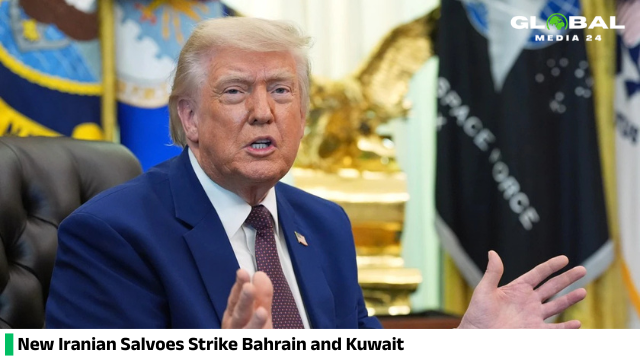

US Press Secretary Karoline Leavitt posted a clip from Donald Trump’s 1988 interview on X, saying that his views on Iran have remained consistent.
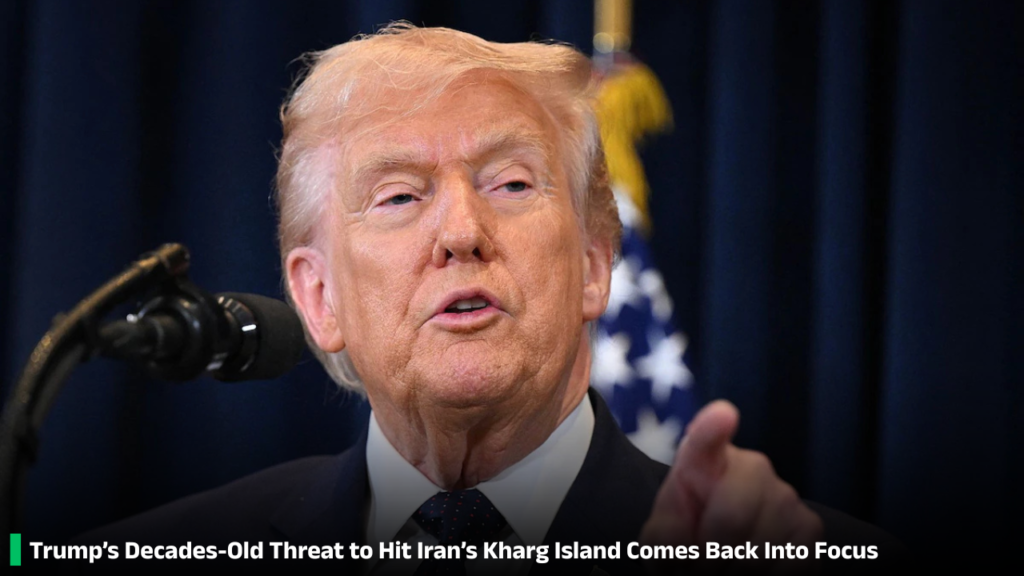
Thirty-eight years before the U.S. military targeted military bases on Iran’s Kharg Island, he stated in an interview that he would be “tough on Iran” and that the firing of “a single bullet” at a U.S. soldier or ship would trigger an attack on the island—a site critical to Iran’s oil exports.
At the time, Trump was a 41-year-old business tycoon contemplating an entry into politics.
In a 1988 interview with Polly Toynbee of The Guardian, he said, “I would be tough on Iran. They are beating us psychologically; they are making fools of us. If even a single bullet is fired at one of our men or ships, I will attack Kharg Island. I will go in and take it. Iran cannot even defeat Iraq, yet they push around the United States. It would be good for the world if they were confronted.”
And nearly four decades later, amidst escalating tensions in the Middle East, President Trump announced that U.S. Central Command had executed the most powerful bombing campaign in the history of the Middle East, destroying every military target on “Iran’s crown jewel: Kharg Island.”
In a post on Truth Social, he stated, “Our weapons are the most powerful and advanced in the world today; however, out of courtesy, I have decided not to destroy the oil infrastructure on the island. Nevertheless, if Iran—or anyone else—takes any action to interfere with the free and safe passage of ships through the Strait of Hormuz, I will immediately reconsider this decision.”
Sharing a post regarding Trump’s 1988 interview, U.S. Press Secretary Karoline Leavitt posted on X that Trump has remained consistently steadfast in his stance on Iran.
She wrote, “President Trump has been remarkably consistent regarding Iran throughout his entire life. Anyone who claims otherwise simply hasn’t been paying attention.”
This new US strike is significant because Kharg Island has long been viewed as a critical pressure point—one where any attack would elicit a severe response from Tehran.
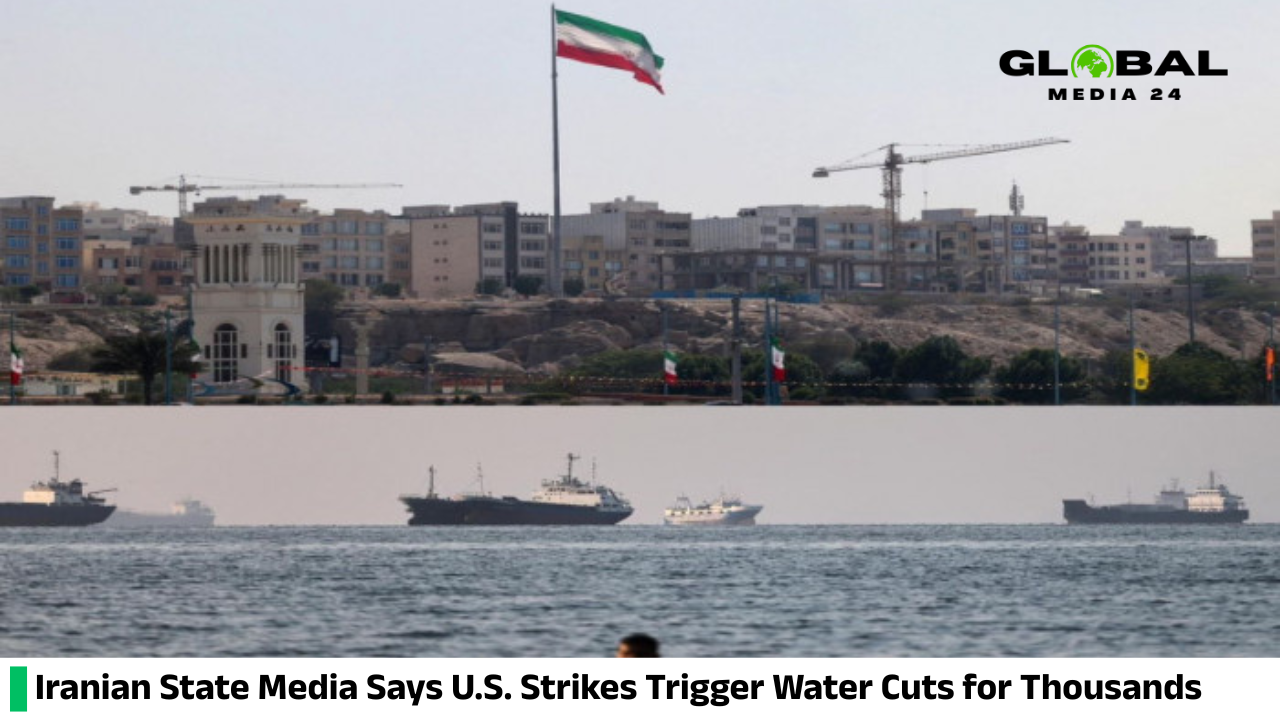
The US strike—which Iran has downplayed—occurred after Tehran moved to block the Strait of Hormuz, a transit route for approximately 20 percent of the world’s oil supply. This action has driven up global crude oil prices, thereby heightening concerns regarding energy security.
Trump has stated that numerous nations affected by the closure of the Strait will dispatch warships to ensure it remains open and secure.
“Many countries—particularly those impacted by Iran’s attempts to close the Strait of Hormuz—will join forces with the United States of America to send warships to keep the Strait open and safe. We have already completely dismantled Iran’s military capabilities; however, it remains easy for them—no matter how decisively they have been defeated—to launch a drone or two, drop mines, or fire short-range missiles within or near this waterway.”
Writing on Truth Social, he added: “Hopefully, China, France, Japan, South Korea, the UK, and other nations affected by this manufactured blockade will dispatch vessels to the region, ensuring that the Strait of Hormuz no longer faces threats from a country whose leadership has been utterly neutralized. In the interim, the United States will unleash heavy bombardment from the shore, systematically eliminating Iranian boats and vessels from the waters. One way or another, we will soon ensure the Strait of Hormuz is open, secure, and free.”
Meanwhile, Iran has asserted that its oil infrastructure on the island remains intact, while simultaneously issuing a warning. Citing its military command, Iran’s Fars News Agency has stated: “If Iran’s energy and economic assets are attacked, all oil, economic, and energy facilities of the region’s oil companies—which are, to some extent, owned by the United States or which cooperate with the United States—will be immediately destroyed and reduced to ashes.”
It has termed any US attacks a “barbaric violation of Iranian sovereignty” and has vowed to launch a retaliatory strike.