The UAE has also been displeased with Pakistan, partly because of its deepening ties with Saudi Arabia, but also because of what it sees as Islamabad’s limited role as a mediator between the US and Iran.
Dubai:
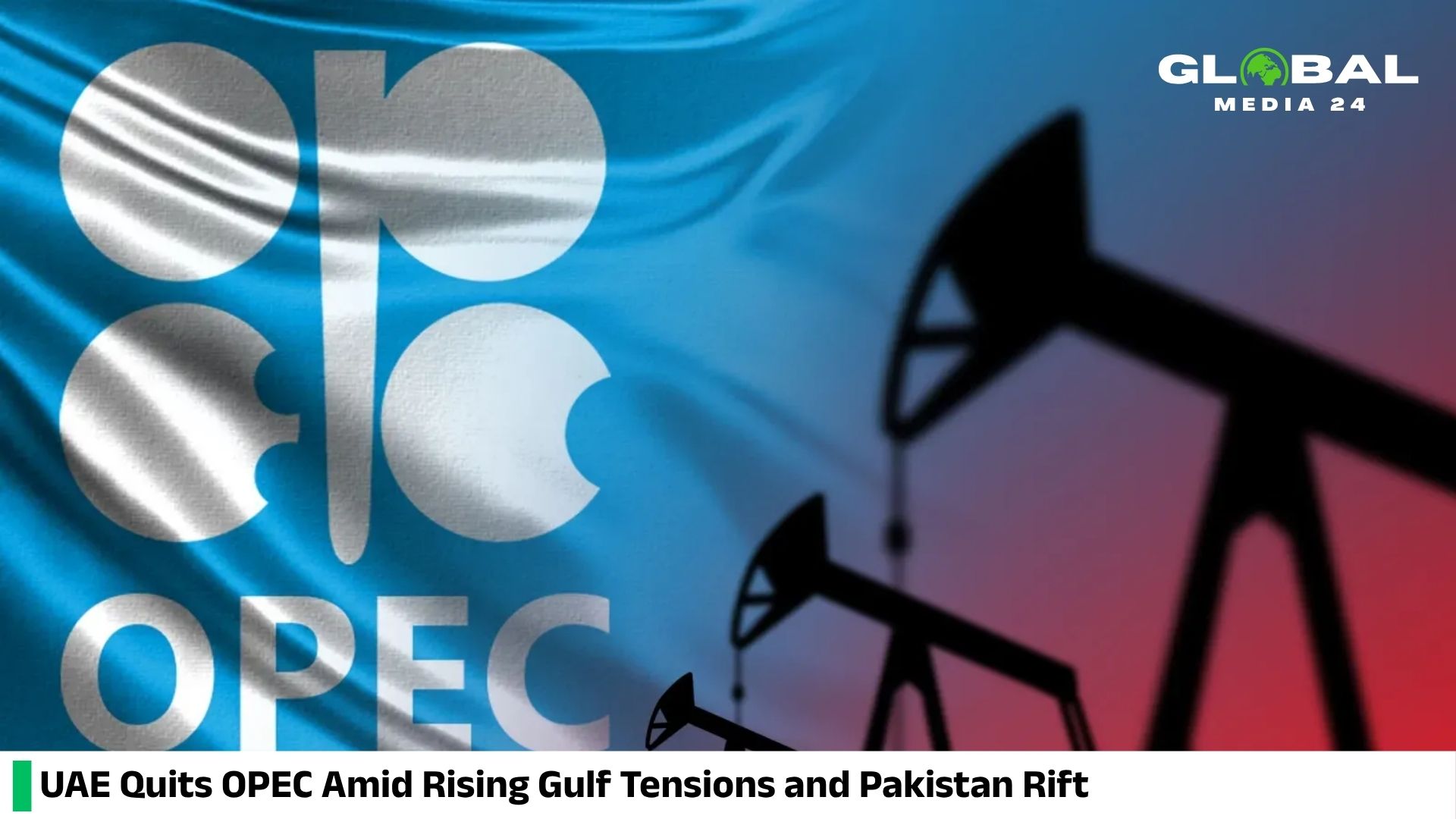
The United Arab Emirates’ decision to withdraw from the Organization of the Petroleum Exporting Countries (OPEC)—after nearly 60 years of membership—is as much political as it is economic. This move could deal a significant blow not only to the oil cartel and its de facto leader, Saudi Arabia, but also to Riyadh’s defense partner, Pakistan.
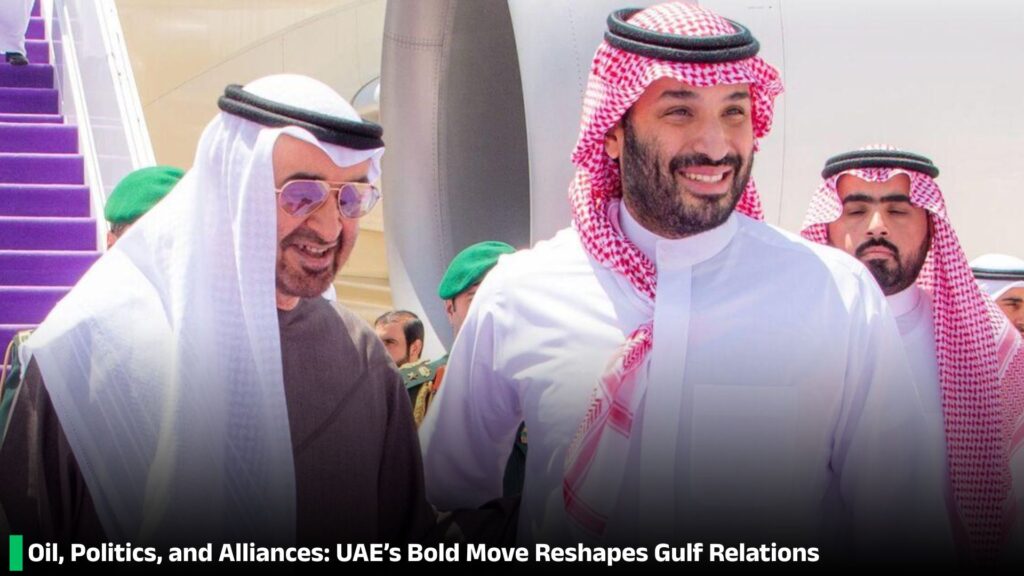
Tensions have been simmering between Abu Dhabi and Riyadh for some time; however, their shared outrage over Tehran’s attacks on Gulf nations—which began following the outbreak of the US-Israel war against Iran—has, to some extent, overshadowed these underlying strains.
Firas Maksad, Director for the Middle East at the Eurasia Group, told The Financial Times, “The Emirates was not content with being constrained—particularly at a time when they sought to increase production, while the Saudis preferred to pump less.”
The UAE is also aggrieved with Pakistan—partly due to the latter’s deepening ties with Saudi Arabia, but also because it perceives Islamabad as playing a weak role as a mediator between the US and Iran, and for failing to hold Tehran accountable for the attacks launched against the Gulf region during the conflict.
Neil Quilliam, an Associate Fellow at Chatham House, told the UK-based financial daily that the UAE is displeased with Pakistan’s role as a mediator, noting that the Emirates is currently “viewing matters in black-and-white terms.”
He stated, “In this [from the UAE’s perspective], there is no neutrality, no middle ground; and if you are mediating, then you are on the middle ground.”
How Exiting OPEC Benefited the UAE
The UAE, OPEC’s third-largest producer, joined the oil-producing cartel in 1967. However, the cartel’s production quotas have long been controlled by its de facto leader, Saudi Arabia, thereby restricting the UAE’s ability to export larger volumes of oil. In the short term, this exit will grant Abu Dhabi the freedom to respond swiftly to potential long-term supply shortages and to maximize profits.
This defection also serves as a blow to Saudi Arabia’s prestige, as it undermines Riyadh’s ability to manage oil prices. Furthermore, it helps the UAE forge closer ties with US President Donald Trump, a long-standing critic of OPEC.
The UAE’s Frustration with its Gulf Neighbors
The UAE made this major announcement without any prior consultation, even as the six-member Gulf Cooperation Council (GCC) convened for an emergency session in Jeddah—the first such meeting following the attacks involving Iran. The UAE—a Gulf nation that is politically closest to Israel and most hostile toward Tehran—was the primary target of Iranian aggression in the region, having intercepted over 2,200 drones and missiles; this high volume was, in part, due to its geographical proximity.
According to a report by The Guardian, Abu Dhabi has been privately pressuring Saudi Arabia and Qatar to launch a joint counterattack against Iran. However, the report states that while Riyadh had appealed to the U.S. to defeat Iran, “despite this, no consensus emerged within the GCC to take any step that could be deemed highly risky—as such a move could be perceived not merely as an act of self-defense, but also as an act of siding with Israel.”
Having failed to secure political solidarity for its objectives, the UAE has abandoned the pursuit of economic solidarity and decided to chart its own course. A Blow to Saudi Arabia.
According to Adnoc, the UAE’s state-owned oil company, Abu Dhabi’s withdrawal from OPEC could see its crude oil production rise from 3.4 million barrels per day—the level prior to the outbreak of the conflict with Iran—to 5 million barrels per day by 2027.
Notably, since Iran blockaded the Strait of Hormuz, the country’s crude oil production plummeted by 44 percent in March, falling to 1.9 million barrels per day; consequently, questions are now being raised regarding its capacity to ramp up production. Overall, the conflict resulted in a 7.88 million barrels-per-day reduction in OPEC’s output during March, leading to a 27 percent decline for the month—bringing total production down to 20.79 million barrels per day—marking the cartel’s most significant supply contraction in recent decades.
Dr. Ebtesam Al-Ketbi, President of the Dubai-based Emirates Policy Center, told The Guardian that this move has been characterized as a strategic initiative undertaken for the UAE’s own benefit.
She stated, “In essence, the UAE is redefining its role within the bloc—shifting from being merely a producer among others to becoming a ‘balancing producer’ that contributes to market stability through the exercise of its operational capacity.”
“While this move may gradually erode OPEC’s collective solidarity, it simultaneously reinforces the UAE’s standing as a key actor capable of directly influencing global supply dynamics.” Furthermore, the decision to withdraw from OPEC could position the UAE as a diplomatic favorite of the Trump administration—a status from which the Emirates could stand to benefit in terms of investment. Trump has been a vocal critic of OPEC.
The Pakistan Factor
The UAE is already demonstrating its influence even before its formal withdrawal from OPEC. Earlier this month, Abu Dhabi withdrew $3.5 billion in deposits from Islamabad—an amount constituting one-fifth of Pakistan’s foreign exchange reserves. This move was interpreted as a signal of the UAE’s displeasure regarding Pakistan’s neutrality concerning Iran; a development that compelled Saudi Arabia—which had signed a defense pact with Islamabad in September—to step in and assist its South Asian partner.
Tensions had been simmering between these powerful Gulf nations for several years, but the rift came to the fore in December and January over disputes regarding the ongoing civil war in Yemen, where they back opposing factions.
According to analysts, another contributing factor to this animosity is that Riyadh maintains closer ties with Pakistan, Turkey, and Egypt than it does with its Gulf neighbor. Quilliam told the FT: “The rift persists, and Pakistan represents a potential flashpoint; moreover, the UAE has, in any case, invested more heavily in India.”
“They [the UAE] view this growing alliance between Saudi Arabia and Pakistan, and for the UAE, this constitutes a conflict of interest for Abu Dhabi.”
By withdrawing from OPEC, the UAE seeks not only to guarantee its alignment with the US but also to disrupt the Saudi-Pakistan relationship.
Benefits for India
India is likely to benefit from the UAE’s withdrawal from OPEC, as it is expected to result in lower costs and improved supply stability.
The UAE aims to maximize production—free from OPEC quotas—and to monetize its reserves for as long as demand persists. Increased supply—particularly from low-cost producers—will, over time, serve to cap price ceilings. For India, this implies that the import bill will decrease, and inflationary pressures will ease.
“The United Arab Emirates’ withdrawal from OPEC is expected to enhance flexibility in global oil supply in the medium term… which could lead to lower crude oil prices.”