
On the domestic equity market front, the Sensex fell by 264.82 points to 76,224.14 in opening trade, while the Nifty slipped 27.6 points to 24,004.10.

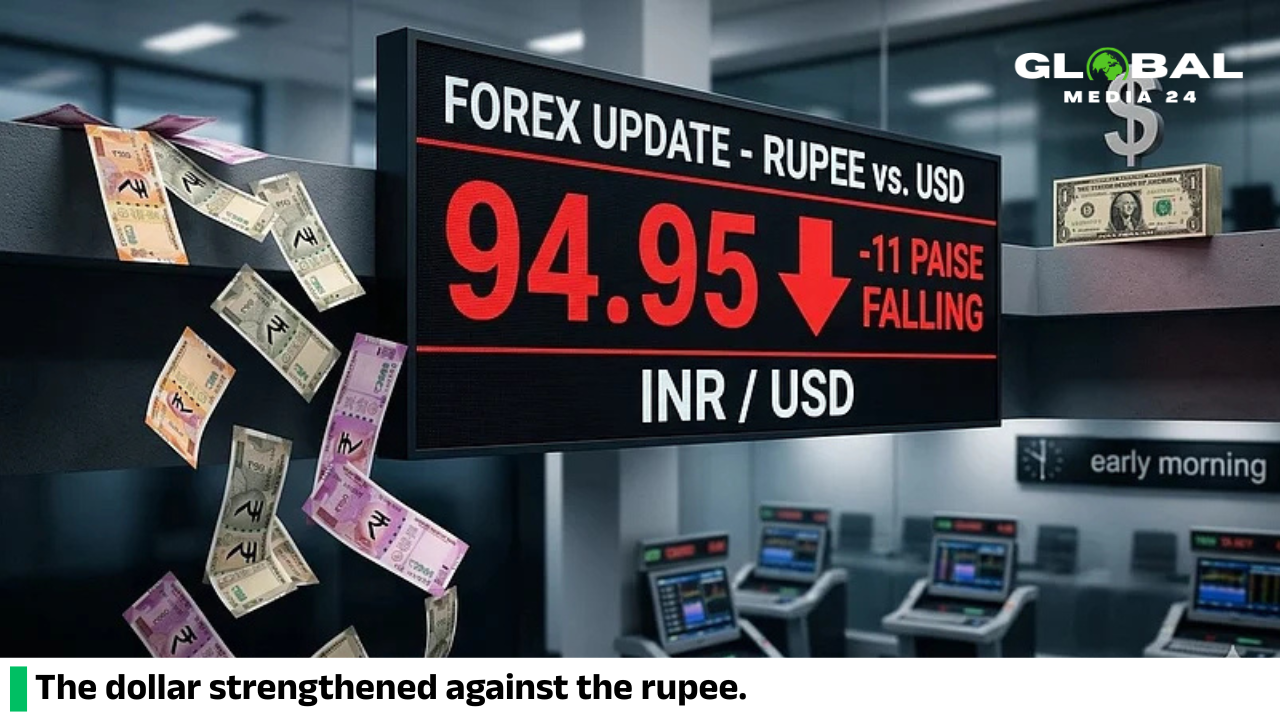
In early trade on Tuesday (May 26, 2026), the Rupee depreciated by 17 paise against the U.S. Dollar to trade at 95.43, as month-end dollar demand and rising crude oil prices weighed on investor sentiment.
Forex traders stated that as long as geopolitical tensions persist, significant pressure on the Rupee will continue. Furthermore, they noted that measures taken by the Reserve Bank of India (RBI) and liquidity support could offer temporary relief, potentially helping to keep volatility in check in the near term.
In early trade on Tuesday (May 26, 2026), the Rupee depreciated by 17 paise against the U.S. Dollar to trade at 95.43, as month-end dollar demand and rising crude oil prices weighed on investor sentiment.
Forex traders stated that as long as geopolitical tensions persist, significant pressure on the Rupee will continue. Furthermore, they noted that measures taken by the Reserve Bank of India (RBI) and liquidity support could offer temporary relief, potentially helping to keep volatility in check in the near term.
Why is the Indian Rupee falling?
In the interbank foreign exchange market, the Rupee opened at 95.43 against the U.S. Dollar, marking a decline of 17 paise from its previous close.
On Monday (May 25, 2026), the Rupee had appreciated by 34 paise against the U.S. Dollar to close at 95.26. The RBI intervened by selling dollars, thereby helping to anchor the Rupee at elevated levels.
Meanwhile, reports of fresh attacks on Iran caused Brent crude oil prices to surge to $93 per barrel, dashing hopes for a deal to reopen the Strait of Hormuz. U.S. President Donald Trump stated on Monday (May 25, 2026) that negotiations to end the conflict with Iran are progressing “well”; however, officials noted that a final decision could take some time due to the complex communication networks Tehran utilizes to consult with its Supreme Leader.
Anil Kumar Bhansali, Head of Treasury and Executive Director at Finrex Treasury Advisors LLP, remarked, “Intervention by the RBI has significantly reduced speculative pressure on the rupee, while improved risk appetite in the equity markets has helped keep the rupee firm against the dollar.” Meanwhile, the Dollar Index—which measures the dollar’s strength against a basket of six major currencies—was trading down 0.19% at 99.04.
Global oil benchmark Brent crude futures rose 1.84% in trading to reach $97.91 per barrel.
Brent crude reversed earlier losses to post gains on Monday (May 25, 2026). This turnaround followed reports that the U.S. had launched fresh strikes against Iran, thereby dashing hopes for a deal to reopen the Strait of Hormuz.
Reports emerging on Monday evening [May 25, 2026] indicated that, despite ongoing negotiations with Iranian officials, the U.S. had carried out new strikes targeting missile launch sites and mine-laying vessels, causing oil prices to edge higher. Mr. Bhansali observed, “This could complicate the ongoing peace negotiations.”
In the domestic equity markets, the Sensex fell 264.82 points to 76,224.14 in early trading, while the Nifty dropped 27.6 points to 24,004.10. According to exchange data, on Monday (May 25, 2026), Foreign Institutional Investors emerged as net buyers, purchasing equities worth ₹821.75 crore.