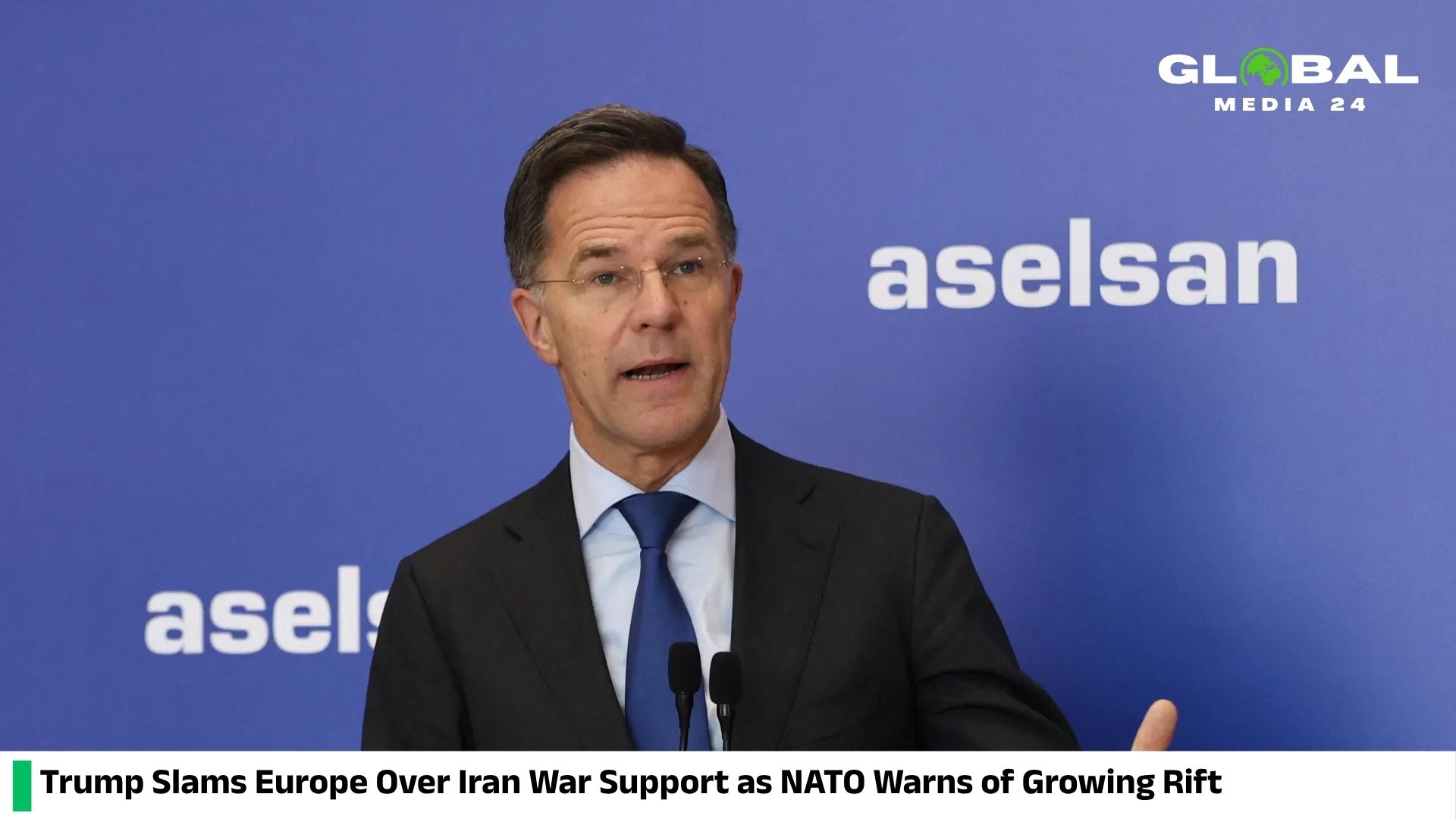
NATO Secretary-General Mark Rutte warns European leaders that U.S. President Donald Trump is disappointed with their reluctance to support the war in Iran
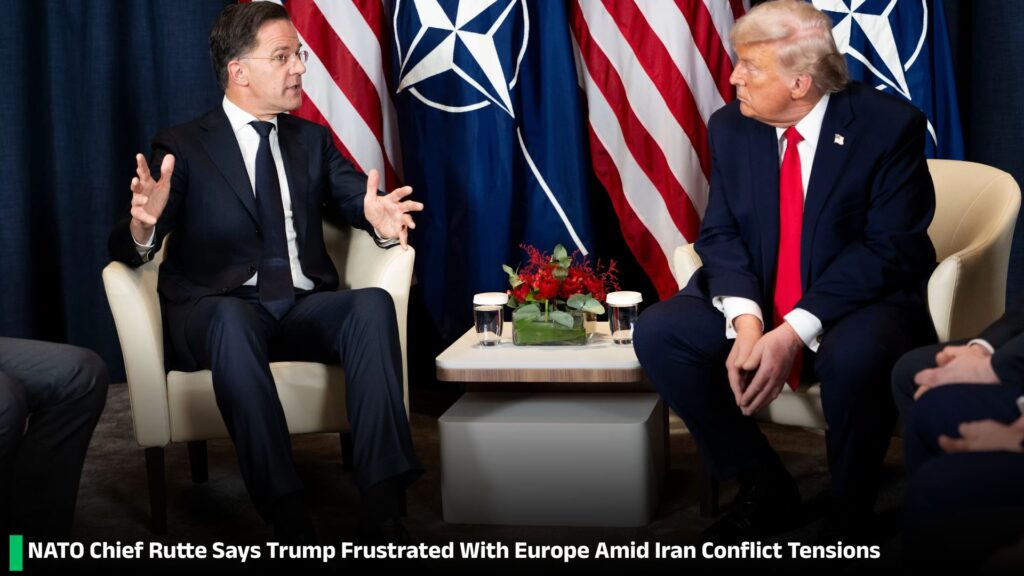
Speaking ahead of a meeting of the European Political Community involving some 50 leaders in Armenia’s capital, Yerevan, on Monday, Rutte stated, “European leaders have received the message.” There has been some frustration on the U.S. side regarding the European reaction to the American military action against Iran.
The U.S. has announced that it will withdraw approximately 5,000 troops from Germany next year. Trump has accused European nations of ignoring his requests to assist in reopening the Strait of Hormuz. This development followed remarks made just days earlier by German Chancellor Friedrich Merz, who questioned Washington’s handling of the conflict in very blunt terms, stating that the administration was being “humiliated.”
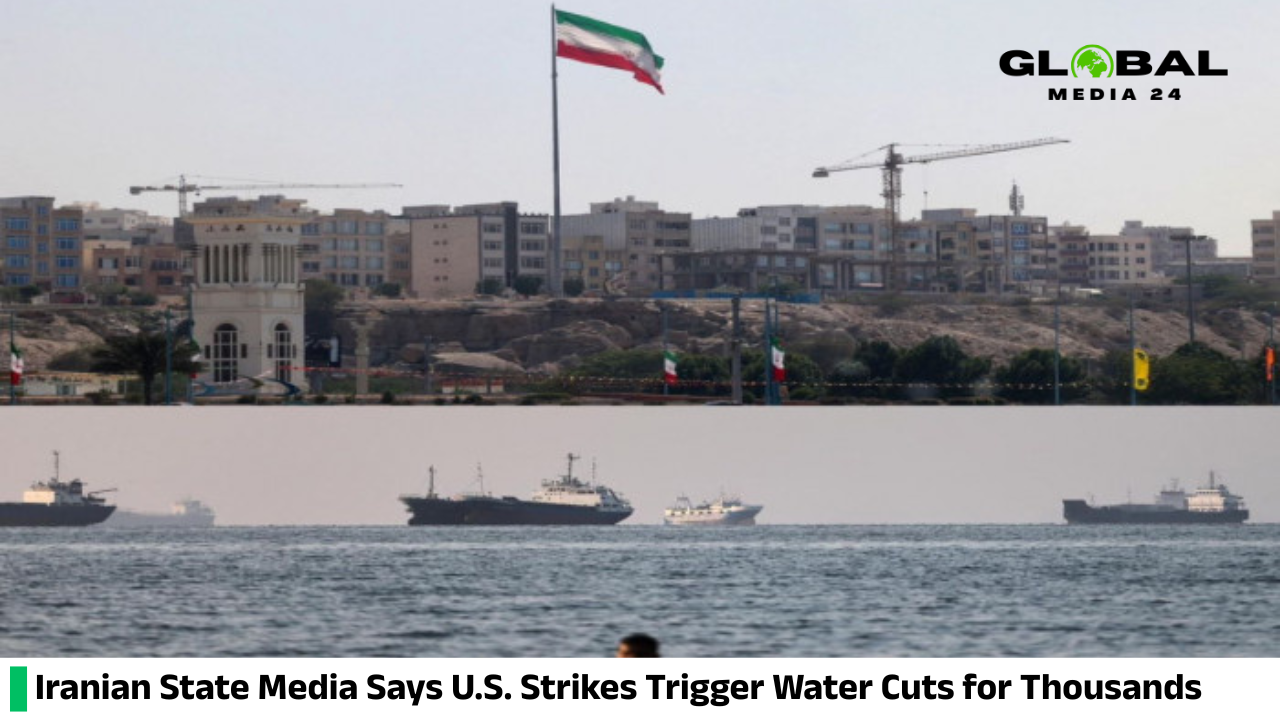
Pointing to an initiative led by France and Britain, Rutte noted that once hostilities cease, a coalition of nations willing to assist in securing the Strait of Hormuz—a vital waterway for global oil supplies—would be formed. He added that some partner nations have already begun positioning their assets in the region.
On Sunday, Trump posted on social media that, starting Monday, the U.S. would begin escorting certain neutral vessels currently stranded in the Persian Gulf out of the strait.
French President Emmanuel Macron described the decision to reopen the waterway as “very good” and something that “allied nations had been calling for from the very beginning.”
“However,” Macron told reporters in Yerevan, “we are not going to participate in any coercive operation that does not appear clear to me.” In doing so, he echoed the sentiments of several other European nations.
The U.S. move to withdraw some troops from Europe took its NATO allies by surprise and prompted them to raise questions. They… They were preparing themselves for a gradual reduction in troop levels, but they had hoped that this process would be coordinated and conducted on a smaller scale.
“I think this demonstrates that we really need to strengthen the European pillar within NATO, and that we really need to do much more,” said Kaja Kallas, a top European Union diplomat, speaking in Yerevan. She noted that U.S. troops in Europe were not merely defending Europe, but were also serving “American interests.”
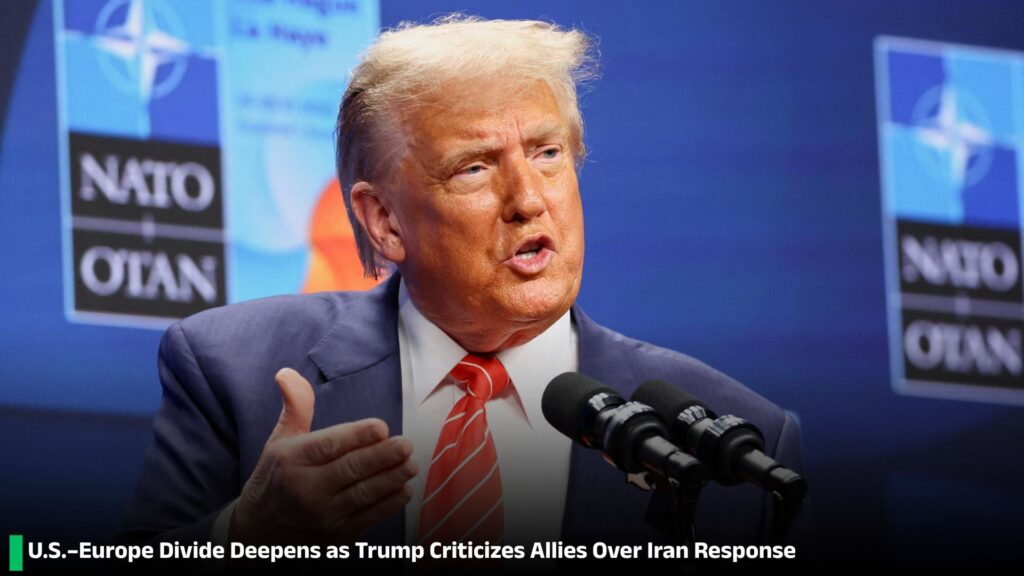
This announcement marks the latest escalation in Trump’s criticism of the military alliance—whose other members he has long accused of “free-riding” on U.S. security rather than contributing their fair share toward their own defense. More recently, he has threatened to seize Greenland from NATO partner Denmark and has criticized certain allies for failing to provide sufficient assistance regarding Iran.
Rutte stated that several European nations are fulfilling their bilateral agreements with the United States, “ensuring that when requests for operations in Iran—including all logistical support—are made, they are met.” He specifically cited Montenegro, Croatia, Romania, Portugal, Greece, Italy, the U.K., France, and Germany.
Approximately 35,000 troops—constituting nearly half of the total U.S. military presence in Europe—are stationed in Germany, which also serves as the headquarters for the U.S. command in the region. To launch operations against Iran, the United States has relied heavily on its extensive network of bases and facilities in Germany—a legacy of the Cold War era.
Any attempt to reduce troop levels in Europe is likely to face opposition within the U.S. Congress. Trump’s previous attempt to withdraw troops from Germany in 2020 was blocked by legislative opposition. Under current U.S. law, a minimum of 76,000 troops must remain permanently stationed or deployed in Europe. Estonian Prime Minister Kaja Kallas, seeking to de-escalate Europe’s recent friction with the Trump administration, stated that the alliance continues to function effectively at a practical, military level.
Speaking in Yerevan, Kallas said, “Such political rhetoric certainly warrants attention; whatever the U.S. President says must be taken seriously.” She added, “However, I do not believe that NATO is failing, or that it is merely a paper tiger.”
Transatlantic relations may find some relief later this week when U.S. Secretary of State Antony Blinken visits Italy. He is scheduled to meet with his Italian counterpart, Antonio Tajani, and potentially with Prime Minister Giorgia Meloni as well.
Meloni had initially sought to strike a delicate balance, refraining from publicly criticizing Trump. Recently, however, Trump has directly targeted her—specifically for her criticism of the war in Iran and for her attacks on Pope Leo XIV.
She has frequently played a mediating role between Europe and the U.S.; in January—when Trump threatened to impose additional tariffs on nations deploying troops to Greenland—she called for mediation, characterizing the entire matter as a misunderstanding. Turkish Vice President Cevdet Yılmaz also attended the meeting, as Ankara and Yerevan work toward normalizing their relations and reopening their shared border. He is the highest-ranking Turkish official to visit Armenia since President Abdullah Gül attended a soccer match between the two nations in 2008. That event was dubbed “football diplomacy,” an initiative aimed at fostering reconciliation between the long-standing adversaries.
Ankara closed its border with Armenia in 1993—during the First Nagorno-Karabakh War—in solidarity with its ally, Azerbaijan. Reopening it…