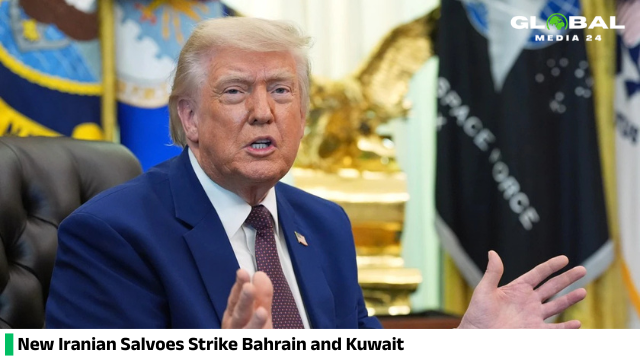
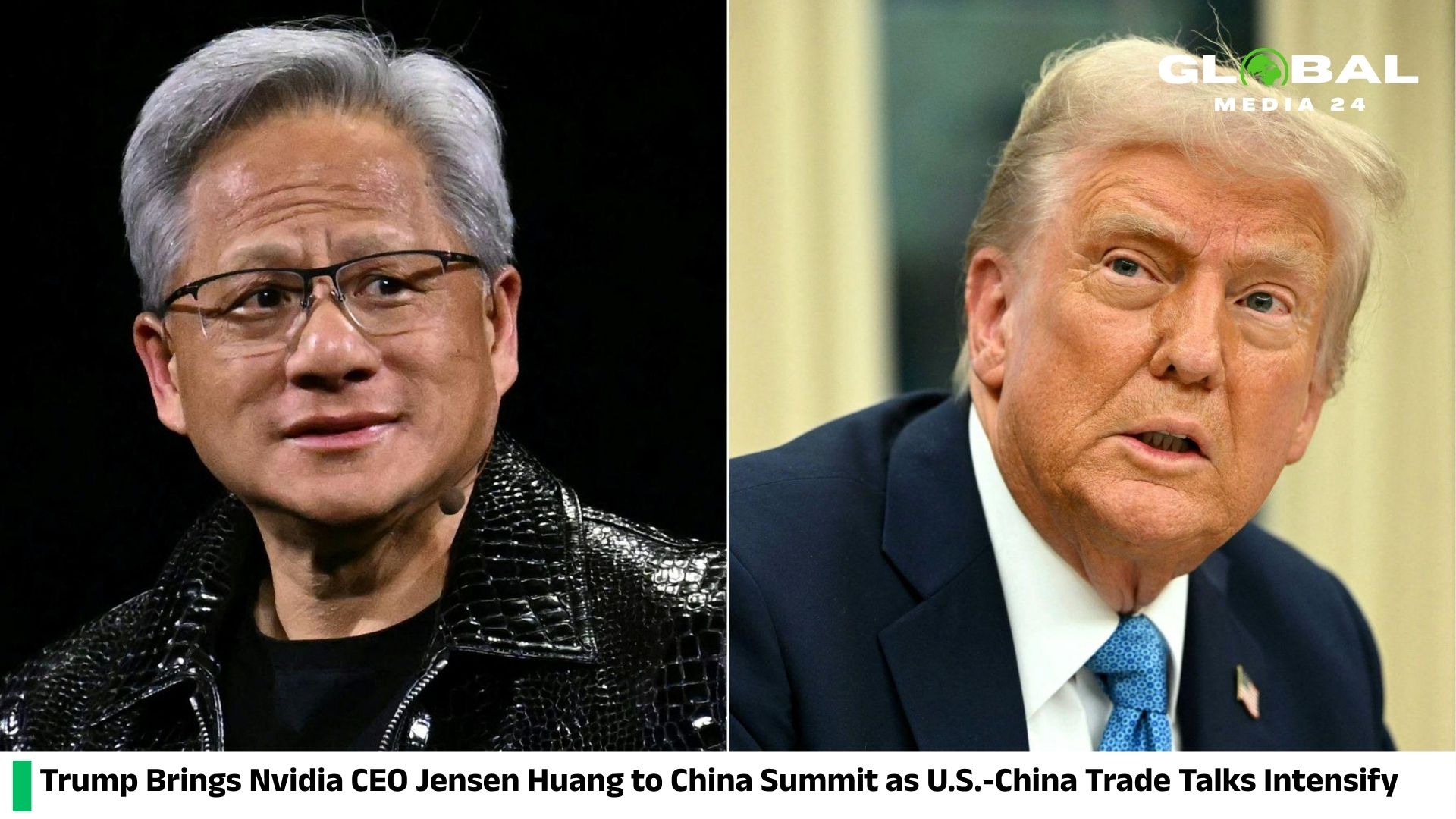
US President Donald Trump Personally Asked Nvidia CEO Jensen Huang at the Last Minute to Accompany Him on the China Visit, Source Says
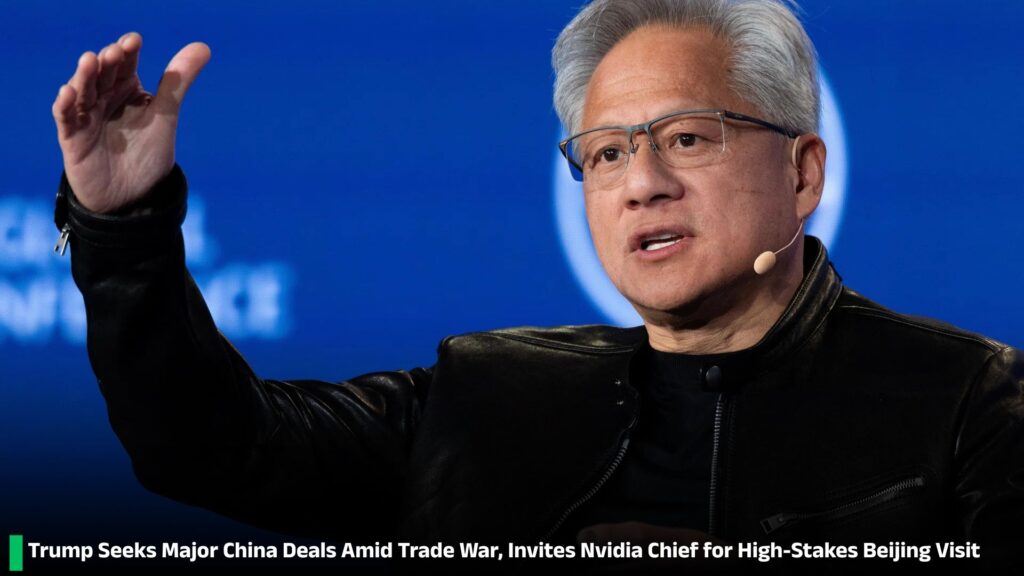
U.S. President Donald Trump brought Nvidia CEO Jensen Huang along to Alaska for the high-stakes summit scheduled to take place in Beijing with China’s Xi Jinping, while his top trade negotiator, Scott Bessent, began preparatory talks with Chinese officials in South Korea.
After seeing his public approval ratings suffer due to the conflict with Iran, Trump is embarking on his first visit to China in nearly a decade—a trip aimed at securing deals on agricultural goods and aircraft, as well as managing a delicate trade war between the world’s two largest economies.
The CEOs accompanying Trump largely represent companies seeking to resolve business-related issues with China—such as Nvidia, which U.S. officials say has faced difficulties obtaining regulatory approval to sell its powerful H200 artificial intelligence chips in the country.
“I will ask President Xi—who is a very special leader—to ‘open up’ China so that these brilliant people can work their magic,” Trump stated in a post on Truth Social, referring to the delegation that included Huang.
“That will be my first request.”
A source familiar with the matter, speaking on condition of anonymity, revealed that Trump asked Huang to join the trip at the last minute; consequently, his name did not appear on the initial list of traveling executives released by the White House earlier this week.
Huang was spotted boarding Air Force One during a refueling stop in Alaska. Trump is scheduled to arrive in Beijing late Wednesday night; his itinerary includes a meeting with Xi, a banquet, and a tour of the Temple of Heaven—a UNESCO World Heritage Site.
Beyond trade, the discussions are expected to cover a range of thorny issues—from the conflict with Iran to nuclear weapons and U.S. arms sales to Taiwan—a democratically governed island that China claims as its own territory. It is expected that Trump will encourage China to persuade Tehran to strike a deal with Washington to end the conflict, although he stated on Tuesday that he does not believe he will require China’s assistance.
Mnuchin Prepares in South Korea
While Trump was making preparations for this high-profile occasion, Treasury Secretary Mnuchin began talks on economic and trade matters with Chinese Vice Premier He Lifeng on Wednesday at Incheon Airport in South Korea, according to a source involved in the negotiations.
Both sides are keen to preserve the trade agreement reached last October, under which Trump suspended triple-digit tariffs on Chinese goods, and Xi refrained from disrupting the global supply of rare earth elements. U.S. officials have indicated that they may also agree on a forum to facilitate mutual trade and investment; meanwhile, Washington is eager to sell Boeing aircraft, U.S. agricultural products, and energy to China in an effort to reduce the trade deficit—an issue that has drawn Trump’s ire.
Conversely, Beijing seeks the lifting of U.S. restrictions on the export of chip-manufacturing equipment and advanced semiconductors.
However, Trump enters these negotiations holding a significantly weaker hand. The courts have curtailed his discretionary authority to impose tariffs on Chinese and other international exports. Trump has vowed to reinstate those tariffs by invoking other legal authorities.
The conflict with Iran has exacerbated inflationary pressures within the country, and the risk has risen sharply that Trump’s Republican Party could lose control of one or both legislative chambers in the November midterm elections.
Although China’s economy has faltered, Xi is not facing comparable economic or political pressures. Liu Qian, founder and CEO of the Beijing-based geopolitical and business advisory firm Wusawa Advisory, stated, “Given last year’s trade war, simply maintaining the status quo—rather than escalating tensions—is already good news.”
“Nevertheless, the Trump administration needs this meeting more than China does, as it needs to demonstrate to American voters that deals have been signed and money has been made… in time for the midterm elections.”
Although Trump has praised his personal rapport and mutual respect with Xi, the Chinese public views this visit with a mixture of hope and skepticism.
“The U.S. economy is heading downward… it is in decline,” Han Huiming, a 23-year-old insurance professional, told Reuters outside a Beijing subway station on Wednesday while on his way to work. “Therefore, I believe he is coming here because he wants things to move in a better direction.”
Lu Huilian, a 44-year-old working in the oil trade, remarked, “I don’t know whether he is truly sincere about this or not. But as a Chinese citizen—and someone working in business—I hope that some positive policies might emerge from this.”