
Israel and Lebanon signal readiness for a ceasefire, contingent on Hezbollah ending attacks. Explore the latest developments, regional impact, and diplomatic efforts shaping stability in the Middle East.
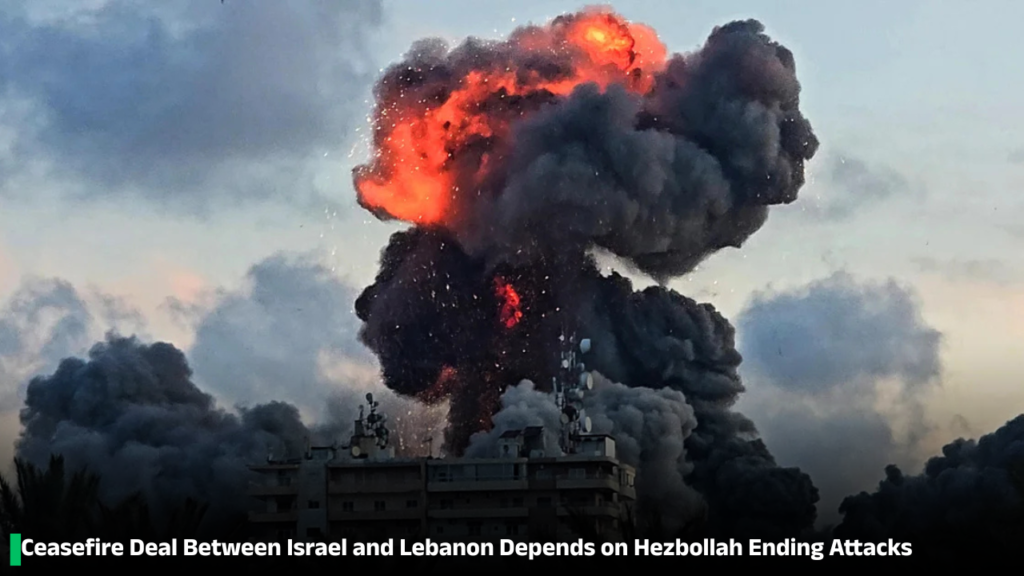
The long-running tensions between Israel and Lebanon may be moving toward a new chapter after both countries agreed to implement a ceasefire, provided that Hezbollah halts its attacks and withdraws its operatives from key areas in southern Lebanon. The agreement, facilitated through U.S.-backed diplomatic efforts, has raised hopes for reduced violence and greater regional stability in the Middle East.
This latest development comes after months of military confrontations, cross-border attacks, and growing concerns that the conflict could expand into a wider regional war. While the ceasefire agreement represents an important diplomatic breakthrough, its success largely depends on whether Hezbollah complies with the conditions outlined by both governments.
What Is the Israel-Lebanon Ceasefire Agreement?
According to the joint understanding announced by officials, Israel and Lebanon have agreed to implement a ceasefire that aims to reduce military hostilities along their shared border. However, the agreement is conditional upon Hezbollah ending all attacks against Israel and withdrawing its fighters from areas south of the Litani River.
The deal also includes provisions for the Lebanese Armed Forces to take greater control of security zones in southern Lebanon. These areas are expected to be free from non-state armed groups, helping create a buffer designed to prevent future escalations.
Diplomatic officials describe the arrangement as a step toward a broader peace and security framework that could eventually improve relations between the two neighboring countries.
Why the Ceasefire Matters
The conflict between Israel and Hezbollah has been one of the most persistent security challenges in the Middle East. Repeated exchanges of rocket fire, drone attacks, and military operations have resulted in significant damage, civilian casualties, and economic disruption on both sides of the border.
A successful ceasefire could provide several important benefits:
- Reduced military tensions in northern Israel and southern Lebanon.
- Improved security for civilians living near border regions.
- Greater opportunities for diplomatic negotiations.
- Increased regional stability amid wider Middle East conflicts.
- Potential support for broader peace initiatives involving other regional actors.
International observers believe that reducing tensions between Israel and Hezbollah could also positively influence ongoing diplomatic discussions involving Iran, the United States, and other regional stakeholders.
The Role of Hezbollah in the Agreement
Hezbollah remains the central factor determining whether the ceasefire succeeds or fails.
Although Israel and Lebanon have formally agreed to implement the arrangement, Hezbollah was not directly involved in the negotiations. The agreement specifically requires Hezbollah to stop attacks and remove its military presence from designated areas in southern Lebanon.
Analysts note that Hezbollah’s response will be critical. If the group accepts the conditions and reduces its military activities, the ceasefire could hold for an extended period. However, any continued attacks or violations could quickly undermine the agreement.
This uncertainty explains why many experts remain cautious despite the positive diplomatic announcements.
U.S. Diplomatic Efforts Behind the Deal
The United States played a significant role in facilitating negotiations between Israel and Lebanon.
Multiple rounds of discussions were held with the objective of reducing violence and preventing further escalation. U.S. officials worked closely with both governments to establish conditions that could lead to a more sustainable ceasefire.
Washington has emphasized that long-term peace will require continued dialogue, stronger security cooperation, and respect for the sovereignty of both nations. Future negotiations are expected to address unresolved issues that have contributed to decades of tensions between Israel and Lebanon.
Challenges Facing the Ceasefire
While the agreement represents a positive step, several challenges remain.
1. Trust Deficit
Years of conflict have created deep mistrust between all parties involved. Previous ceasefire agreements have often collapsed due to accusations of violations and renewed military actions.
2. Hezbollah Compliance
The agreement depends heavily on Hezbollah’s willingness to halt attacks and withdraw forces. Any refusal or partial compliance could jeopardize implementation.
3. Regional Influences
The broader geopolitical situation in the Middle East remains highly complex. Developments involving Iran, Syria, and other regional actors could influence the future of the ceasefire.
4. Security Enforcement
Ensuring that designated security zones remain free from armed groups will require effective coordination between Lebanese security forces and international partners.
Impact on Regional Security
If successfully implemented, the ceasefire could mark one of the most significant diplomatic achievements in the region this year.
A reduction in hostilities between Israel and Lebanon would not only improve local security conditions but could also encourage additional diplomatic initiatives aimed at addressing wider Middle East conflicts.
Financial markets, international organizations, and humanitarian agencies are closely monitoring the situation, as stability in the region has important implications for trade routes, energy markets, and global security.
Many experts believe that even a temporary reduction in violence could create valuable opportunities for future peace negotiations.
What Happens Next?
The coming days will be crucial.
Officials from Israel, Lebanon, and international mediators are expected to continue monitoring developments on the ground. Further diplomatic meetings are planned to discuss implementation mechanisms and long-term security arrangements.
Success will depend on all parties respecting the terms of the agreement and avoiding actions that could reignite tensions.
While significant obstacles remain, the ceasefire offers a rare opportunity to reduce conflict and move toward greater stability in a region that has experienced years of uncertainty.
Conclusion
The agreement between Israel and Lebanon to implement a ceasefire, contingent upon Hezbollah ending attacks and withdrawing from key areas, represents an important diplomatic development in the Middle East. Although challenges remain and the situation continues to evolve, the deal has generated cautious optimism among international observers.
If all parties uphold their commitments, the ceasefire could help reduce violence, strengthen regional security, and open the door to broader peace efforts. For now, the world will be watching closely to see whether this latest agreement becomes a lasting step toward stability or another temporary pause in a long-running conflict.