Over the last 30 years, the story of Bangladeshi politics has largely been the story of two women: Zia and Sheikh Hasina, who has led the country as prime minister five times.

New Delhi:
Former Bangladeshi Prime Minister Khaleda Zia, who was seen as a leading contender in next year’s general election, passed away on Tuesday morning after a prolonged illness. According to national newspapers, Zia, 80, was being treated for infections in her heart and lungs and also suffered from pneumonia.
Begum Khaleda Zia was the first woman to become Prime Minister of Bangladesh; she served two full terms a decade apart – from 1991 to 1996 and 2001 to 2006 – and was the chairperson of the Bangladesh Nationalist Party. She is also credited with changing the country’s presidential system to a parliamentary system through a referendum in 1991 – thus vesting administrative power in the prime minister.
Zia was one of two women who dominated Bangladeshi politics for the past three decades.
The other is Awami League chief Sheikh Hasina, who served as prime minister five times and whose government was overthrown amidst violent protests over the jobs quota system in August 2024.
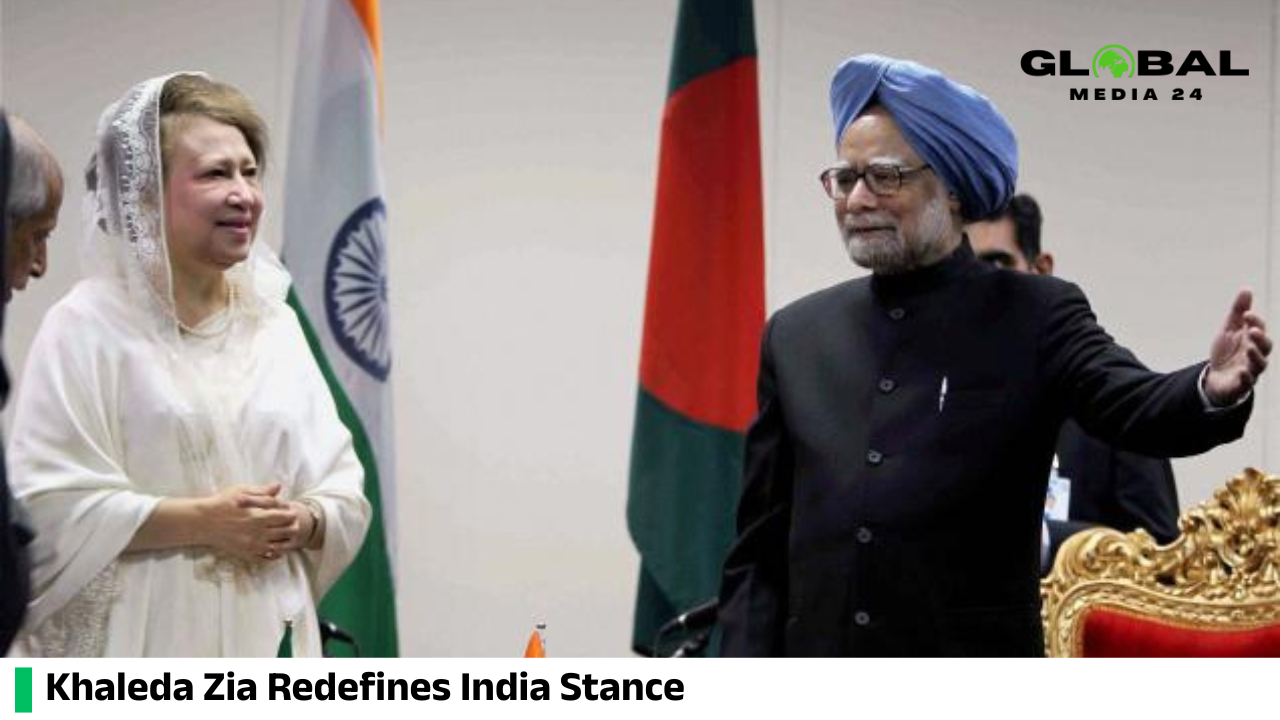
Zia and Hasina – who is now living in exile in India and faces the death penalty if she returns home – differed in their foreign policy approaches, particularly concerning India.
Although the latter is largely considered to have a more friendly face, Zia maintained an overall cautious, even hostile, stance in her early years, exemplified by her prioritization of Bangladeshi sovereignty.
One example of this is her consistent opposition to land transit and connectivity links with India, both as Prime Minister and Leader of the Opposition, a position she held twice between 1996 and 2014.
As Prime Minister, Khaleda Zia refused India transit rights through Bangladeshi territory to its northeastern states, arguing that it violated her country’s security and sovereignty. She also stated that allowing Indian trucks toll-free access to Bangladeshi roads amounted to “slavery.”
She also opposed the renewal of the 1972 India-Bangladesh Friendship Treaty, which many considered strategically important from a military perspective, again stating that it “chained” her country.
Positioning her BNP as the “protector of Bangladesh’s interests,” Zia was seen as framing policies as a “defense against Indian dominance”; for example, at a rally in Dhaka in 2018, when Hasina was Prime Minister and she was the Leader of the Opposition, Zia spoke out against Hasina for exempting India from paying transit duties, stating, “We will oppose any move to turn Bangladesh into a state of India.”
By linking transit permits to unresolved security and water concerns, their stance was seen as using demands for regional integration as leverage to diminish Indian influence.
India’s Farakka Barrage, operational since 1975, which diverts Ganges water into the Hooghly River via a feeder canal, also came under criticism. This barrage not only reduces siltation and facilitates navigation in and around Kolkata Port, but it also provides fresh water to the city.
However, Zia argued that the structure deprived Bangladesh of Ganges water; in fact, in 2007, she accused India of deliberately opening the floodgates to worsen flooding in her country.
The confrontational approach extended beyond transit and infrastructure.
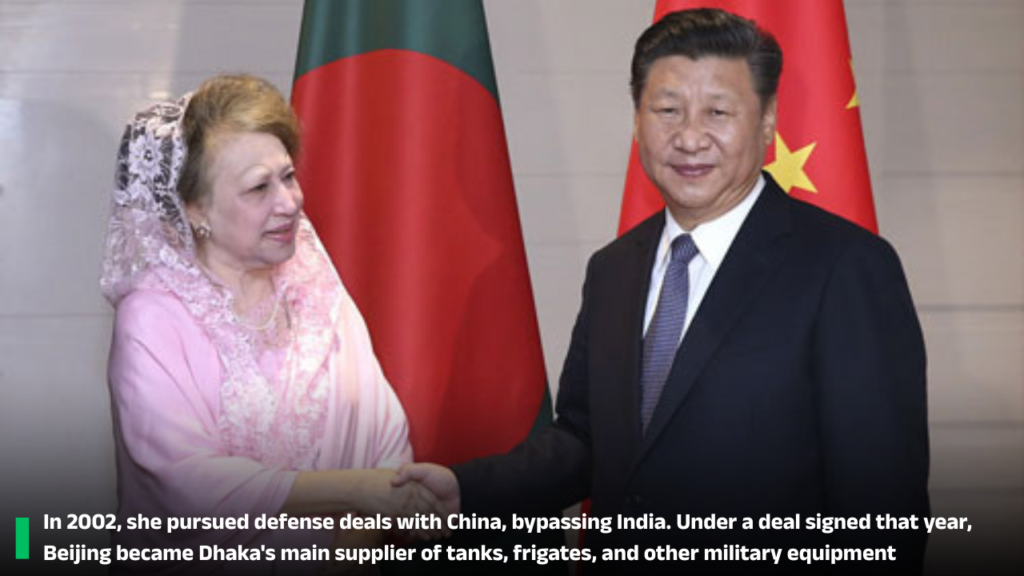
Again, the narrative was about “preventing Indian interference.” India’s response was directly shaped by the perception of a strategic threat, particularly Zia’s overtures to China for arms, and Delhi ratcheted up diplomatic pressure, including a counter-offensive that accused her BNP government of harboring separatists and terrorists operating in India’s northeastern states.
Zia had previously publicly referred to separatist groups like ULFA and NSCN as “freedom fighters” and compared them to Bangladesh’s own struggle for independence. But her anti-India stance was not without a pragmatic dimension.
The 1992 lease of the Teen Bigha Corridor, which granted Dhaka permanent access to Dahagram-Angarpota – an enclave located 200 meters inside Indian territory – is one example.
Dahagram-Angarpota remains the only such corridor between the two countries. This pragmatism was also evident in 2006, when she visited India as prime minister and signed a revised trade agreement and a new anti-drug smuggling agreement with India.