Trump says he convinced Netanyahu to halt a planned Beirut strike after a heated call, highlighting growing US-Israel tensions amid Lebanon conflict.
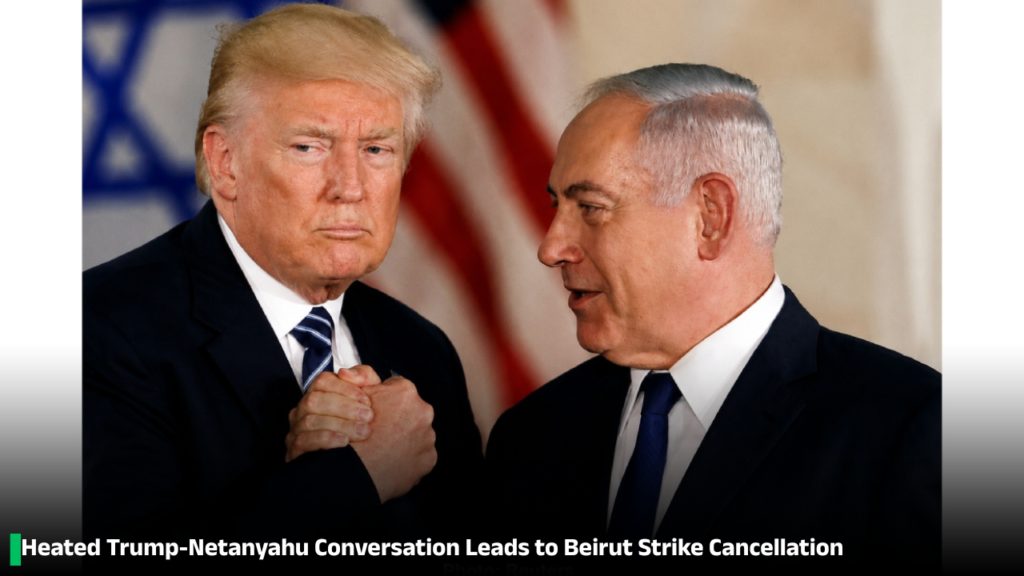
Trump Claims Credit for Preventing Planned Israeli Strike on Beirut
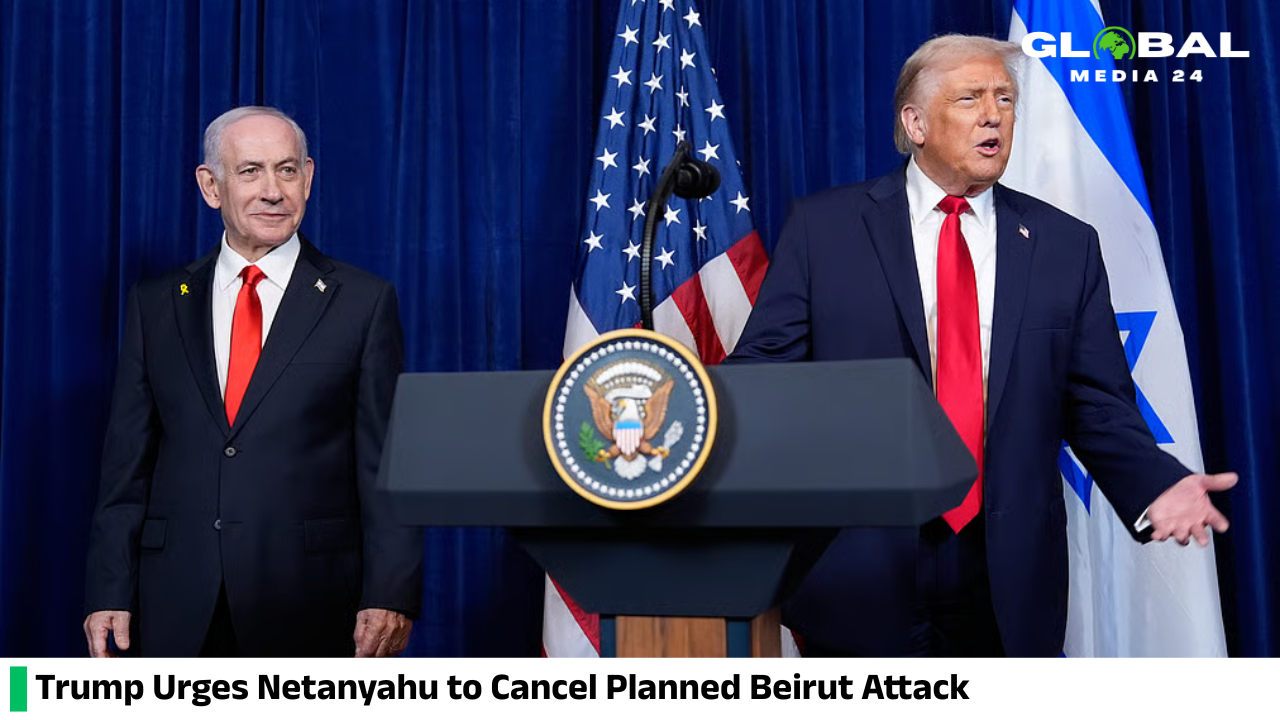
A fresh diplomatic dispute has emerged between Washington and Jerusalem after US President Donald Trump publicly claimed that he persuaded Israeli Prime Minister Benjamin Netanyahu to cancel a planned military operation targeting Beirut.
The development comes at a particularly sensitive moment for the Middle East, where tensions involving Israel, Lebanon, Hezbollah, Iran, and the United States continue to threaten regional stability despite recent ceasefire efforts.
According to statements posted by Trump on social media, the US president directly intervened after learning about Israeli plans for a significant military action in the Lebanese capital. Trump said he personally urged Netanyahu to abandon the operation and claimed the Israeli leader agreed to reverse course.
The announcement immediately drew international attention, raising questions about the state of US-Israel relations, the future of the Lebanon conflict, and the extent of Washington’s influence over Israeli military decision-making.
Trump Says Netanyahu Reversed Course
In a post published Monday evening, Trump stated that he contacted Netanyahu and requested that Israeli forces refrain from carrying out what he described as a major raid on Beirut.
According to Trump, the Israeli prime minister responded by turning military forces around before the operation could proceed.
The US president publicly thanked Netanyahu afterward, portraying the decision as an example of successful diplomatic intervention during a period of growing regional instability.
Israeli officials have not publicly provided detailed information regarding the reported operation or the exact circumstances surrounding its cancellation. However, the issue quickly became a major talking point across international media and diplomatic circles.
Reports Suggest Heated Exchange Between the Two Leaders
While Trump publicly described the conversation as successful, reports from US media indicate that the discussion may have been considerably more confrontational behind closed doors.
According to Axios, citing unnamed American officials familiar with the call, tensions escalated during the conversation as Trump expressed frustration over Israel’s military actions in Lebanon.
Sources quoted by the outlet claimed that the US president strongly criticized Netanyahu and questioned the wisdom of expanding military operations at a time when regional tensions remain dangerously high.
The report suggested that Trump believed further escalation could undermine diplomatic efforts underway across the region and increase international criticism directed at both Israel and the United States.
Although neither government has officially confirmed details of the reported exchange, the allegations highlight growing pressure on leaders attempting to manage multiple crises simultaneously.
Escalating Conflict Along the Israel-Lebanon Front
The dispute comes against the backdrop of ongoing hostilities involving Hezbollah and Israeli forces.
Netanyahu had previously warned that Israel would continue targeting what it considers terrorist infrastructure in Lebanon if Hezbollah attacks persisted.
Israel has repeatedly argued that Hezbollah’s military activities near its northern border pose a significant security threat and require a firm military response.
Despite recent ceasefire efforts, military operations have continued across parts of Lebanon. Reports indicate that Israeli forces recently conducted some of their deepest operations inside Lebanese territory in decades, underscoring the seriousness of the confrontation.
The situation has fueled concerns among regional governments and international observers that the conflict could widen into a broader Middle Eastern crisis.
Trump Also Claims Contact With Hezbollah Representatives
Adding another unexpected element to the story, Trump stated that he also communicated with representatives linked to Hezbollah leadership.
According to the US president, discussions with those representatives resulted in an understanding that attacks against Israeli forces would cease.
Trump further claimed that Israel likewise agreed to halt attacks, expressing hope that the arrangement could become permanent.
No independent confirmation of those conversations has been provided, and Hezbollah has not publicly verified Trump’s account.
Nevertheless, the statement reflects ongoing efforts by multiple actors to prevent further escalation at a time when military tensions remain high.
Iran’s Role Adds Another Layer of Complexity
The controversy surrounding the Beirut operation also unfolds amid broader tensions involving Iran and the United States.
Recent reports suggested that Tehran was considering withdrawing from ongoing discussions with Washington following Israeli military actions in Lebanon.
Iran has long supported Hezbollah politically and militarily, making developments in Lebanon closely connected to wider regional dynamics.
The possibility of stalled negotiations between Washington and Tehran has increased concerns among diplomats who fear that simultaneous crises could further destabilize the Middle East.
Recent military exchanges involving US and Iranian forces have already tested the durability of a fragile ceasefire arrangement reached earlier this year.
Why This Matters
The significance of the Trump-Netanyahu dispute extends beyond a single military operation.
For decades, the relationship between the United States and Israel has been one of the most important strategic partnerships in global politics. Public disagreements between leaders of the two countries often signal deeper policy differences regarding regional security, diplomacy, and military strategy.
If reports about the heated conversation are accurate, they may indicate increasing frustration within Washington regarding the pace and scope of Israeli military actions.
The incident also demonstrates how rapidly local conflicts involving Israel and Hezbollah can evolve into broader international diplomatic challenges involving the United States, Iran, and other regional powers.
Investors, security analysts, and foreign governments are closely monitoring developments because further escalation could affect regional stability, energy markets, and international security interests.
What’s Next?
Several key questions remain unanswered.
It is still unclear whether the cancellation of the reported Beirut operation represents a temporary pause or a broader shift in Israeli military strategy.
Observers will also be watching for signs of renewed diplomatic engagement between Washington and Tehran, particularly after reports suggesting Iranian dissatisfaction with recent developments.
Meanwhile, Hezbollah’s future actions along the Israel-Lebanon border will likely play a major role in determining whether tensions decrease or intensify in the coming weeks.
Any significant attack from either side could quickly unravel existing ceasefire arrangements and reignite fears of a wider regional conflict.
Conclusion
The reported intervention by Donald Trump in preventing a planned Israeli strike on Beirut has added a new dimension to an already volatile Middle Eastern landscape. While questions remain about the exact details of the conversation between Trump and Netanyahu, the episode underscores the delicate balance between military action and diplomacy in a region where even a single decision can have far-reaching consequences.
As Israel, Hezbollah, Iran, and the United States navigate an increasingly complex security environment, international attention will remain focused on whether diplomacy can prevent another major escalation—or whether current tensions are merely a pause before the next confrontation