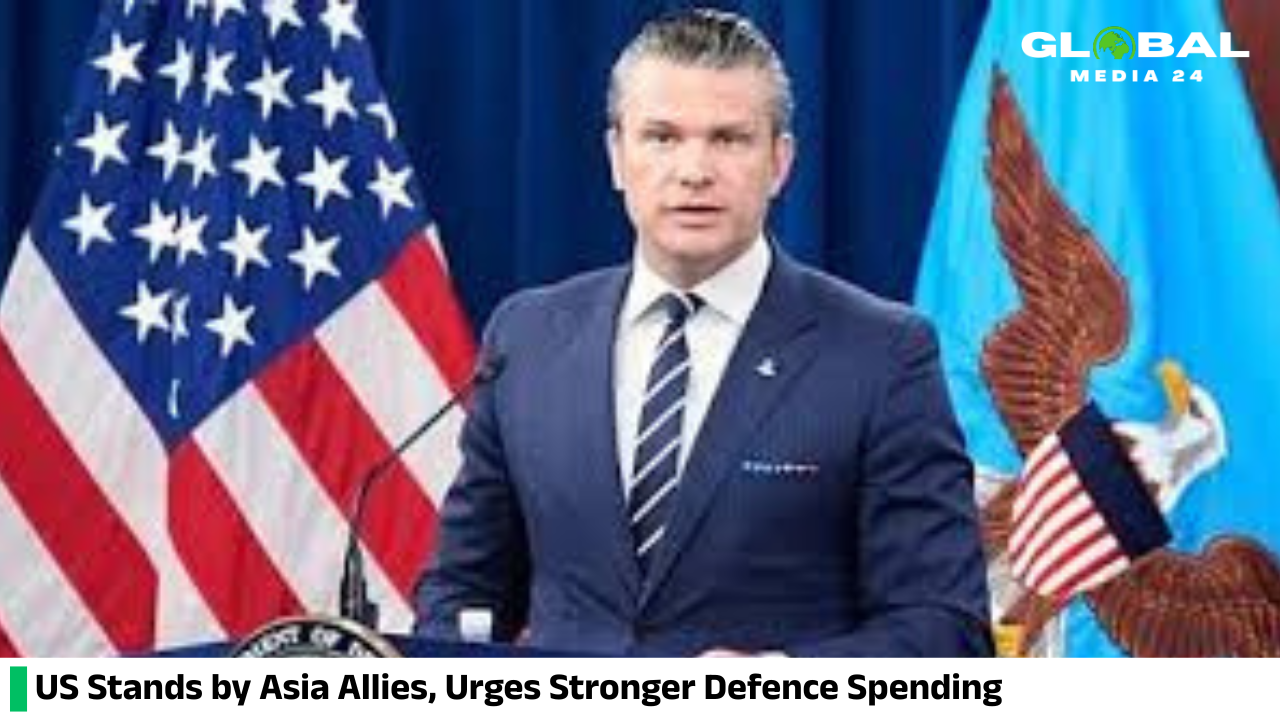
US Defense Secretary Pete Hegseth reassured Asia-Pacific allies that the United States remains fully committed to regional security despite global challenges, including tensions with Iran. Speaking at the Shangri-La Dialogue in Singapore, Hegseth emphasized stronger defense cooperation, military readiness, and Washington’s strategy to counter growing Chinese influence while maintaining stability across the Indo-Pacific region.
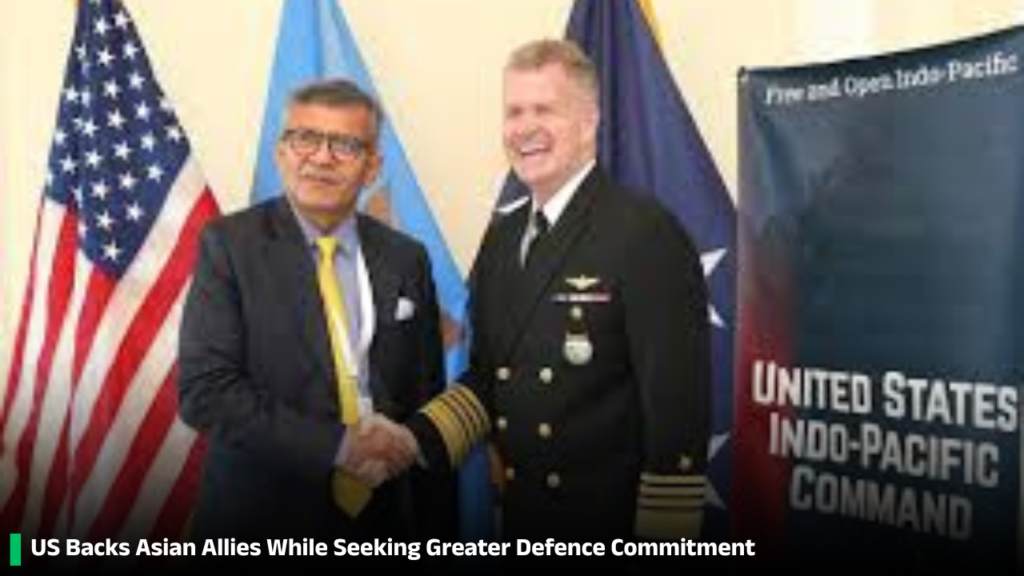
The United States remains firmly committed to the Asia-Pacific region despite ongoing global security challenges, including tensions involving Iran, according to US Defence Secretary Pete Hegseth. Speaking at the prestigious Shangri-La Dialogue security summit in Singapore, Hegseth sought to reassure regional allies that Washington’s focus on other international issues would not come at the expense of its commitments in Asia.
His remarks came amid growing concerns among several Asian nations regarding America’s ability to maintain strong engagement in the Indo-Pacific while also managing conflicts and strategic responsibilities in other parts of the world. Hegseth made it clear that the United States is fully capable of handling multiple global responsibilities simultaneously without weakening its presence in Asia.
America’s Commitment to Asia Remains Strong
Addressing defence leaders, policymakers, and military officials from across the region, Hegseth emphasized that the United States has no intention of reducing its strategic role in Asia. He rejected suggestions that America might be distracted by developments elsewhere, including the Middle East.
According to Hegseth, maintaining stability and security in the Asia-Pacific region remains a key component of US national defence strategy. He highlighted Washington’s continued cooperation with allies and partners throughout the region, stressing that America remains committed to preserving peace, security, and economic prosperity.
The defence secretary stated that some observers mistakenly believe global obligations automatically reduce America’s focus on Asia. However, he argued that the US military possesses the resources and capabilities required to meet multiple challenges at the same time.
Reassurance for Regional Allies
Hegseth’s comments were partly aimed at easing concerns among America’s Asian allies. During the summit, Japanese officials raised questions about Washington’s long-term commitment to regional security.
Many countries in the Indo-Pacific have closely watched recent developments involving US military priorities. Questions emerged after reports indicated that a major weapons package intended for Taiwan had been temporarily suspended as part of broader efforts to manage military resources.
In response, Hegseth assured allies that the United States remains fully committed to fulfilling defence agreements and maintaining strong security partnerships throughout the region. He emphasized that temporary adjustments to military planning should not be interpreted as a reduction in America’s strategic commitments.
Taiwan Arms Concerns Addressed
One of the major topics discussed at the summit involved US defence support for Taiwan. Questions were raised about whether Washington could continue meeting military commitments to partners while addressing other international security challenges.
Hegseth dismissed concerns that the suspension of a multi-billion-dollar Taiwan weapons package reflected broader limitations in American military readiness. He stated that the United States remains in a strong position regarding weapons stockpiles and defence production capabilities.
According to the defence secretary, America’s defence industry is capable of increasing production when necessary, ensuring that security commitments to allies remain intact even during periods of heightened global tension.
Focus on Military Strength Over Diplomacy Alone
A central theme of Hegseth’s speech was the importance of military power in maintaining international stability. He argued that diplomatic principles and international rules are effective only when supported by credible defence capabilities.
The US defence secretary suggested that strong military deterrence remains essential for preventing conflicts and preserving peace. He emphasized that nations must be prepared to invest in defence capabilities rather than relying solely on diplomatic forums and discussions.
His remarks reflected a broader shift toward strengthening military preparedness and enhancing cooperation among allied nations facing evolving security challenges.
Growing Concerns Over China’s Military Expansion
China’s rapid military modernization remained one of the most significant issues discussed during the conference. While Hegseth adopted a measured tone regarding Beijing, he acknowledged growing concerns over China’s expanding military capabilities.
He noted that many countries in the region are closely monitoring China’s military build-up and strategic ambitions. However, he emphasized that the United States is not seeking confrontation or escalation.
Instead, Washington’s objective is to maintain a stable balance of power throughout the Indo-Pacific region. Hegseth stated that no single nation should be allowed to dominate the region or impose its influence over neighboring countries.
The United States, he said, seeks a security environment where all countries can operate freely and peacefully without coercion.
Call for Higher Defence Spending Among Allies
Another major point of discussion was defence spending among US allies. Hegseth urged partner nations across Asia to increase their military budgets and invest more heavily in national security.
He suggested that countries should aim to spend approximately 3.5% of their gross domestic product on defence. According to him, stronger military capabilities among allies would enhance regional stability and reduce security risks.
The defence secretary praised countries that have recently increased military spending and expanded defence cooperation with Washington. Nations such as Japan, South Korea, Australia, and the Philippines were highlighted as examples of partners strengthening their security commitments.
At the same time, Hegseth criticized countries that rely heavily on American protection without making comparable investments in their own defence capabilities.
Changing Dynamics in US-China Relations
Hegseth’s speech came only weeks after positive discussions between US President Donald Trump and Chinese President Xi Jinping. The timing of the summit added significance to his comments regarding regional security and great-power competition.
Compared with previous statements made by US officials, Hegseth adopted a more balanced and cautious approach toward China. Rather than focusing on direct confrontation, he emphasized the importance of maintaining stability while protecting American interests and supporting allies.
Observers noted that his remarks reflected a desire to avoid unnecessary tensions while continuing to address strategic concerns associated with China’s growing influence.
China Maintains Lower Profile at Summit
The Shangri-La Dialogue has long served as one of Asia’s most important defence and security forums. Traditionally, both the United States and China have used the event to communicate their strategic positions and engage with regional partners.
However, for the second consecutive year, China chose not to send its defence minister to the conference. Instead, Beijing was represented by a lower-level delegation.
Analysts remain divided on the significance of this decision. Some view it as a sign of China’s reduced enthusiasm for the forum, while others believe Beijing prefers to avoid highly publicized confrontations with Washington in a multilateral setting.
Conclusion
Pete Hegseth’s remarks at the Shangri-La Dialogue were designed to deliver a clear message: the United States remains committed to the Asia-Pacific region despite growing global challenges. By reassuring allies, addressing concerns about defence commitments, and emphasizing military readiness, Washington aims to reinforce confidence in its long-term role as a security partner in Asia.
As geopolitical competition continues to shape the Indo-Pacific landscape, the balance between deterrence, diplomacy, and regional cooperation will remain a defining factor in the future of Asian security.