Russia has warned that it may carry out another series of “systematic strikes” on Kyiv, just days after launching one of the biggest attacks on the Ukrainian capital since the war began.
In a statement, Russia’s Foreign Ministry said that new strikes would target drone manufacturing sites within the city, as well as “decision-making centers and command posts.”
Moscow has urged foreign nationals and diplomats to leave Kyiv “as soon as possible” and has warned civilians to stay away from administrative and military buildings.
Ukraine stated that Russia’s threats amount to “nothing less than shameless blackmail” and appealed to its partners to increase pressure on Moscow.
The statement further added that by issuing warnings to foreign nationals, Moscow is “effectively admitting that the objective of its shelling—among other things—is to intimidate the foreign diplomatic corps.”
It noted that since the start of the war, Russian attacks on Kyiv “have not ceased for even a single week,” and the overall security threat posed by Moscow “remains consistent with that of previous years or months.”
Ukrainian President Volodymyr Zelenskyy stated that four people were killed and approximately 100 others were injured in Kyiv and other regions during large-scale Russian attacks on Saturday night.
Moscow asserted that this strike was carried out in retaliation for a deliberate Ukrainian attack on a student dormitory in the city of Starobilsk on Friday, and issued threats of further attacks. Russian officials claimed that 21 people were killed in that incident.
The Ukrainian military stated that its forces had struck a specific Russian military drone unit in Russian-occupied eastern Ukraine, emphasizing that civilians were not targeted.
Russia has launched numerous dangerous missile and drone attacks on Kyiv since a brief ceasefire—coinciding with Moscow’s annual Victory Day parade in May—came to an end.
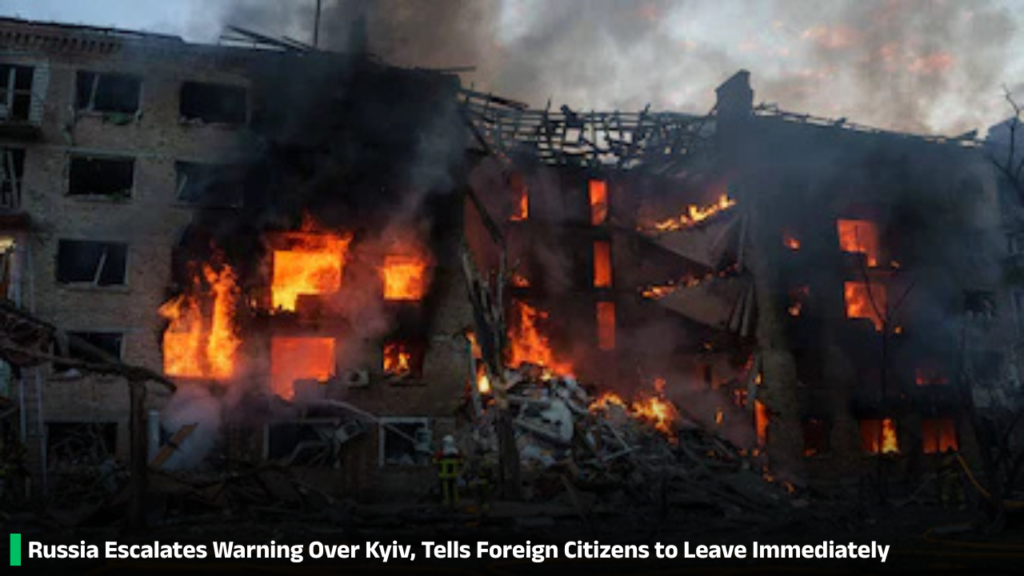
Shortly thereafter, Russian attacks on Kyiv killed 24 people, including three children, in a residential apartment block.
A few days later, Russian officials reported that three people were killed in a major Ukrainian drone attack in the Moscow region; Zelenskyy subsequently declared that these strikes were a “completely justified” response to Russia’s deadly attacks.
Then, on Saturday night, Kyiv endured one of the most massive aerial assaults of the war.
Videos posted on social media showed the night sky illuminated by explosions throughout the night, and many Kyiv residents reported that the entire city shook from the blasts as numerous civilian targets came under attack.
Russia employed dozens of ballistic and cruise missiles, along with hundreds of drones, to strike the capital; it also fired a hypersonic, nuclear-capable Oniks missile at the Bila Tserkva area, located 90 kilometers south of Kyiv.
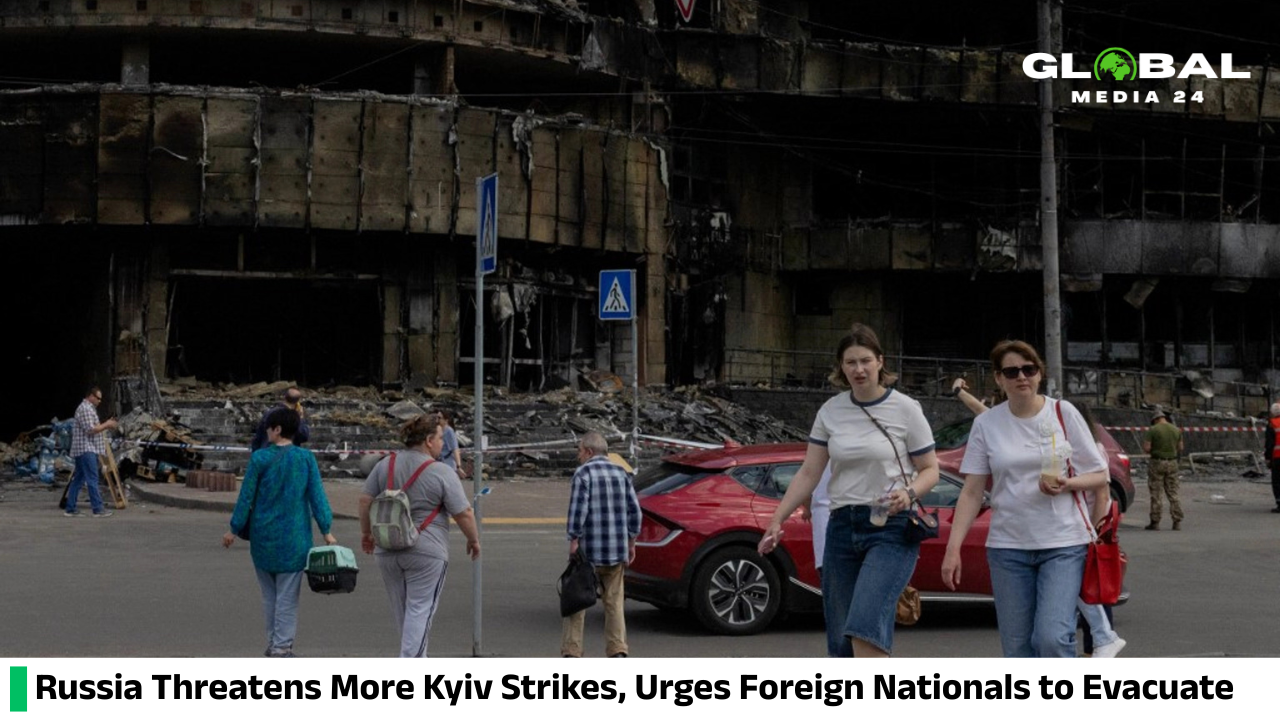
In Kyiv’s historic district, non-military targets—such as the Chernobyl Museum and the National Art Museum of Ukraine—were damaged or destroyed. In the Lukyanivka area, a shopping center, a market, and several residential buildings were also devastated.
Russia’s Foreign Ministry reported that on Monday evening, Russian Foreign Minister Sergey Lavrov spoke by phone with U.S. Secretary of State Marco Rubio, urging him to evacuate American diplomats from Kyiv.
Following that phone call, Rubio stated that major attacks by either Ukraine or Russia “serve as a reminder of why this is a terrible war” and that “it must end.”
He further added: “The U.S. stands ready to do whatever it can to help bring this war to an end, and hopes that, at some point, an opportunity to do so will arise.”
Many observers view Russia’s warning for foreign nationals to leave Kyiv as a form of psychological pressure.
Russia is already conducting large-scale attacks on the capital—a campaign it has maintained since launching its full-scale invasion of Ukraine in 2022.
However, four and a half years of war have taught Ukraine how to build and enhance an advanced, multi-layered air defense system.
It is now capable of intercepting a significant number of drones and missiles—though Russia frequently launches them in such massive volleys that they overwhelm the air defenses, allowing many to slip through.