
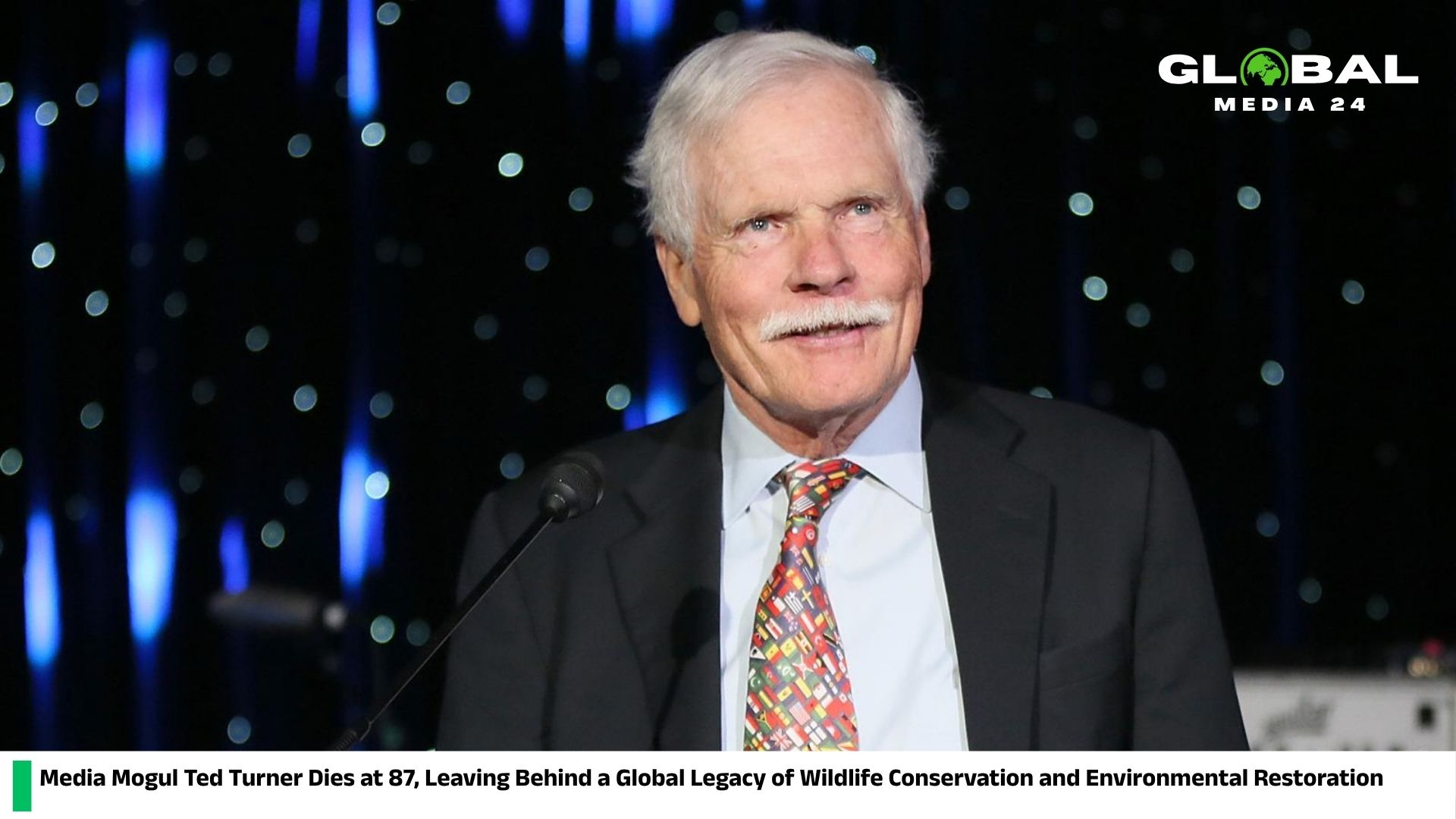
Media Mogul Ted Turner Dies at 87, Leaving Behind a Powerful Legacy of Global Conservation and Environmental Advocacy
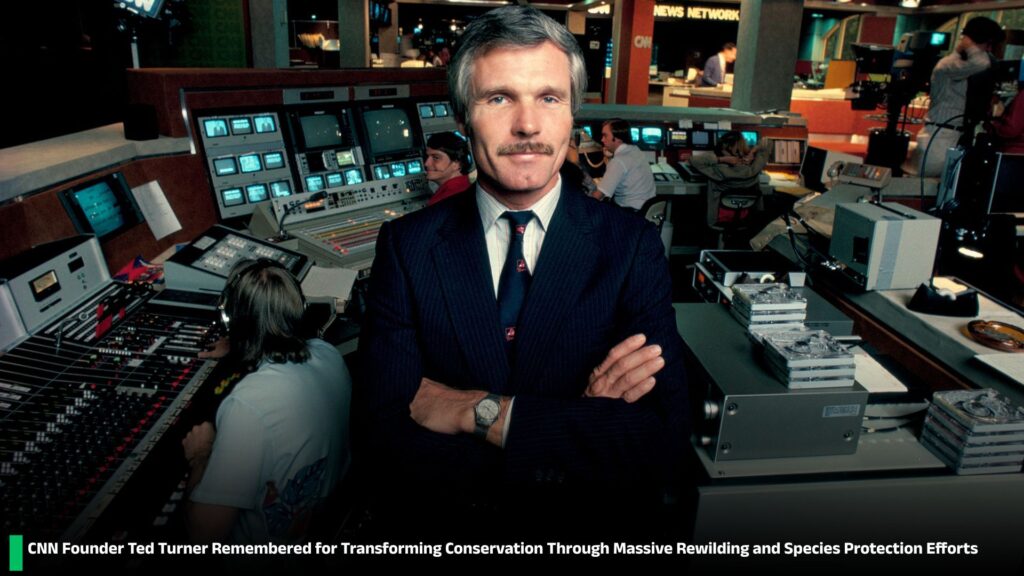
Albuquerque: Ted Turner had a deep love for the land—and for a great deal of it, too: as one of America’s largest private landowners, he embarked on a mission to conserve approximately 3,125 square miles (8,094 square kilometers) of ranchland across multiple states, aiming to leave it in better condition for future generations.
Describing conservation as essential for human survival, Turner viewed habitat restoration, land management, and efforts to protect endangered species as vital strategies for addressing climate change, biodiversity loss, and resource depletion.
“I want to inspire people to care about the environment,” Turner told a travel publication in an interview in 2016. “When we connect with nature, we heal ourselves. When we protect nature, we heal the planet.”
The passing of the media mogul on Wednesday leaves behind a legacy of conservation work spanning decades—from the moment Turner purchased his first bison half a century ago, to large-scale restoration projects and ongoing species reintroduction efforts that continue to this day.
His ranches in New Mexico, Montana, Nebraska, and elsewhere have evolved into living laboratories. In Patagonia, his estancias serve as models for ecotourism.
And according to Turner Enterprises—which manages his land holdings alongside his other business interests and investments—Turner ensured that his properties would remain protected from development for the long term.
Turner purchased his first bison in 1976, thereby fulfilling a childhood dream. “When I was a little boy, about 10 years old, I read National Geographic magazine, and there was an article in it about bison—and it described just how close they had come to extinction.
I decided then that, if I could, I would do whatever I could to help bring the bison back,” he said in the 2019 CNN program, Ted Turner: Captain Planet.
But, he noted, “I had to make a lot of money first. Because ranches aren’t cheap.”
Turner purchased his first ranch in 1987. Shortly thereafter, he acquired the Flying D Ranch near Bozeman, Montana—which now stands as one of the largest and most notable examples of “rewilding.”
Before embarking on habitat restoration and the reintroduction of native species, he initially utilized his properties for hunting and fishing. At the Flying D, for instance, the land had been severely overgrazed; consequently, he replaced traditional cattle ranching with the raising of a bison herd to allow the local ecosystem to recover.
At the Vermejo Park Ranch—acquired from Pennzoil in the mid-1990s and spanning over 870 square miles (2,253 square kilometers) near the New Mexico–Colorado border—Turner’s team has worked to restore mountains and valleys that had been degraded by overgrazing, mining, and land clearing.
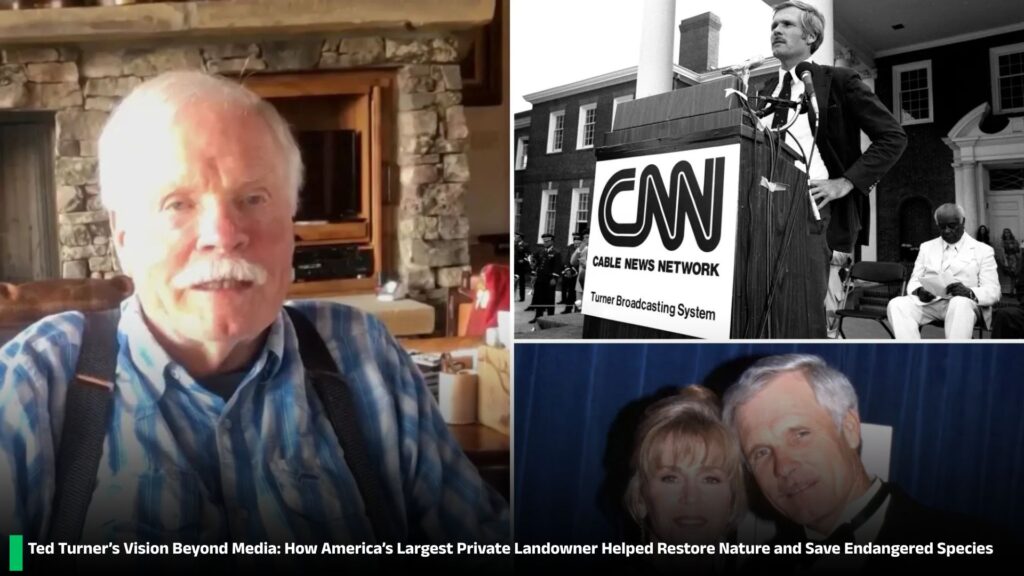
It is also home to a herd of animals that the ranch managers describe as genetically pure wild bison.
In total, Turner owned 13 ranches across six states. On some ranches, Ted Turner Reserves and Turner Enterprises have integrated revenue-generating programs—such as bison ranching, recreation, and tourism—alongside ecological conservation efforts.
“He wanted a part of America to still remain—to be preserved in some way—just as it was when Native Americans roamed those lands,” Tom Johnson, former president of CNN, said on Wednesday.
“In this era of development, commercialization, and poor zoning, he cleaned up rivers and reintroduced gray wolves and prairie dogs. I mean, he truly cared about nature and was keenly aware of what was happening.”
Jennifer Morris, CEO of The Nature Conservancy, stated on Wednesday that Turner did not merely believe in protecting nature; he actively worked to do so—and on a massive scale.
“He invested in the land, restored ecosystems, and demonstrated what is possible when vision is coupled with genuine commitment,” she said in a statement. “His work helped redefine conservation, proving that private land and private capital can be powerful forces for the public good.”
Turner acquired his farms in Argentina during the wave of privatization in the 1990s and 2000s, a period when wealthy foreigners were purchasing vast tracts of land.
This occasionally sparked nationalist sentiments and raised concerns regarding the exploitation of resources and public access to rivers and lakes. Turner became a target due to his celebrity status; however, the criticism eventually subsided as he focused on low-impact ecotourism and conservation.
In the Western U.S., not all ranchers were pleased, as Turner altered land management practices on his properties—including the decision to raise bison instead of cattle. His support for wolves—including a Mexican wolf breeding program at Ladder Ranch in New Mexico—provoked the ire of livestock organizations that were raising concerns about livestock predation by wild wolves.
And, to the frustration of some ranchers, Turner raised the world’s largest bison herd, thereby expanding the species’ genetic diversity and growing the market for their meat, as he supplied burgers and steaks to nearly three dozen Ted’s Montana Grill locations across 14 states.
“By turning it into a commodity—by making it a business—we incentivized people to enter the bison-ranching industry, which significantly expanded the gene pool and resulted in a very healthy bison herd,” said George McKerrow, co-founder of Ted’s Montana Grill and a restaurateur, on Wednesday. In an interview, Turner described his role not as an owner, but as a caretaker, emphasizing that business and conservation can coexist through “eco-capitalism”—a concept he helped popularize.
The work of restoring prairie grasses—aided by the hooves of bison—continues today through the Turner Endangered Species Fund, which supports the Bolson tortoise—North America’s largest and rarest tortoise—via a captive breeding program at the Armendaris Ranch in New Mexico.
At the Vermejo and Bad River Ranches in South Dakota, Turner’s team is partnering with state and federal scientists to aid in the recovery of the black-footed ferret—one of the rarest mammals on Earth, with a wild population numbering fewer than 300 individuals.
From Aplomado falcons and desert bighorn sheep to bats and monarch butterflies, everything mattered to Turner. His philosophy revolved around the interconnectedness of all living things and the belief that no species should ever be underestimated.
It was a philosophy so simple that it was immortalized on a bumper sticker: “Save Everything.”