

Pentagon Yet to Include Repair Costs in War Bill as FY27’s $1.5 Trillion Budget Proposal Still ‘Under Assessment’
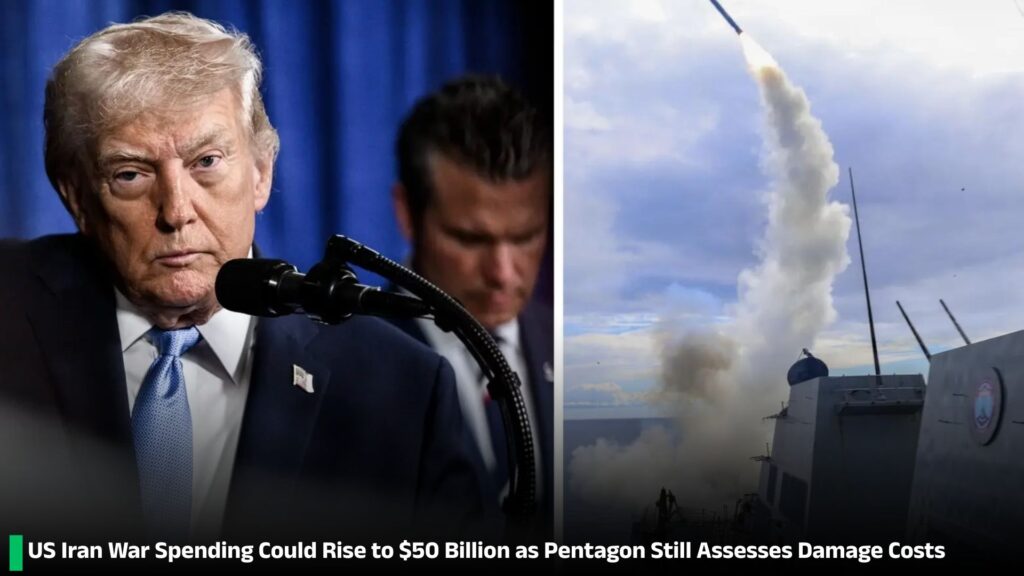
The Pentagon’s top financial officer informed lawmakers that approximately $25 billion has been spent over roughly eight weeks in the conflict with sanctioned Iran—a conflict that risks escalating into a wider regional war capable of devastating the global economy and triggering the worst global energy crisis to date. However, media reports suggest that this figure is not entirely accurate.
At least three individuals familiar with the matter told CNN that this figure excludes the billions of dollars yet to be spent on repairing and restoring military bases and equipment damaged by missiles and drones.
Defense Secretary Pete Hegseth was questioned by lawmakers on Wednesday but declined to confirm these details.
However, last week, another broadcaster—NBC News (paywalled)—cited input from six separate sources, including congressional aides and government officials, stating that the actual damage is far more extensive than what has been reported.
The six sources indicated that the repair bill could run into billions of dollars.
One source told CNN that the true estimate could range between $40 billion and $50 billion; this includes repairs to at least nine U.S. military bases across Bahrain, Kuwait, Iraq, the UAE, and Qatar, as well as compensation for civilian and energy infrastructure in those nations. And then, of course, Washington will have to incur costs to restock its missile inventory.
Last week, The New York Times reported that Tehran’s strategy of “asymmetric warfare”—specifically, forcing the U.S. to expend $4 million Patriot interceptors to shoot down $50,000 Shahed drones—has resulted in the Trump administration expending over 1,200 missiles. By comparison, only 600 of these missiles were produced across the entire United States last year. It also involved the use of over 1,000 Tomahawk missiles, each costing approximately $3.6 million.
The claimed cost for this conflict does not include repair expenses; these are “not reflected” in the FY27 $1.5 trillion budget proposal, as the Pentagon is still “assessing” the situation.
It remains unclear whether the costs for restocking missiles and replacing downed aircraft and equipment—such as the AN/TPY-2 radar for the THAAD air defense system—which were destroyed or damaged by Iran, have been included. Each radar unit costs between $500 million and $1 billion.
All of this is contingent upon the fighting ceasing today.
However, President Donald Trump—who is currently awaiting the deadline imposed by the War Powers Resolution—has given no indication that this will happen. On Wednesday, he posted a fantasy-style image depicting himself as a “war hero” on Truth Social, accompanied by a warning to Iran: “No More Mr. Nice Guy.”
Furthermore, earlier this week, Axios reported that he has rejected a second peace overture from Iran and has ordered “small, sharp strikes” to force the Iranians to surrender their nuclear program.
The true cost of the war since hostilities began on February 28 remains unclear. By the end of the first week, The Times, Fox News, and Reuters—citing Pentagon officials—reported the bill to be approximately $11.3 billion, a figure that included a staggering $3.7 billion for the first 100 hours alone.
By the end of the second week, government leaks revealed that this figure had reached $16.5 billion, and the daily cost began to stabilize at approximately $1 billion—a figure The Times reported had been disclosed during a closed-door Pentagon briefing.
And by the end of the fourth week, the bill had reportedly surpassed $25 billion.