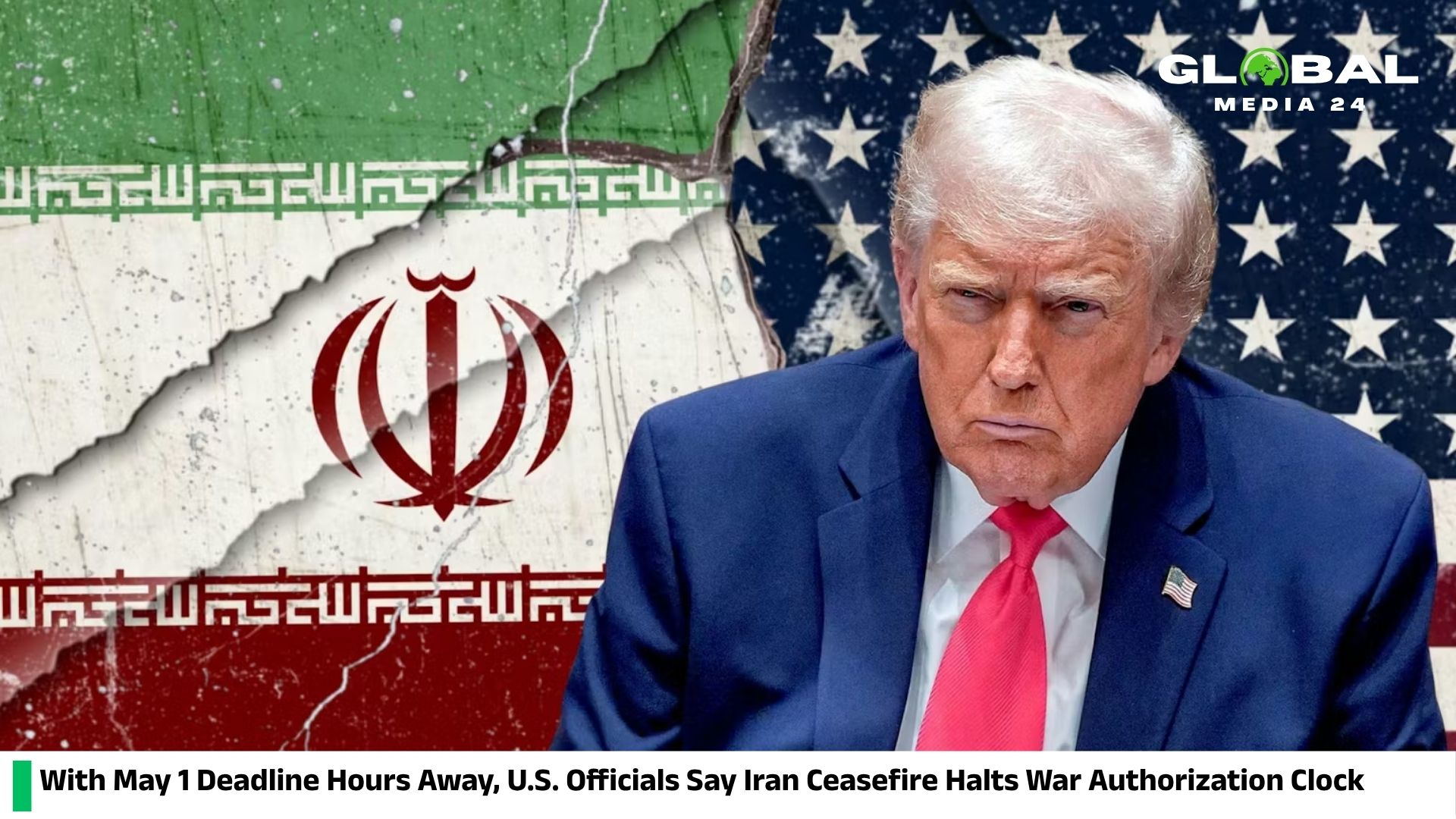
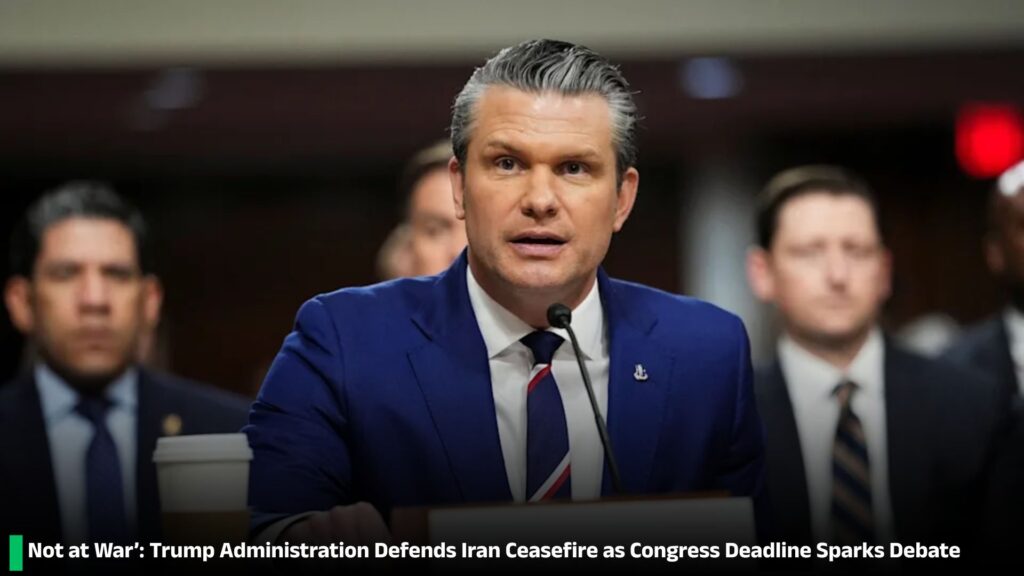
US Defense Secretary Pete Hegseth said the Iran ceasefire “halts” the 60-day congressional war authorization clock.
The Donald Trump administration maintains that the United States is “not at war” with Iran, even as the ongoing conflict in the Middle East impacts markets across all regions, driving oil prices to record-high levels. This comment from Team Trump comes at a time when the statutory deadline requiring Congressional authorization for military action is fast approaching. They argue that a ceasefire with Iran effectively “pauses” the statutory deadline requiring Congressional approval for military action.
When asked about the 60-day deadline, US House Speaker Mike Johnson replied, “We are not at war.”
Johnson told NBC News, “I don’t believe we have any active, kinetic military bombardment, firing, or anything of that nature taking place here. Right now, we are attempting to broker peace.”
He added, “I would be very hesitant to get ahead of the administration amidst these highly sensitive negotiations; so, we will have to wait and see how this unfolds.”
What Pete Hegseth Said
US Secretary of Defense Pete Hegseth also told lawmakers that he believes a ceasefire with Iran has effectively paused the 60-day clock regarding Congressional authorization for war. Hegseth made this statement when Democratic Senator Tim Kaine asked him—during a Congressional hearing—whether the Trump administration would, in accordance with the law, seek authorization from Congress upon the completion of 60 days of conflict with Iran (which falls on May 1st).
Hegseth stated, “Ultimately, I will defer to the White House and the White House Counsel on this matter. However, we are currently in a ceasefire, which, to our understanding, means that the 60-day clock is paused or halted during the ceasefire.” The May 1st Deadline
This war began on February 28, when Israel and the United States launched a joint attack on Tehran and other Iranian cities, an assault that killed Iran’s then-Supreme Leader Ali Khamenei, senior commanders, and civilians.
In retaliation, Iran bombed Israeli and U.S. bases in neighboring Gulf nations. It also blocked a major commercial shipping lane passing through the Strait of Hormuz. According to media reports, President Donald Trump notified Congress on March 2 regarding the military campaign against Iran; this established May 1 as a 60-day milestone—after which, under the U.S. War Powers Act, the President would be required to begin winding down the conflict unless he receives authorization from Congress.
In the absence of such authorization, the deadline sets up a direct constitutional clash between the White House and Congress.
Democrats Disagree
Democrats argue that the President is already on shaky legal ground—and once the deadline passes, his actions would constitute a clear violation.
Democratic Senator Kaine objected to Hegseth’s claim, stating, “I don’t think the law would support that.”
“I believe the 60-day window likely expires tomorrow, and that will present a critical legal question for the administration.”
What Comes Next?
Despite mounting pressure, efforts to halt the war face significant hurdles. Even if a resolution were to pass the Senate, it would still require approval from the Republican-controlled House, and Trump could veto it.
The War Powers Act has rarely succeeded in curbing presidential war-making powers; courts typically hesitate to intervene, and such disputes are generally left to the political arena. Nevertheless, Democrats remain hopeful of reining in Trump. U.S. Senators voted on Thursday to reject a resolution aimed at curbing Trump’s authority—the latest in a series of failed attempts by Democrats to end the conflict.
Senator Adam Schiff, who introduced Thursday’s failed resolution, stated: “Some of my colleagues have indicated that once the 60-day period under the War Powers Act has elapsed, they might join our efforts to end this war. That time has now arrived.”
“After two months of fighting, after the loss of thirteen soldiers’ lives, and after billions of dollars have been squandered, it is time we recognized that the price we have paid is already far too high.”