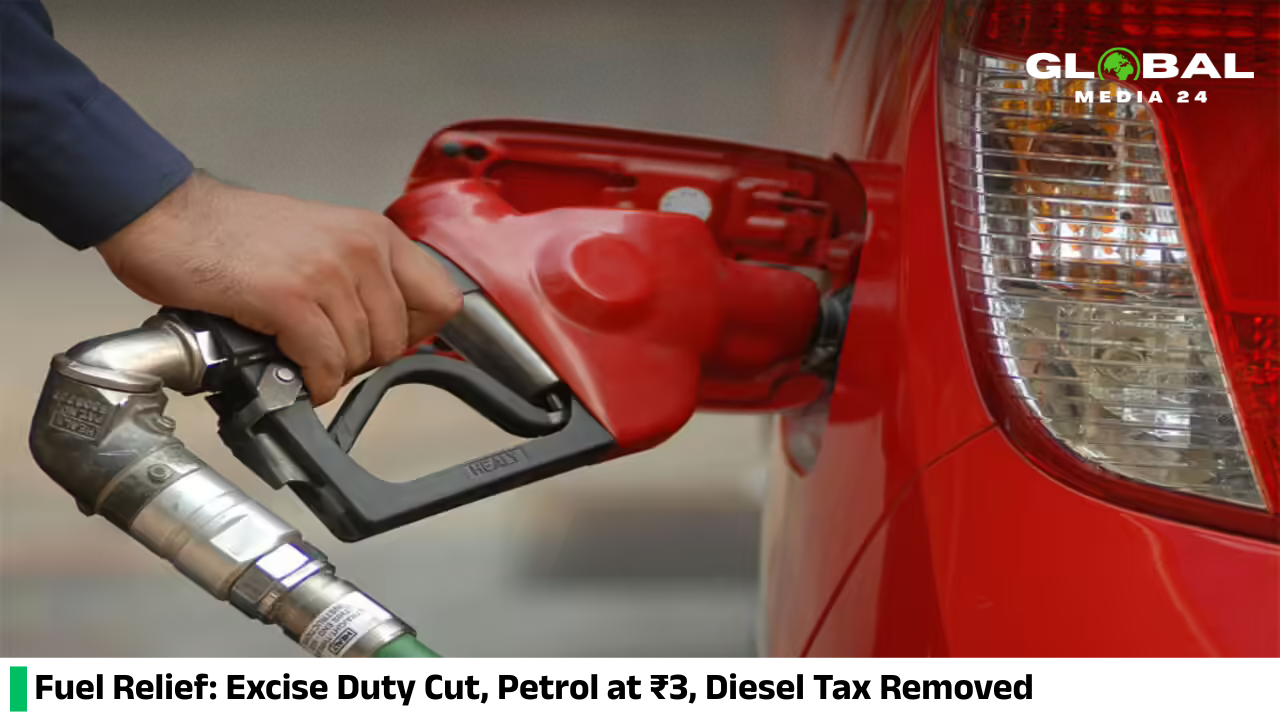
Due to concerns over a possible surge in fuel prices triggered by the US-Israel conflict with Iran, the government on Friday reduced excise duties on petrol and diesel by ₹10 per litre each, lowering them to ₹3 per litre for petrol and eliminating the duty on diesel altogether.
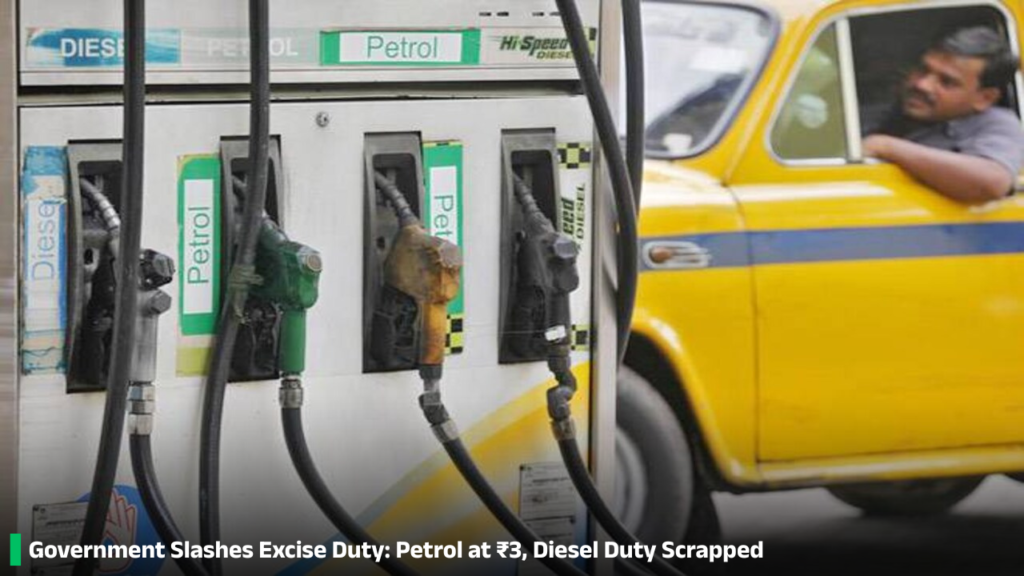
On Friday, the government reduced the excise duty on petrol and diesel by ₹10 per liter, bringing the excise duty on petrol down to ₹3 per liter and to zero for diesel.
However, sources indicated that consumers are unlikely to see any savings from this move, as Oil Marketing Companies (OMCs) are expected to absorb this reduction to offset the substantial losses they are currently incurring on every liter sold.
OMCs are currently facing a loss of ₹48.8 per liter—meaning they lose this amount on every liter of petrol or diesel sold in India—a situation largely driven by current Brent crude oil prices.
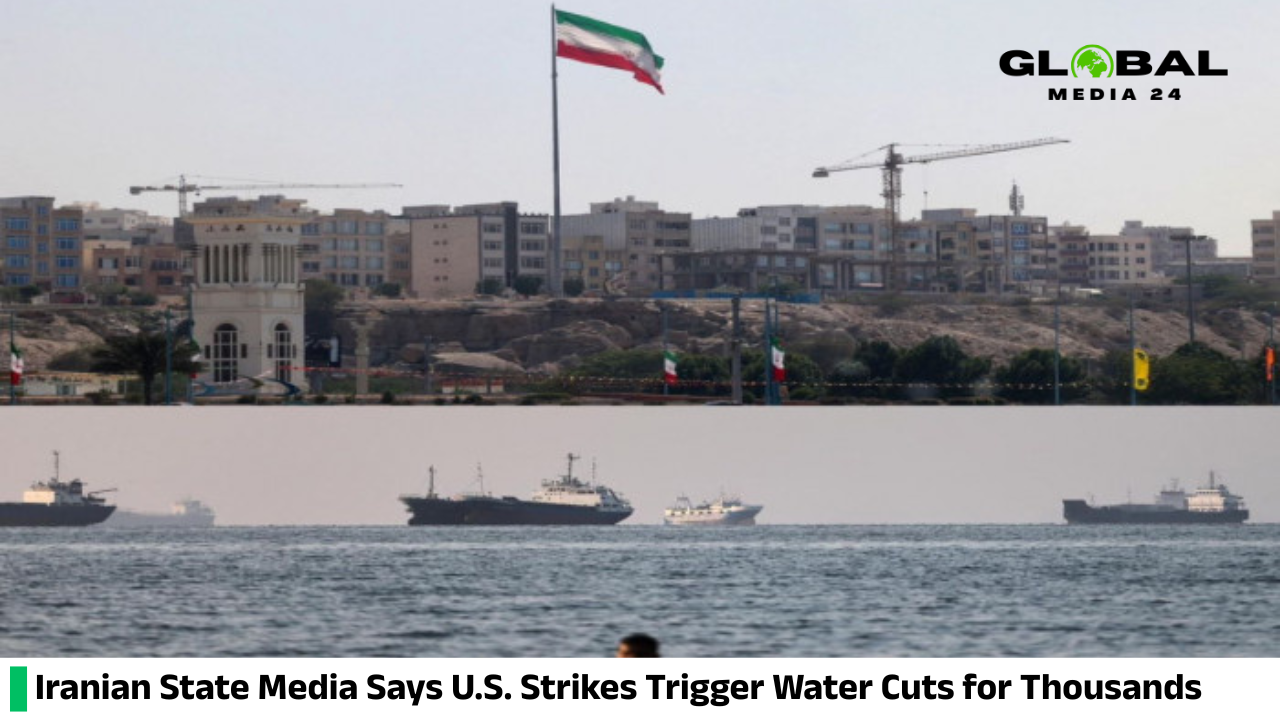
Global benchmark prices surged past the US$100-per-barrel mark following the US-Israel conflict involving Iran and the blockade of the Strait of Hormuz.
According to a report, this development comes just one day after Nayara Energy—a private energy supplier—implemented steep price hikes of ₹5.3 per liter for petrol and ₹3 per liter for diesel.
Nayara, the country’s largest private fuel retailer, holds an 8.4 percent market share and is backed by the Russian company Rosneft and Kesani Enterprises.
This shortfall has emerged amidst fears of price surges driven by a global energy crisis—a scenario potentially triggered by a US-Israel war against Iran, followed by a blockade imposed by Tehran on the Strait of Hormuz.
Hormuz serves as a critical energy supply conduit for the world; prior to any conflict, approximately one-fifth of the crude oil and gas transported globally by sea—amounting to 20 to 25 million barrels of crude oil and roughly 10 billion cubic feet of gas daily—passed through this narrow maritime channel.
Consequently, it constitutes a major supply route for India; according to estimates, 40 to 50 percent of India’s crude oil imports—translating to 2.2 to 2.8 million barrels per day—have historically arrived via this very route.
India also imports substantial quantities of gas from West Asia; estimates suggest that Delhi procures between 16 and 17 percent of the LNG (Liquefied Natural Gas) exported by Qatar and the United Arab Emirates.
Furthermore, India imports large volumes of LPG (Liquefied Petroleum Gas)—utilized in over 330 million households—from Qatar as well as from Iran via the Strait of Hormuz.
Given this high degree of dependency, concerns have arisen regarding a potential severe shortage of oil and gas within the country should a conflict with Iran materialize. However, the government has firmly asserted that there is currently no immediate threat.
On Thursday, the government reiterated its stance, stating that India possesses sufficient oil reserves to cover approximately 60 days of consumption, along with a 30-day supply of LPG cylinders. Reports of shortages were characterized as a “deliberate disinformation campaign” designed to incite panic buying.
Also on Thursday, industry sources informed NDTV that the government has accelerated the process of signing contracts to diversify its sources for crude oil and LPG imports. Meanwhile, junior petroleum minister Suresh Gopi informed Parliament this week that India’s three strategic reserves currently hold approximately 3.372 million tonnes of oil—or two-thirds of their maximum capacity.
Furthermore, the current total reserves—specifically the SPRs, which comprise both unrefined (crude) oil and ready-to-use fuel—are sufficient for 74 days, Gopi stated, “…including the stocks held by oil marketing companies.”
Regarding the supply of LPG (Liquefied Petroleum Gas)—which is used for cooking in over 330 million Indian households—the government stated that in early March, it had ordered a 25 percent increase in domestic production and that there is no need for panic buying.