Oil values softened marginally following Trump’s postponement of a projected Iran strike, while Asia-Pacific markets commenced widely higher notwithstanding Middle East hazards.
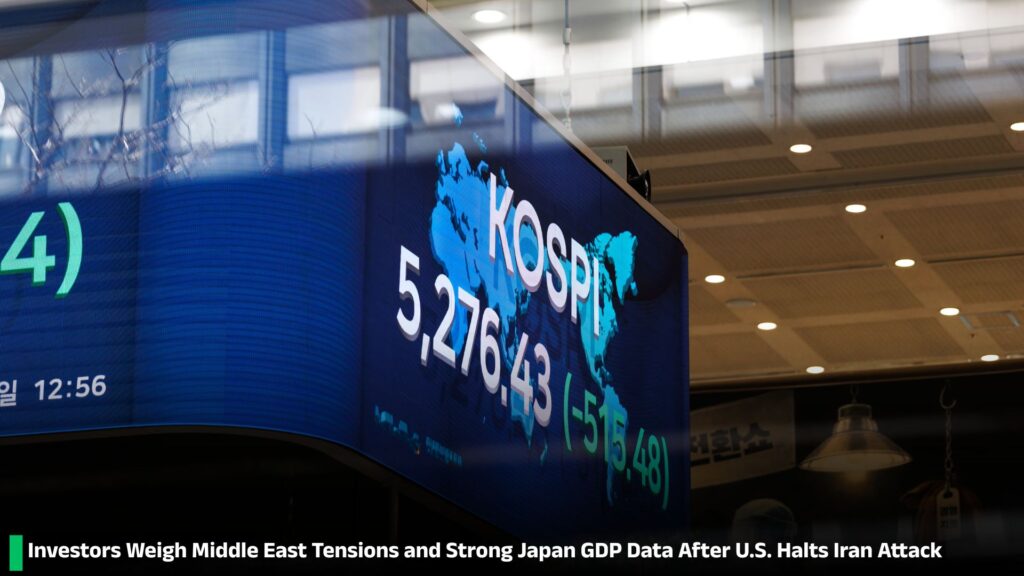
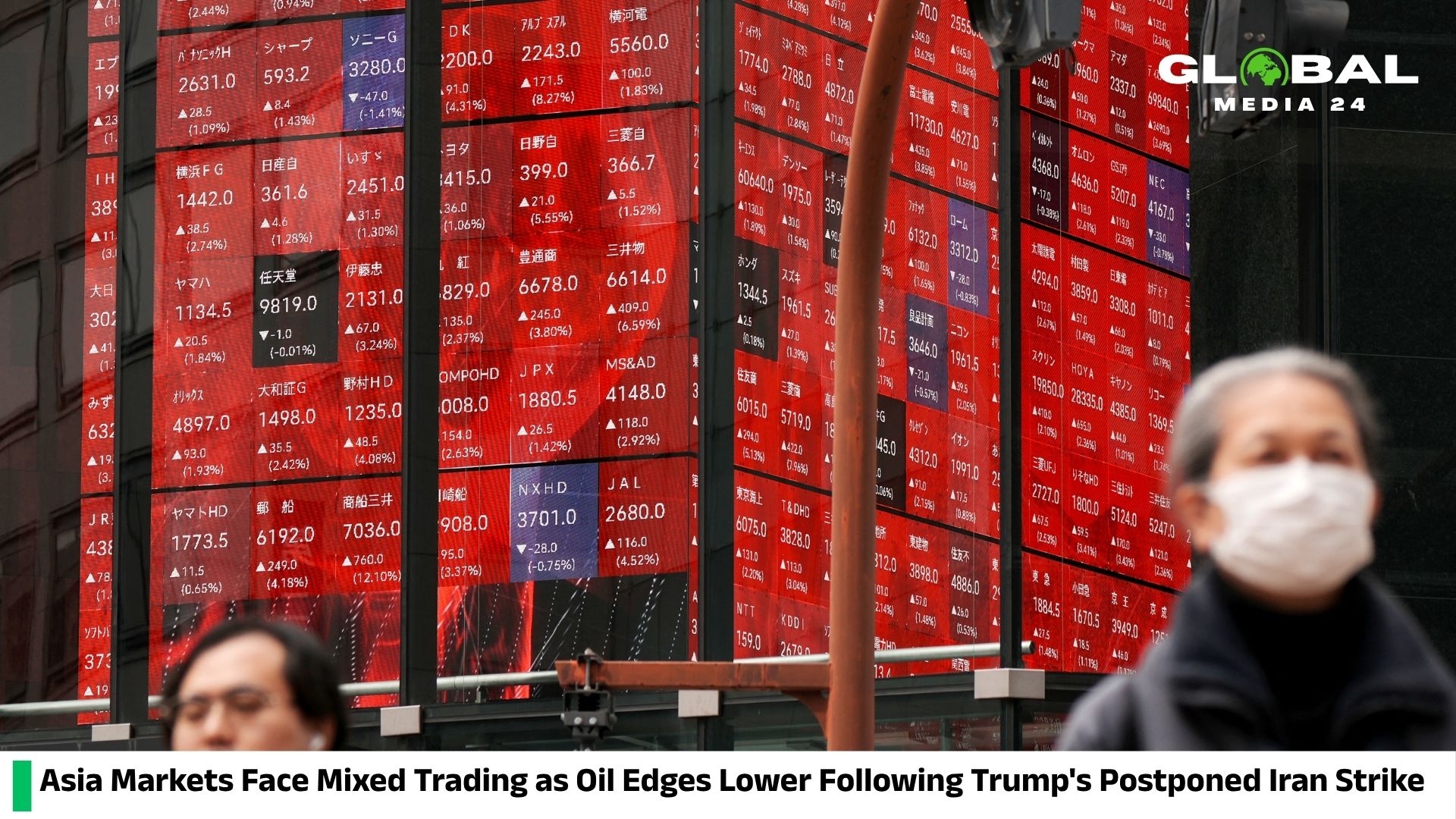
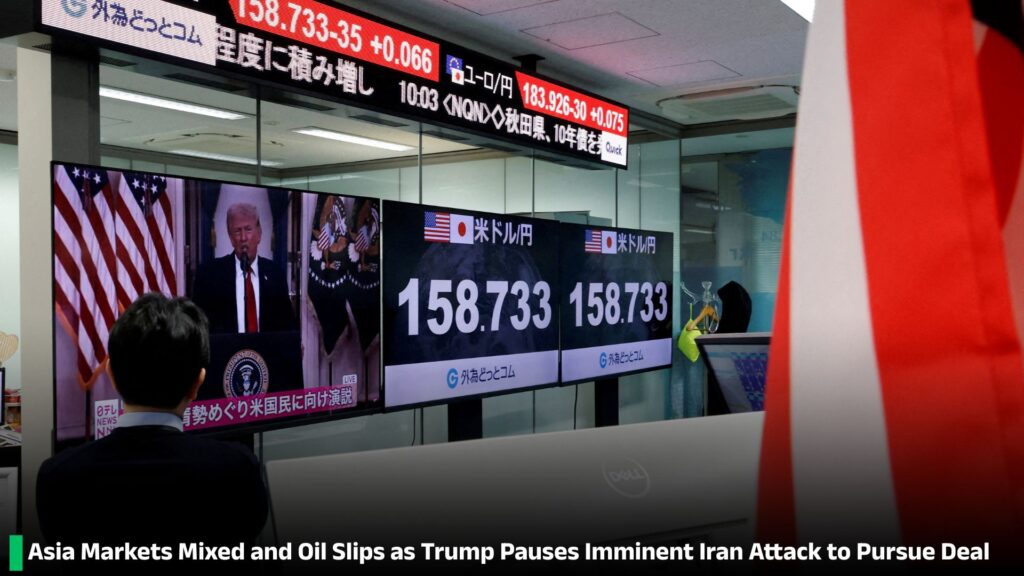
Asian-Pacific markets saw mixed trading on Tuesday, as oil prices remained elevated but eased slightly following reports that President Donald Trump had called off a planned strike on Iran.
International Brent crude futures for July delivery fell 2.04% to $109.81 per barrel at 12:14 AM ET. West Texas Intermediate futures for June were down 1.12% at $107.44 per barrel.
Investors were assessing Japan’s first-quarter GDP data, which revealed that the economy grew at an annualized rate of 2.1% during the first three months of the year. This growth significantly exceeded the average estimate of 1.7% from analysts polled by Reuters, as well as the 1.3% growth recorded in the previous quarter. These figures do not yet reflect the full impact of the war with Iran, which began in late February.
Japan’s Nikkei 225 surrendered its early gains to close down 0.45%, while the TOPIX index rose 0.54%.
A summit scheduled for later today between Japanese Prime Minister Sanae Takaichi and South Korean President Lee Jae-myung also remained a key topic of discussion. South Korea’s KOSPI index extended its early losses, falling 3.12%, while the small-cap KOSDAQ index dropped 3.32%.
Australia’s S&P/ASX 200 index rose 1.05%.
Mainland China’s CSI 300 index fell 0.52%, while Hong Kong’s Hang Seng index gained 0.41%.
Standard Chartered’s Hong Kong-listed shares surged 2.54% after the lender raised its 2028 return target to 15%—a 3-percentage-point increase from its 2025 target. The bank also plans to reduce its corporate function roles by 15% by 2030.
India’s Nifty 50 rose by 0.44%.
Shares of companies linked to Indian billionaire Gautam Adani surged after the U.S. dropped fraud allegations against him. Adani Enterprises gained 1.89%, while Adani Ports and Adani Green rose by 0.36% and 1.23%, respectively.
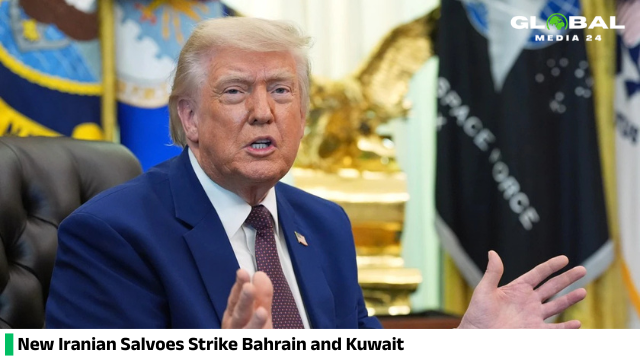
In a Truth Social post, Trump stated that following requests from the leaders of Qatar, Saudi Arabia, and the United Arab Emirates, U.S. military leaders were instructed to halt “an attack on Iran that was set to take place tomorrow.”
Trump said, “There will be a deal—one that is highly acceptable to the United States of America, as well as to all the countries in the Middle East and beyond. The most important aspect of this deal is that Iran will possess no nuclear weapons!”
However, Trump warned that he has informed his military leaders that “if an acceptable deal is not reached, they must be prepared to launch a massive attack on Iran.”
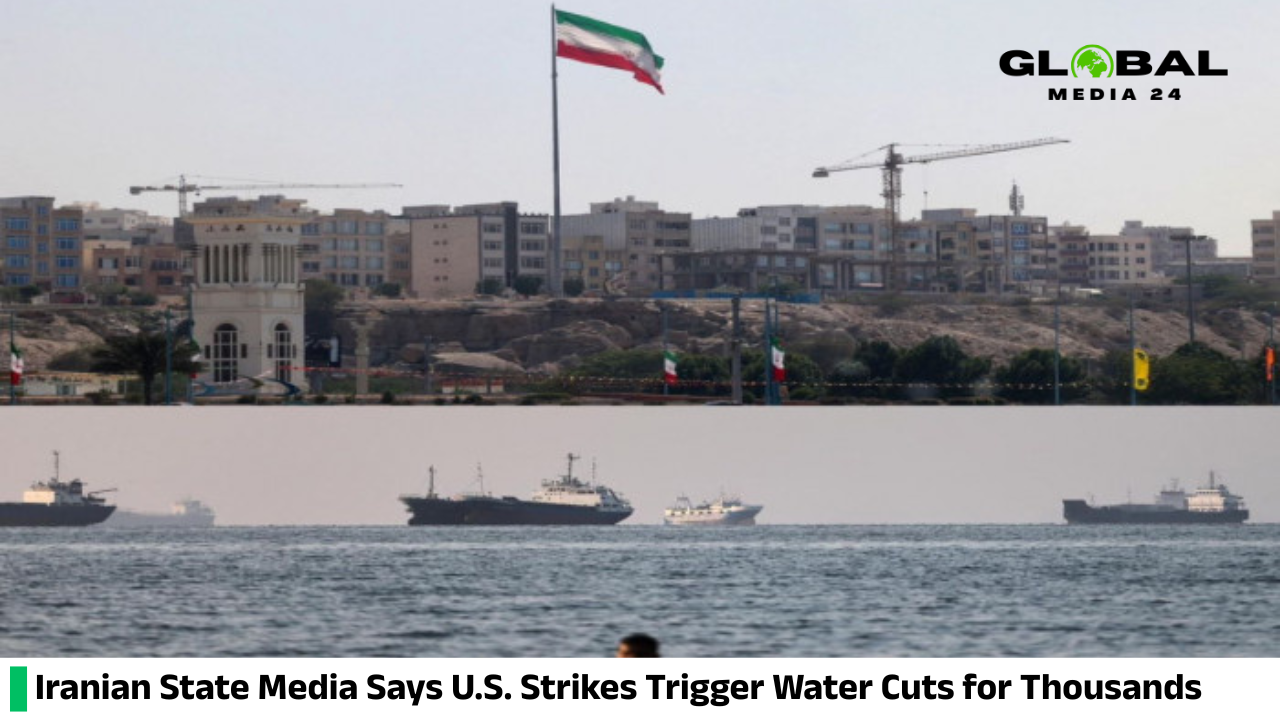
Despite a fragile ceasefire between the U.S. and Iran, Tehran has kept the vital Strait of Hormuz closed, while the U.S. has continued to maintain a blockade on Iranian ports.
In a note, Moody’s stated, “As the conflict in the Middle East enters its third month, the prospects of a swift and sustainable agreement between the U.S. and Iran—and, consequently, the full reopening of the Strait of Hormuz—remain low.”
S&P 500 futures were up 0.1%, while Nasdaq 100 futures rose 0.2%. Dow Jones Industrial Average futures gained 25 points, or 0.05%. During Monday’s regular session, the broad-market S&P 500 benchmark fell 0.07% to close at 7,403.05, while the tech-heavy Nasdaq slipped 0.51% to close at 26,090.73. This marked the second consecutive day of decline for both indices. The Dow Jones Industrial Average rose 159.95 points, or 0.32%, to close at 49,686.12.