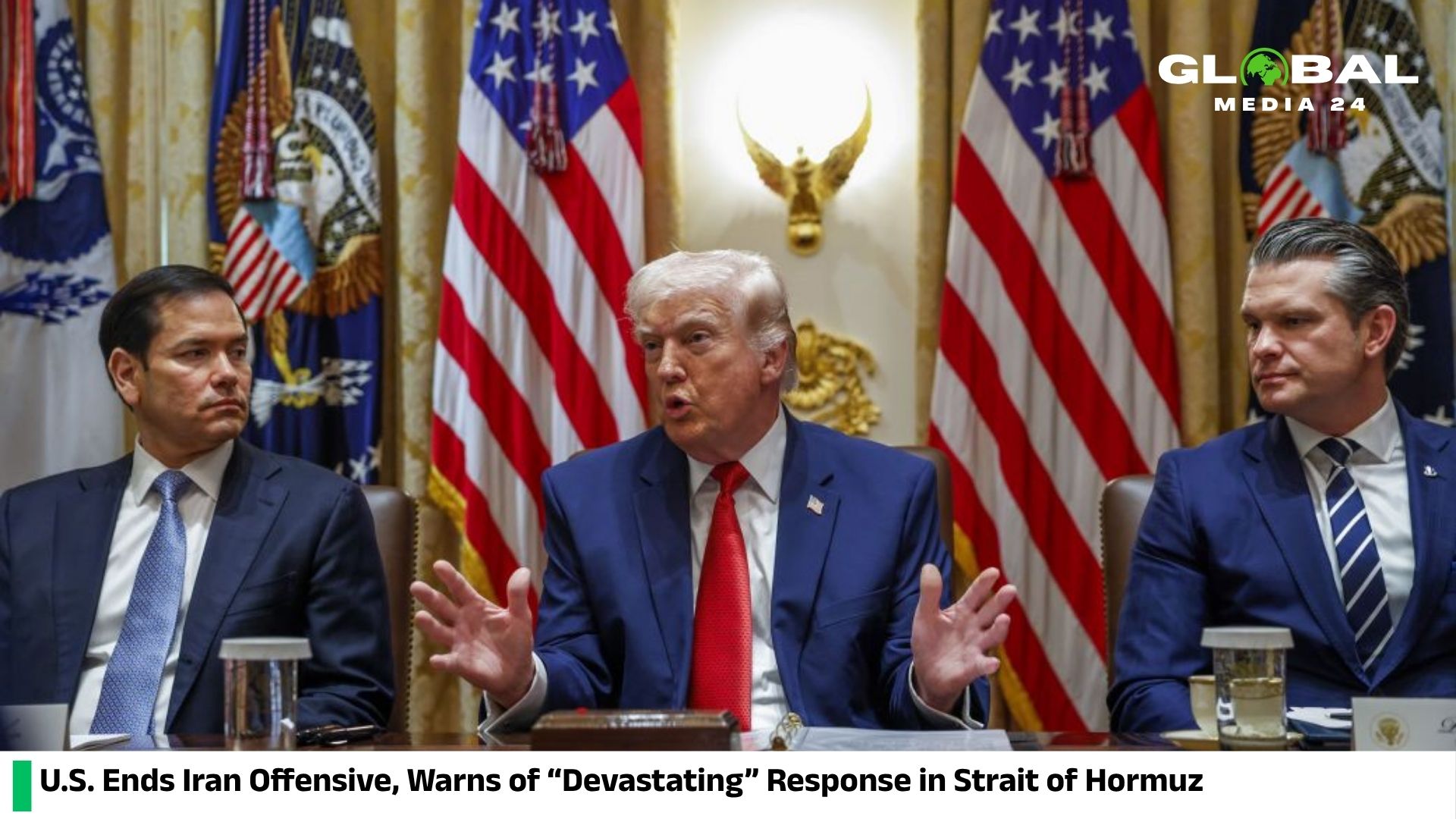
The United States has concluded its offensive operations against Iran, Secretary of State Marco Rubio said Tuesday, even as Washington warned it was prepared to deliver a “devastating” response to any fresh attacks on shipping in the Strait of Hormuz.
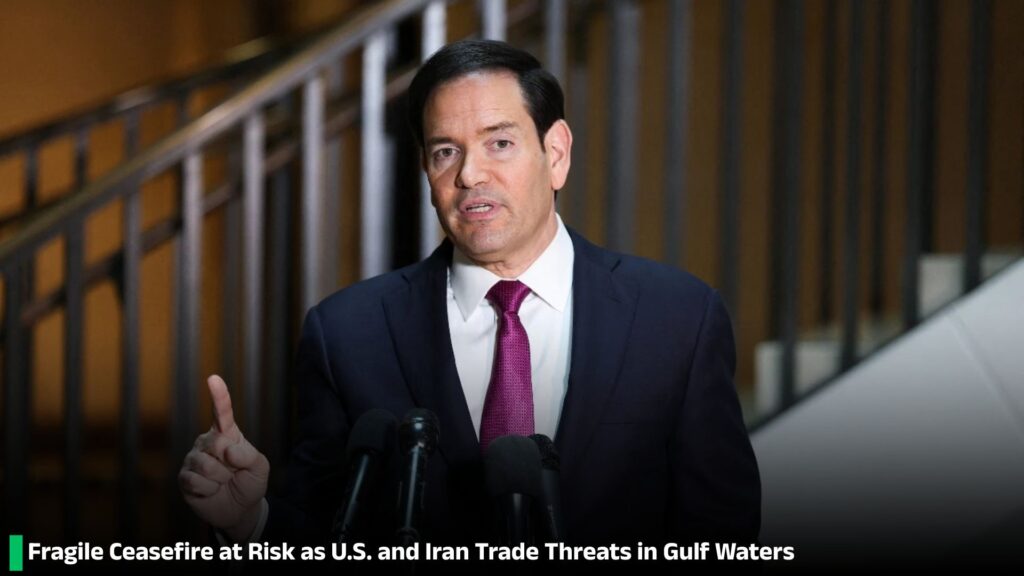
Secretary of State Marco Rubio stated on Tuesday that the United States has concluded its attack against Iran, while Washington warned that it stands ready to deliver a “dangerous” response to any new attacks on shipping in the Strait of Hormuz.
Rubio’s remarks followed a statement by Washington’s top military officer, who asserted that U.S. forces are prepared to resume combat operations if ordered—a prospect that threatens to shatter a fragile ceasefire amidst skirmishes along this vital waterway.
Iran’s Revolutionary Guards Navy has warned that a “firm response” will be issued if vessels traversing the Strait deviate from their designated routes. The country’s chief negotiator declared that Tehran has “not even started yet,” noting that numerous attacks have already occurred along this critical trade route.
The United Arab Emirates announced that, for the second consecutive day, it was intercepting barrages of missiles and drones originating from Iran—a claim that Tehran “categorically” denied.
Iran’s Khatam al-Anbiya Command stated, “The Armed Forces… have not launched any missile or drone operations.”
On Monday, Iran fired missiles and drones at U.S. forces, while Washington reported striking six Iranian vessels—accusing them of posing a threat to commercial shipping—marking the most intense escalation following a month-long ceasefire.
General Dan Caine told reporters that U.S. Central Command is “prepared to resume major combat operations if ordered.”
“No adversary should mistake our current restraint for a lack of resolve.”
President Donald Trump appealed to Iran to “act smartly” and negotiate a deal, stating that he does not wish to kill any more Iranians, even as the ceasefire hangs in the balance. He had previously dismissed this conflict as “a minor skirmish,” stating: “Iran stands no chance.”
Pentagon Chief Pete Hegseth stated that the United States “does not seek a fight,” but warned that any attacks would be met with “overwhelming and dangerous” force.
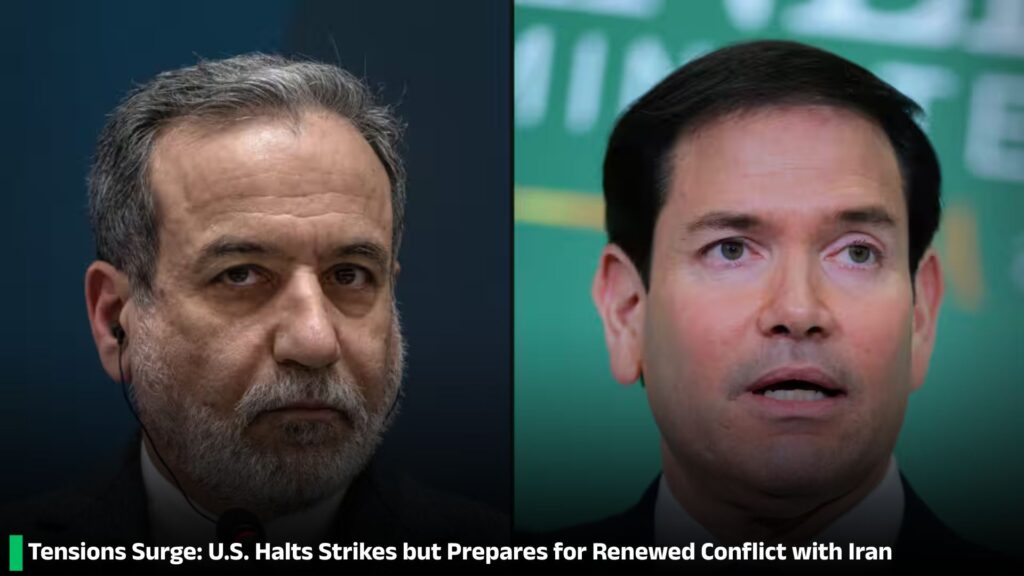
A Malign Presence
Iranian Parliament Speaker Mohammad Bagher Ghalibaf declared that the current situation is “intolerable,” and warned that the U.S.’s “malign presence will diminish,” as Tehran has vowed to maintain control over the Strait of Hormuz.
The exchange of fire on Monday occurred after adversaries imposed a naval blockade following a plan by the Trump administration to withdraw U.S. vessels from the Gulf.
This conflict—which began over two months ago with U.S.-Israeli strikes—has severely impacted the global economy, despite a ceasefire that had held for several weeks. Israeli Air Force Chief Omer Tishler stated that the military is “prepared to deploy the entire Air Force eastward if necessary.”
Military Chief Eyal Zamir announced that the armed forces are on “high alert” and ready to respond to threats in the Gulf.
Iran denied suffering any naval losses but accused Washington of killing five civilians who were aboard the vessels.
Despite the heightened tensions, Maersk—a major Danish shipping company—reported that one of its vessels had successfully transited the Strait of Hormuz under U.S. escort.
The UAE characterized the attacks as a “dangerous escalation,” while Saudi Arabia appealed for efforts to be directed toward finding a political resolution.
Rubio accused Iran of “holding the global economy hostage” by issuing threats to shipping and laying naval mines; he added that Washington and its Gulf partners have drafted a UN Security Council resolution demanding that Tehran cease its attacks and disclose the locations of the mines. Rubio stated that, under the proposed measure, Iran would be required to cease attempts to levy tolls in the Strait and support a humanitarian corridor—a proposal expected to face a vote in the coming days.
On Tuesday, European and U.S. stocks posted gains, while Asian equities came under pressure amid fears that the ceasefire might collapse.
Negotiations remain stalled, and to date, only one round of direct talks has taken place.
Iranian President Masoud Pezeshkian stated that Tehran is ready for dialogue but dismissed the U.S. demands for “maximum pressure” as “impossible.”
Rising energy prices are intensifying economic strain and creating a political headache for Trump ahead of the midterm elections.
European allies have warned that a prolonged disruption would adversely impact their economies.
EU Chief Ursula von der Leyen stated on X, “These attacks are unacceptable,” and warned that security in the Gulf would have a “direct impact on Europe.”
German Chancellor Friedrich Merz appealed to Iran to return to the negotiating table, echoing similar appeals made by French President Emmanuel Macron and British Prime Minister Keir Starmer.