New Delhi Continues To Support Dialogue And Diplomacy To Restore Peace And Stability In The Middle East: Ministry
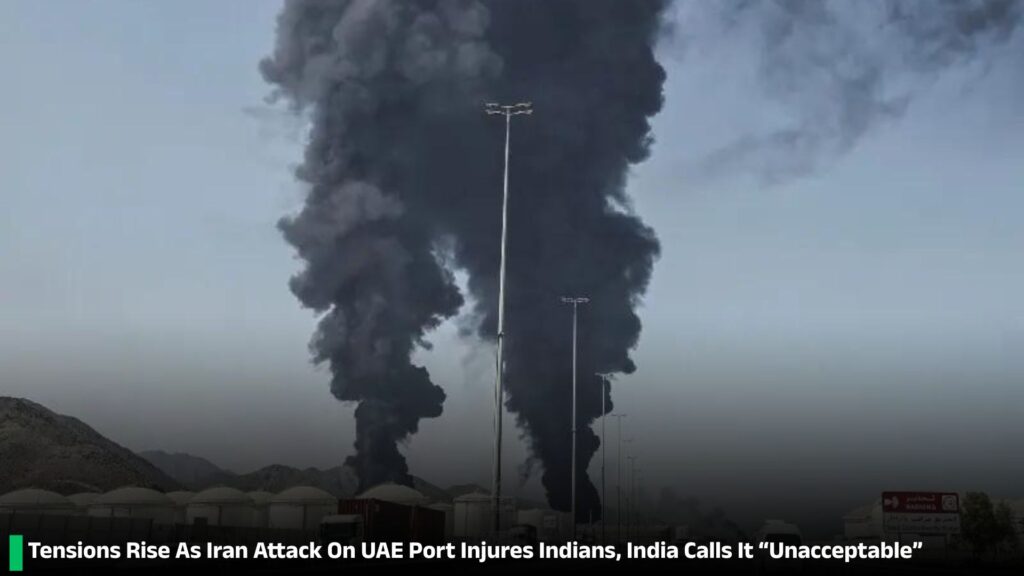
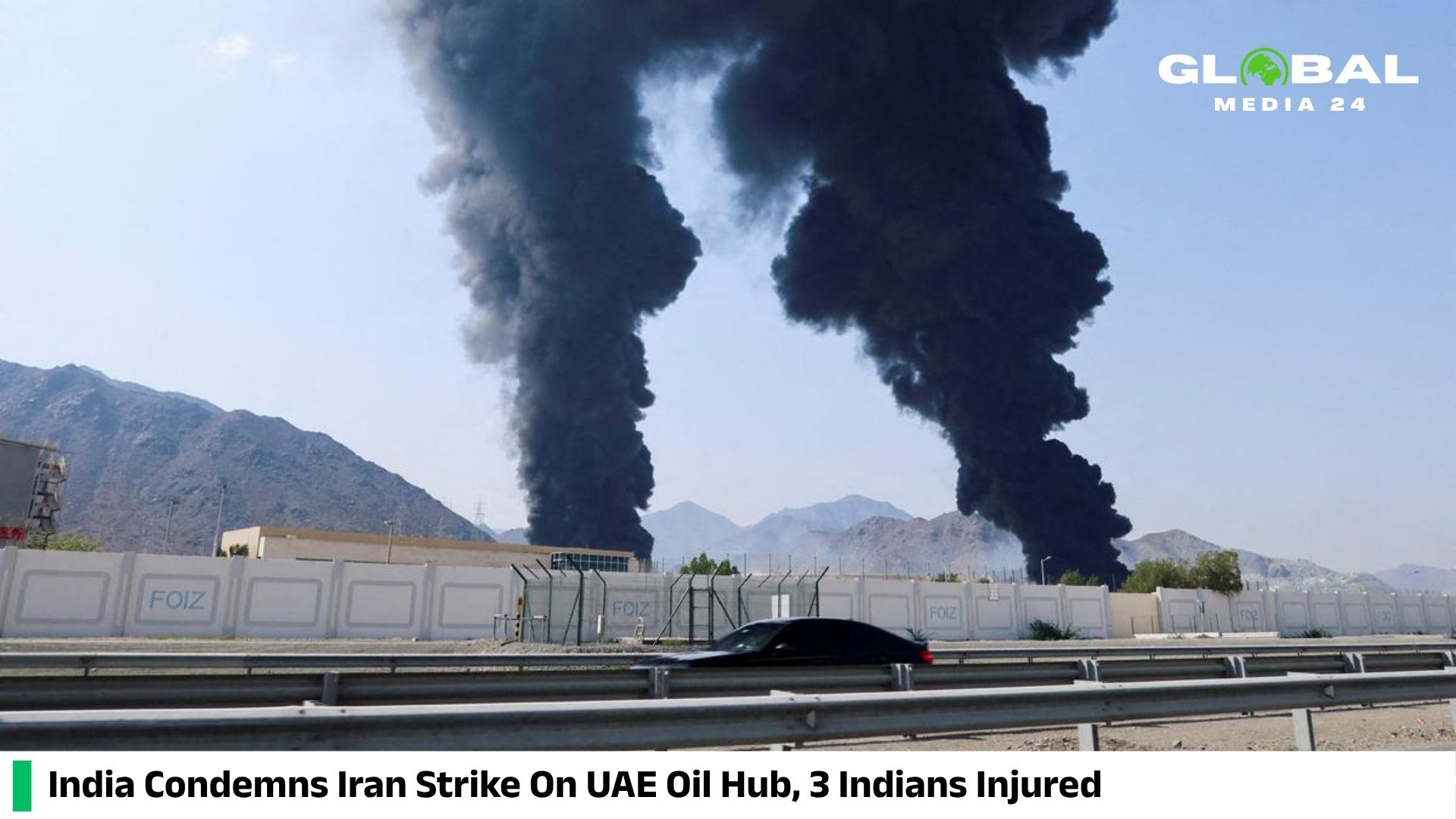
New Delhi: Amidst escalating tensions between the US and Iran, India has condemned an Iranian attack on the Fujairah Petroleum Industries Zone in the United Arab Emirates (UAE), in which three Indian nationals were injured. In a statement, the Ministry of External Affairs termed the attack “unacceptable.” This development comes after the UAE—a key US ally—stated that Iran had attacked it for the first time since a fragile ceasefire was established in early April.
Ministry spokesperson Randhir Jaiswal stated in a post on X: “The attack on Fujairah, in which three Indian nationals were injured, is unacceptable. We demand an immediate cessation of such hostilities and the targeting of civilian infrastructure and innocent civilians.”
The Ministry added that New Delhi remains ready to engage in dialogue and diplomacy to address the situation, with the aim of restoring peace and stability across the entire Middle East.
The post further stated: “We also demand free and unimpeded navigation and commerce through the Strait of Hormuz, in accordance with international law. India stands ready to support all efforts aimed at a peaceful resolution of these issues.”
What the UAE Said
The Emirati Ministry of Defense stated that its air defense systems intercepted 15 Iranian missiles and four drones. Officials in the eastern emirate of Fujairah reported that a drone strike sparked a fire at their largest oil facility, injuring three Indian nationals working there.
The British military reported that fires had broken out on two cargo vessels near the Emirates.
Iran Claims Attack Was “Unplanned”
Tehran has neither directly confirmed nor denied the attacks; however, on Tuesday morning, Iranian Deputy Foreign Minister Abbas Araqchi posted on X, warning both the US and the UAE to “be careful not to get bogged down in a quagmire once again.”
Similarly, Iranian state television had earlier quoted an unidentified military official as stating that Tehran had “no plans” to target the UAE or any of its oil fields. Commenting on the attack on the oil plant, an official stated, “This incident was the result of the U.S. military’s unauthorized adventurism in attempting to force a passage.” He was likely alluding to U.S. President Donald Trump’s renewed efforts to reopen the Strait of Hormuz—a vital waterway for global energy supplies. The Hormuz Blockade:
The ceasefire between Iran and the United States appears to be teetering, as exchanges of fire erupt between the two nations over the strategic Strait of Hormuz, following U.S. President Donald Trump’s announcement of an operation to extract vessels currently stranded within this strategic waterway.
Breaking Iran’s stranglehold on the Strait would alleviate global economic anxieties and deprive Iran of a major source of revenue. However, such endeavors also carry the risk of reigniting large-scale hostilities—a conflict that originally flared up when the U.S. and Israel launched their initial strikes against Iran on February 28, compelling Iran to close the Strait.
Shipping companies and their insurers are unlikely to assume such risks, given that Iran has fired upon vessels within these waters and has vowed to continue doing so. Iran has asserted that the U.S.’s latest initiative constitutes a violation of the fragile ceasefire that has been in effect for over three weeks.
Iran has completely sealed off the Strait of Hormuz—which runs between Iran and Oman—triggering a surge in global fuel prices and delivering a severe shock to the global economy.