The Welcoming International Success Act (WISA) is a proposed policy aimed at helping U.S. companies more easily recruit and employ highly skilled international professionals, including Indian H-1B visa holders.
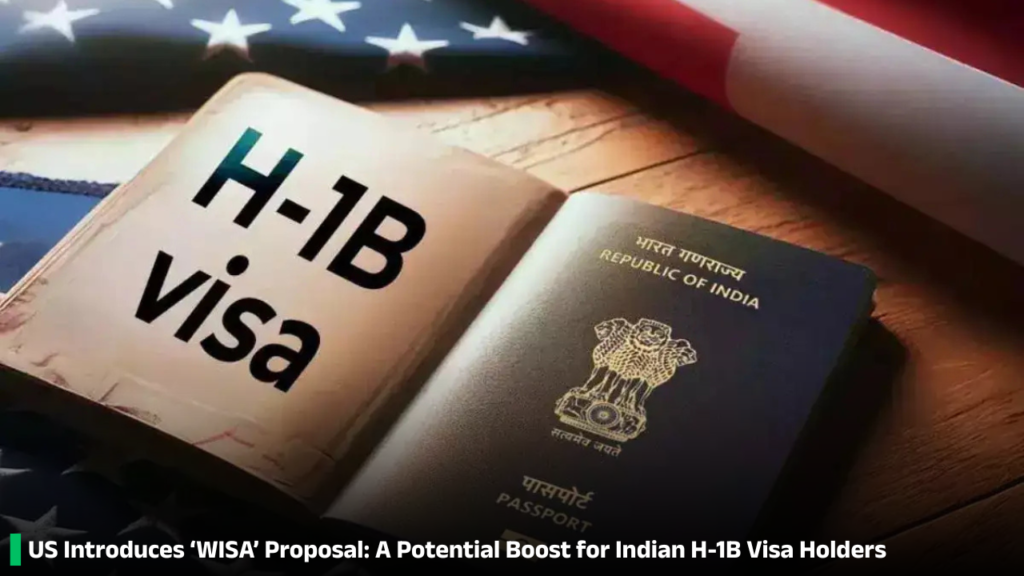
US Congresswoman Bonnie Watson Coleman has introduced a new bill in the US House of Representatives that aims to change the strict regulations imposed by US President Donald Trump on the H-1B visa program.
The proposed legislation, called the Welcoming International Success Act (WISA), seeks to repeal measures announced by the Trump administration in September 2025 that made it more difficult and expensive for employers to hire foreign professionals under the H-1B system.
The changes made last year reportedly created significant obstacles for companies, universities, hospitals, and research institutions that rely on international talent.
What were the Trump administration’s 2025 rules?
In September 2025, the Trump administration imposed major restrictions on the H-1B program.
These measures include:
A $100,000 fee for employers submitting new H-1B visa applications.
More stringent salary requirements for sponsored workers.
A wage-weighted lottery system that prioritizes higher-paying job offers. The administration stated that these changes will prevent companies from replacing American workers with lower-paid foreign labor and ensure that only highly skilled professionals are brought into the country.
Officials have described the H-1B program as one of the most abused parts of the US immigration system.
WISA Proposal
WISA aims to overturn key regulations of Trump’s September 2025 proclamation.
If passed, the bill would:
Revoke the September 2025 immigration proclamation.
Remove or reduce the $100,000 employer fee.
Ease the stringent salary requirements imposed under the new policy.
Make it easier for organizations to hire skilled foreign professionals.
The proclamation, titled “Prohibiting the Entry of Certain Non-Immigrant Workers,” would have no legal effect if the bill becomes law.
Watson Coleman said that the current regulations have created “significant obstacles” for US employers and institutions that rely on skilled workers from around the world.
What is the H-1B Visa Program?
The H-1B visa program allows US employers to hire foreign professionals in specialized fields where skilled workers are scarce or unavailable in the domestic workforce.
These jobs typically require advanced training or specialized knowledge and are typically found in areas such as information technology, engineering, healthcare, scientific research, education, and academia.
Technology companies, universities, hospitals, and research centers in the US rely heavily on this visa program to fill specialized roles.
Indian professionals are the biggest beneficiaries of this system. Over 70 percent of H-1B visas are issued to Indian citizens, while applicants from China account for approximately 12 percent.
Debate on the H-1B System
In January 2026, Representative Marjorie Taylor Greene introduced a bill called the End H-1B Now Act, which proposes to completely remove the visa category from US immigration law.
Another proposal came in February 2026 when Representative Greg Steube introduced the EXILE Act (Ending Exploitative Imported Labor Exemptions Act). His bill aims to gradually phase out the H-1B program by 2027.
How WISA Can Help Indians
This proposed legislation is particularly important for Indian professionals because they dominate the H-1B system.
Recent estimates show:
Currently, approximately 7.3 lakh H-1B visa holders live in the US.
Approximately 5.5 lakh dependents, including spouses and children, live with them.
More than 70 percent of these visa holders are from India.
Because Indians constitute a significant portion of the program, any rule changes could directly impact thousands of Indian engineers, IT professionals, researchers, and healthcare workers.
To become law, the bill must first pass the US House of Representatives, after which it must also be approved by the Senate. If both houses of Congress approve the legislation, it will be sent to the president, who must sign it into law. Until this happens, the current H-1B rules, introduced in 2025, will remain in effect.