Oil prices briefly climbed to their highest level since 2022, just a day after Iran chose Ayatollah Mojtaba Khamenei as the successor to his late father as the country’s supreme leader.
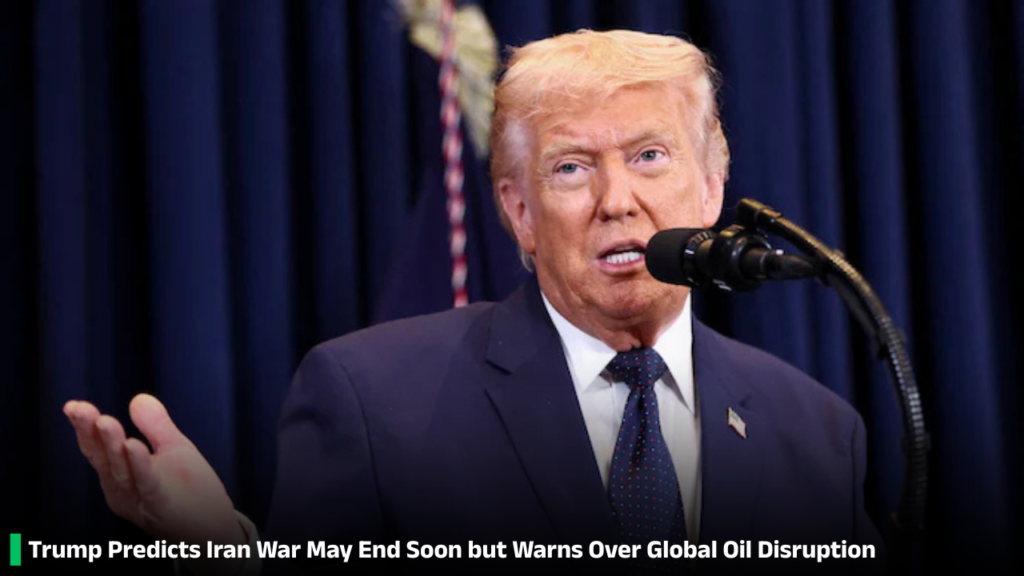
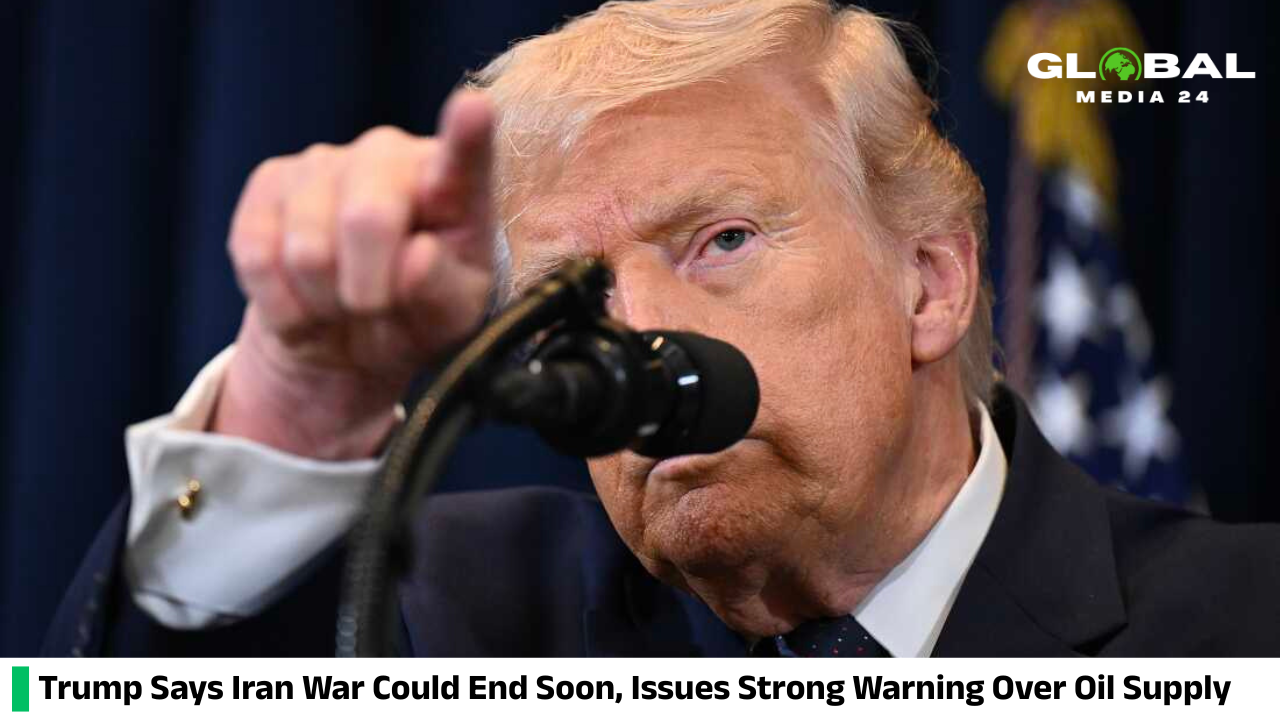
US President Donald Trump said on Monday that a war against Iran could be short-lived, but he also said the fighting could escalate if the Islamic Republic disrupts global oil supplies, as the country has elected a new hard-line Supreme Leader.
Oil prices hit their highest level since 2022, a day after Iran elected Ayatollah Mojtaba Khamenei as Iran’s supreme leader, replacing his late father.
Investors took this as a signal that Iran was adding another 10 days to the war started by the United States and Israel.
But prices later fell, and U.S. stocks rose on hopes that the war with Iran would not last long.
“We made a short trip to the Middle East to get rid of some bad blood,” Trump told Republican lawmakers at his golf club near Miami.
A few hours later, Trump posted on social media: “If Iran does anything to stop the flow of oil through the Strait of Hormuz, the United States of America will strike them with a force twenty times stronger than they have ever seen before.” Furthermore, we will destroy targets that can be easily eliminated, making it virtually impossible for Iran to rebuild as a nation—death, fire, and anger will reign over them. But I hope, and pray, that this is not the case! This is a gift from the United States of America to China and all the countries that use the Strait of Hormuz extensively. Hopefully, this will be a gesture that will be greatly appreciated.”
In an apparent response to Trump’s comments published in Iranian state media, Ali Mohammad Naeini, a spokesperson for the paramilitary Revolutionary Guard, said, “Iran will decide when the war ends.”
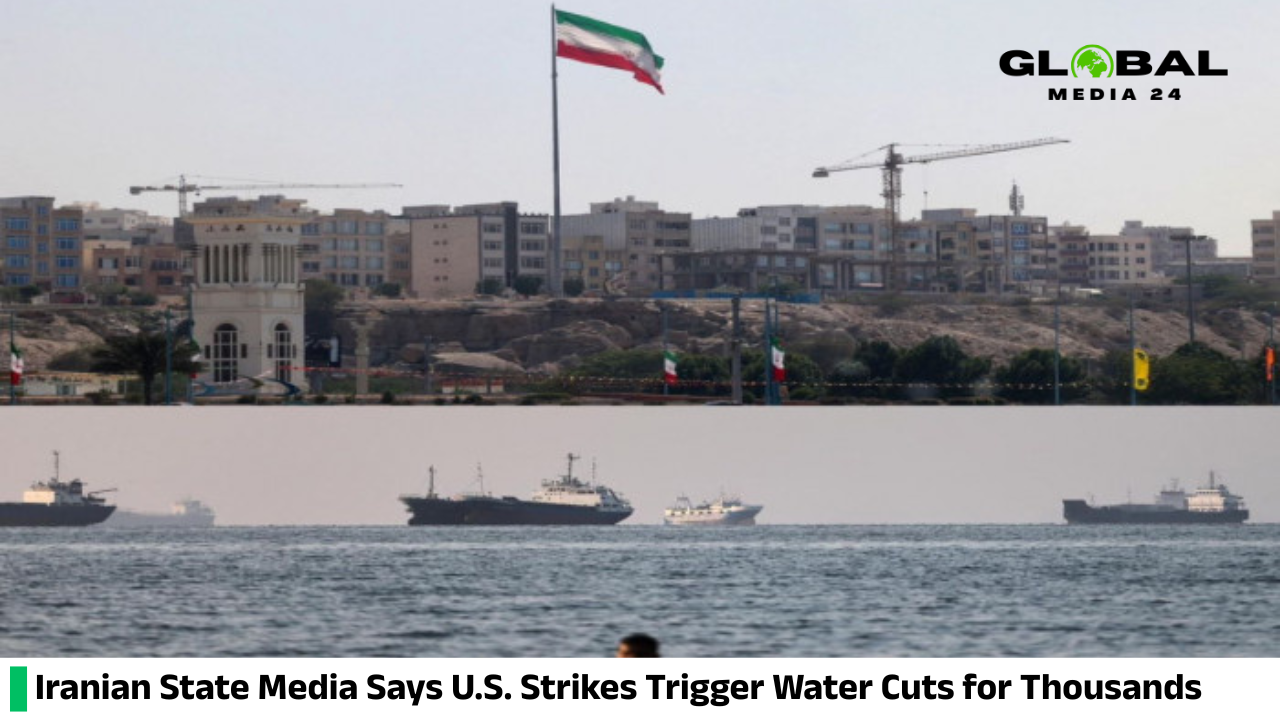
The war has disrupted major supplies of oil and gas to global markets, and fuel prices have surged across the U.S. The fighting has forced foreigners to flee business hubs and forced millions to seek shelter, with bombs hitting military bases, government buildings, oil and water plants, hotels, and at least one school.
Trump also spoke with Russian President Vladimir Putin on Monday about the war and other issues.
Yuri Ushakov, Putin’s foreign affairs adviser, said that Putin “expressed some ideas about a quick political and diplomatic solution” to the conflict after talks with Gulf leaders and Iranian President Masoud Pezeshkian.
Khamenei, a 56-year-old enigmatic cleric, is only the third Supreme Leader in the Islamic Republic’s history.
He has close ties to the paramilitary Revolutionary Guard, which has been firing missiles and drones at Israel and Gulf Arab countries since his father, Ayatollah Ali Khamenei, who had ruled since 1989, was killed in the war’s opening act.
Dozens of explosions were heard in Tehran, in what was considered the heaviest airstrike on the capital since the war began on February 28. Iranian media did not report damage or casualties.
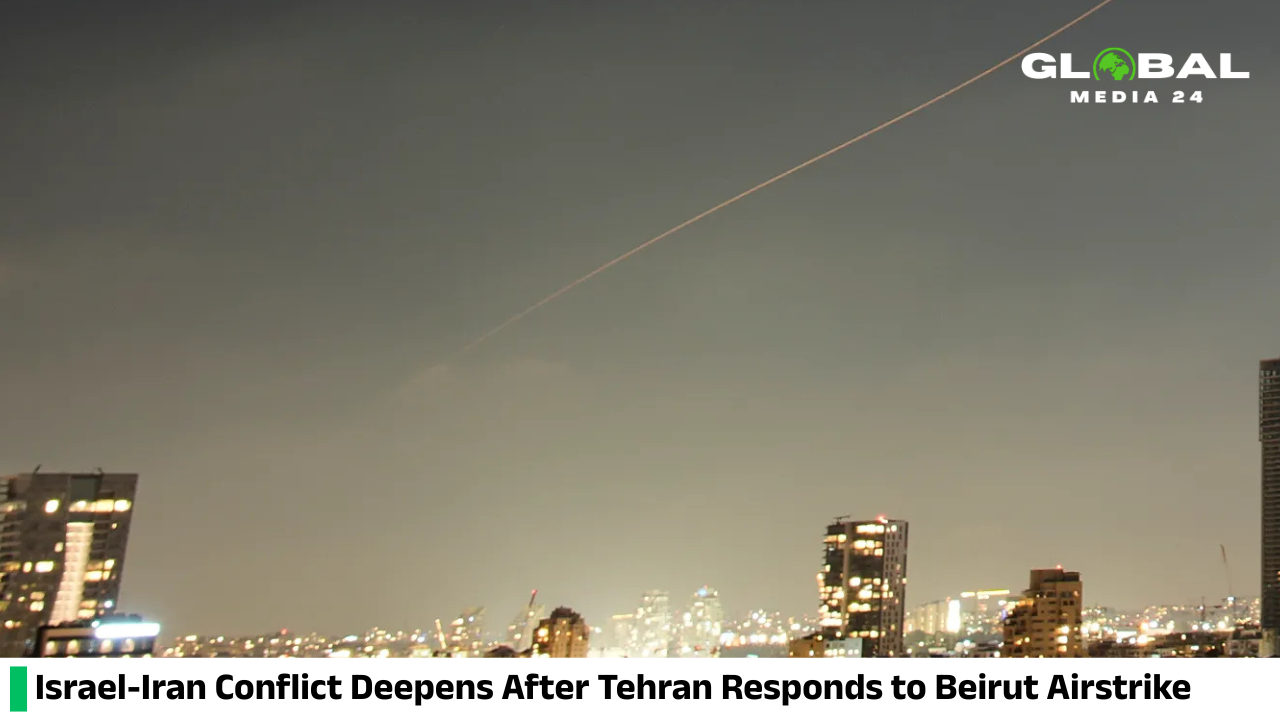
Israel said on Monday that it was carrying out “large-scale strikes” in the Iranian city of Isfahan, Tehran, and southern Iran. The Israeli military said it struck dozens of infrastructure sites, including the Revolutionary Guard’s drone headquarters.
Meanwhile, the Israeli military alerted citizens throughout the day about incoming missiles from Iran. Iran-backed Hezbollah from Lebanon also fired rockets at Israel on Monday.
Trump said the US was close to achieving its goal of eliminating Iran’s ballistic missile stockpile and its ability to build and launch them. The administration has offered varying rationales and timelines since the conflict began.
He also spoke of “building a new country,” a comment that suggested the U.S. might be engaged in creating a new Iran.
Thousands of people gathered in a central square and elsewhere in the capital, Tehran, waving flags and chanting slogans like “Death to America” and “Death to Israel” to show loyalty to the new Supreme Leader.
The younger Khamenei, who has not been seen in public since the war began, had long been considered a potential successor—even before his 86-year-old father was assassinated.
Trump told reporters that he was “disappointed” with the election of Mojtaba Khamenei and that he liked the “idea” of a leader chosen from a group of “internal” candidates, saying it worked well with Venezuela.
The younger Khamenei is considered even less compromising than his late father. As Supreme Leader, he has the final say on all major policies, including Tehran’s controversial nuclear program.
Although Iran’s key nuclear sites were destroyed after US bombing during the 12-day Israel-Iran war in June, it still possesses a significant amount of enriched uranium, technically just one step away from weapons-grade levels.
Khamenei could accomplish what his father never did: build a nuclear bomb.
Trump told reporters that the war with Iran began because the country was working on a new site to develop materials to replace the nuclear weapons destroyed by the US last year.
Israel has already named Khamenei as a potential target. Trump said on Monday that it would be “inaccurate” to say whether he would be targeted.
The US stock market fluctuated on Monday, recovering from an initial sharp decline to a healthy gain as concerns gave way to hope that the war with Iran would not last long. Oil prices, which had risen from nearly $120 per barrel, the highest since 2022, fell back to $90.
Iranian attacks in the Strait of Hormuz have virtually prevented tankers from using the shipping lane that carries a fifth of the world’s oil, and Iranian drones and missiles have targeted the oil and gas infrastructure of major producers. According to the International Maritime Organization, at least seven sailors were killed in attacks on merchant ships near the strait. Kamal Kharrazi, foreign policy adviser to the Supreme Leader’s office, told CNN on Monday that Iran is prepared for a long war.
He said he “no longer sees any room for diplomacy” unless economic pressure forces other countries to intervene and stop “the Americans’ and Israelis’ aggression against Iran.”
Meanwhile, Turkey said NATO defenses intercepted a ballistic missile that entered its airspace for the second time since the war began.
Saudi Arabia attacked Iran after a drone attack on its major Shaybah oil field, saying it would suffer “the most” if Tehran continued to attack Arab countries.
In the UAE, home to the futuristic city of Dubai, officials said two people were injured by shrapnel from Iranian missiles intercepted over the capital, Abu Dhabi. The Emirati Defense Ministry said 15 ballistic missiles and 18 drones were fired at the country on Monday.
On Tuesday morning, the United Arab Emirates said a drone strike targeted its consulate in Iraq’s Kurdish region, causing damage but no injuries.
The Foreign Ministry statement did not hold anyone responsible for the attack but described it as a “dangerous escalation and a threat to regional security and stability.”
Iran also attacked Kuwait, Qatar, and Bahrain, where the government said one person was killed and others injured in an Iranian attack targeting a residential building in the capital, Manama.
Several U.S. diplomatic missions have ordered the departure of all but essential staff.
According to officials, the war has killed at least 1,230 people in Iran, at least 397 in Lebanon, and 11 in Israel.
A total of seven U.S. service members have been killed.
Trump said Monday that the soldiers’ families told him during the transfer of their bodies in Dover, Delaware, over the weekend: “Make sure you win, sir.”