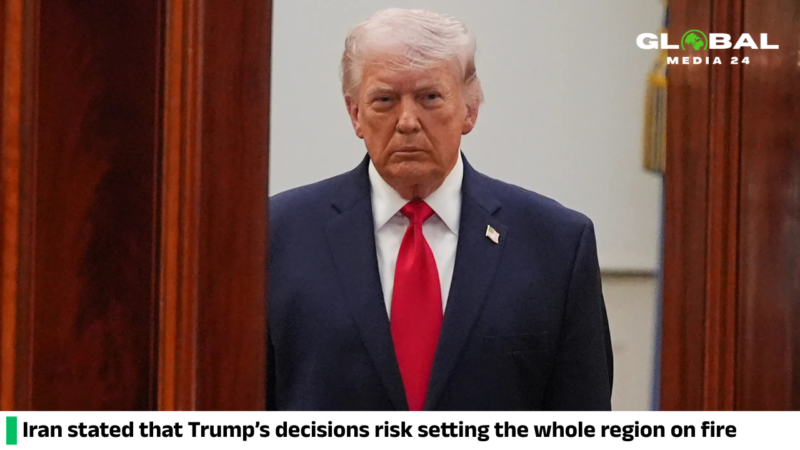
Trump Open to Ending Iran War Despite Hormuz Closure

Trump reportedly believed that attempting to force open the chokepoint would extend the conflict beyond his intended four- to six-week timeframe.
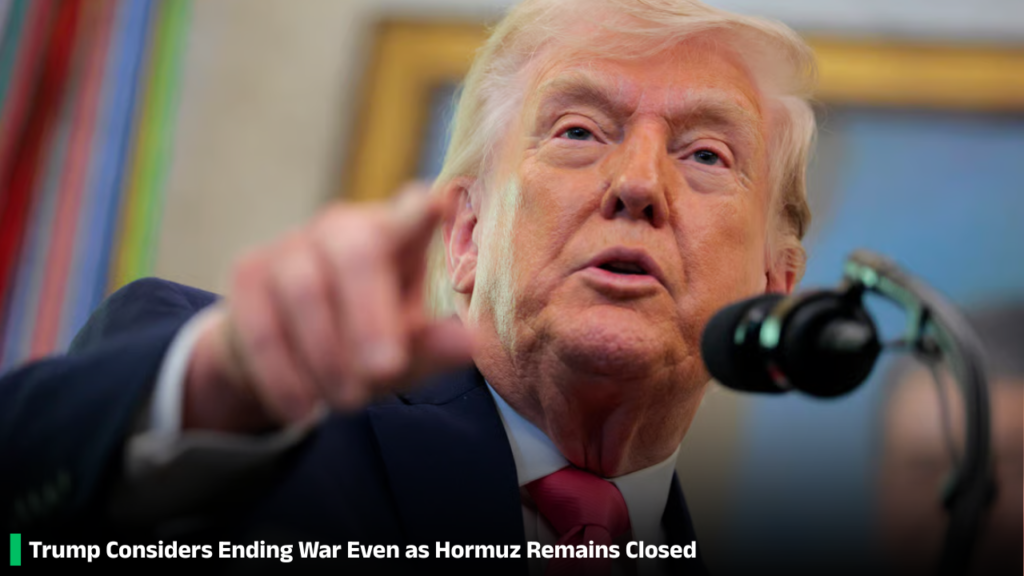
Citing administration officials, The Wall Street Journal reported that U.S. President Donald Trump told his aides he is “prepared to call off” military operations against Iran—even if the Strait of Hormuz remains largely closed.
This development comes just days after Trump issued a threat to Iran, warning that if Tehran did not permit shipping operations through the strait, the U.S. would “obliterate” its power plants.
According to the report, Trump stated that he would defer a “complex operation” aimed at reopening the choke point—which carries approximately one-fifth of the world’s oil supply—to a “later date.”
The president reportedly assessed that a mission to reopen the choke point would extend the conflict beyond his projected timeline of four to six weeks.
U.S. Drops 900 kg Bunker-Buster Bomb on Iran’s Isfahan; Trump Shares Video
The report notes that Trump decided the U.S. should focus on achieving its primary objectives—neutralizing Iran’s navy and missile stockpiles while de-escalating current hostilities—while simultaneously pressuring Tehran through diplomatic channels to resume the free flow of trade.
Furthermore, should these diplomatic efforts fail, Washington would then pressure its allies in Europe and the Gulf region to take the lead in reopening the strait.
The Strait of Hormuz—which connects the Persian Gulf to the Gulf of Oman and the Arabian Sea—serves as a vital conduit for approximately 25 percent of the world’s oil; for India, this route is even more critical, as 80 percent of its essential energy supplies pass through it.
Iran has effectively closed the shipping lane—particularly to the U.S. and nations supporting the war effort—bringing the daily movement of hundreds of vessels—including container ships, dry bulk carriers, and liquid cargo tankers—to a near standstill.
The conflict erupted on February 28, when the U.S. and Israel launched coordinated airstrikes against Iran following stalled nuclear negotiations and Tehran’s assertions that it was resuming its nuclear activities.
These attacks, codenamed “Operation Epic Fury,” targeted several Iranian cities and resulted in the deaths of numerous senior leaders, including Ayatollah Ali Khamenei.
Iran has been launching retaliatory strikes, many of which have caused damage to Gulf nations such as Dubai, Kuwait, Abu Dhabi, Qatar, and Bahrain.
White House Press Secretary Karoline Leavitt told reporters on Monday that President Trump would likely ask Arab nations to shoulder the financial burden of the war against Iran; she added that she anticipates Trump will have further comments to make on this issue.
When asked during a press briefing whether Arab nations would step forward to help fund the war effort, Leavitt stated that she would not preempt the president but confirmed that the concept was indeed Trump’s idea.
She remarked, “I believe this is a matter in which the president would take a keen interest. I won’t get ahead of him on this, but it is certainly an idea—something I think you will hear more about from him.”