
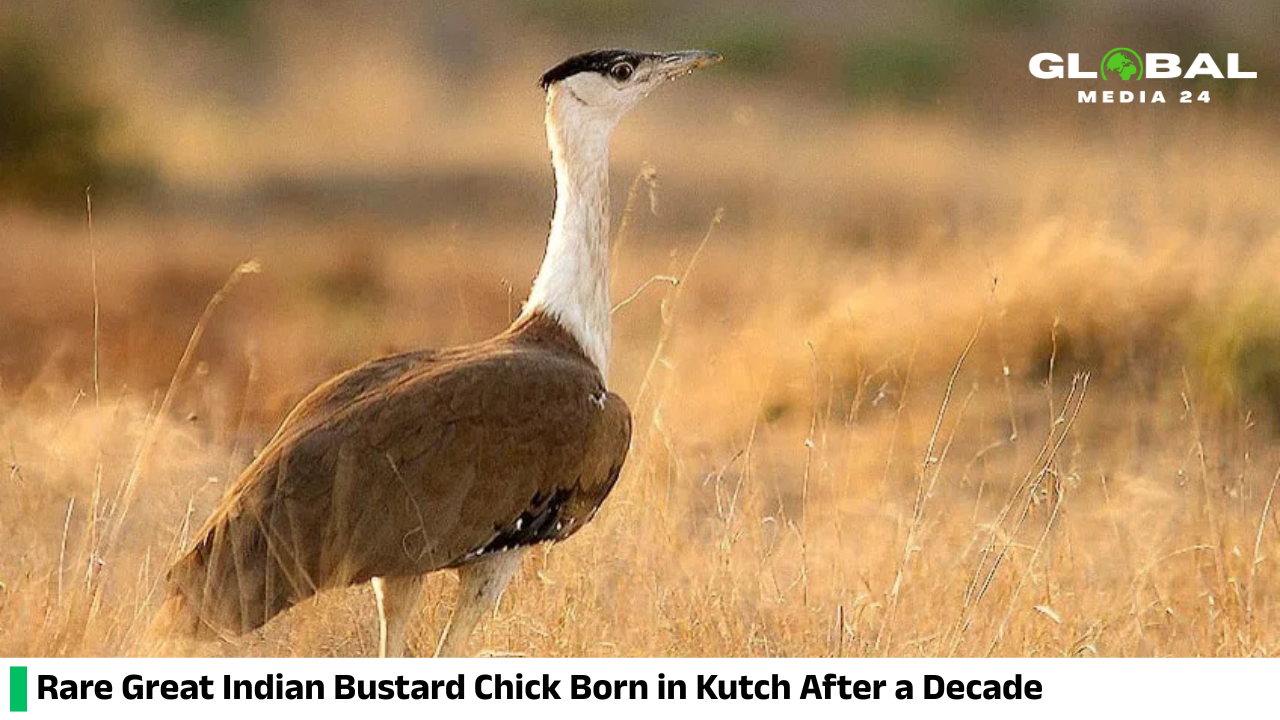
The population of birds at the breeding centers set up in Sam and Ramdevara, Rajasthan, has now risen to 73.
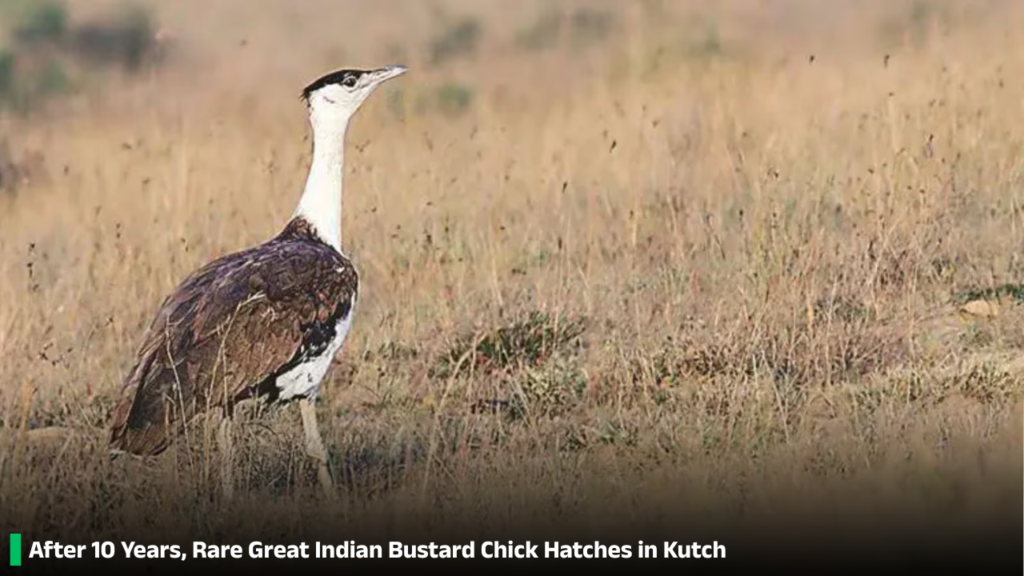
Forest and Environment Minister Arjun Modhwadia stated that a major breakthrough in wildlife conservation has been achieved through the collaborative efforts of the Forest Departments of Gujarat and Rajasthan, the Union Ministry of Environment, and the Wildlife Institute of India (WII).
The hatching of a Great Indian Bustard (‘Ghorad’) chick in the Abdasa region of Kutch—after a gap of a decade—was a moment of pride for everyone involved.
Providing further details, the Forest Minister noted that the Gujarat Forest Department, under the leadership of Chief Minister Bhupendra Patel and Deputy Chief Minister Harsh Sanghavi, has achieved a significant milestone in wildlife conservation.
He lauded the efforts of the officials from the Wildlife Division and congratulated everyone involved in making this campaign a success.
Union Minister for Environment, Forest, and Climate Change, Bhupender Yadav, also commended the joint efforts undertaken by the Ministry of Environment, the states of Gujarat and Rajasthan, and the Wildlife Institute of India (WII).
Forest Minister Modhwadia further added that this success was made possible through the application of an advanced conservation technique known as the ‘Jumpstart Approach.’
‘Project GIB’ was launched in 2016, in alignment with the vision articulated in 2011 by the then Chief Minister of Gujarat—and current Prime Minister—Narendra Modi, regarding the preservation of the Ghoral bird’s natural habitat. The population of these birds at the breeding centers established in Sam and Ramdevra, Rajasthan, has now risen to 73.
Due to a scarcity of male birds within the Ghorad population in Kutch, the female birds were laying eggs that remained infertile. To address this challenge, a specialized conservation initiative was launched.
A fertile egg of the Great Indian Bustard was procured from a breeding center in Rajasthan and was safely transported to Kutch following a continuous 19-hour road journey inside a portable incubator.
On March 22, the infertile egg in a female Ghorad’s nest in Kutch was successfully replaced with the fertile egg. The female bird naturally incubated the egg, and on March 26, a healthy chick was born.
Currently, the field monitoring team is continuously keeping a close watch on the female Great Indian Bustard and her chick. The minister stated that this is a moment of pride for scientists, Forest Department officials, and wildlife enthusiasts, which will further strengthen India’s commitment to wildlife conservation and ecological preservation.