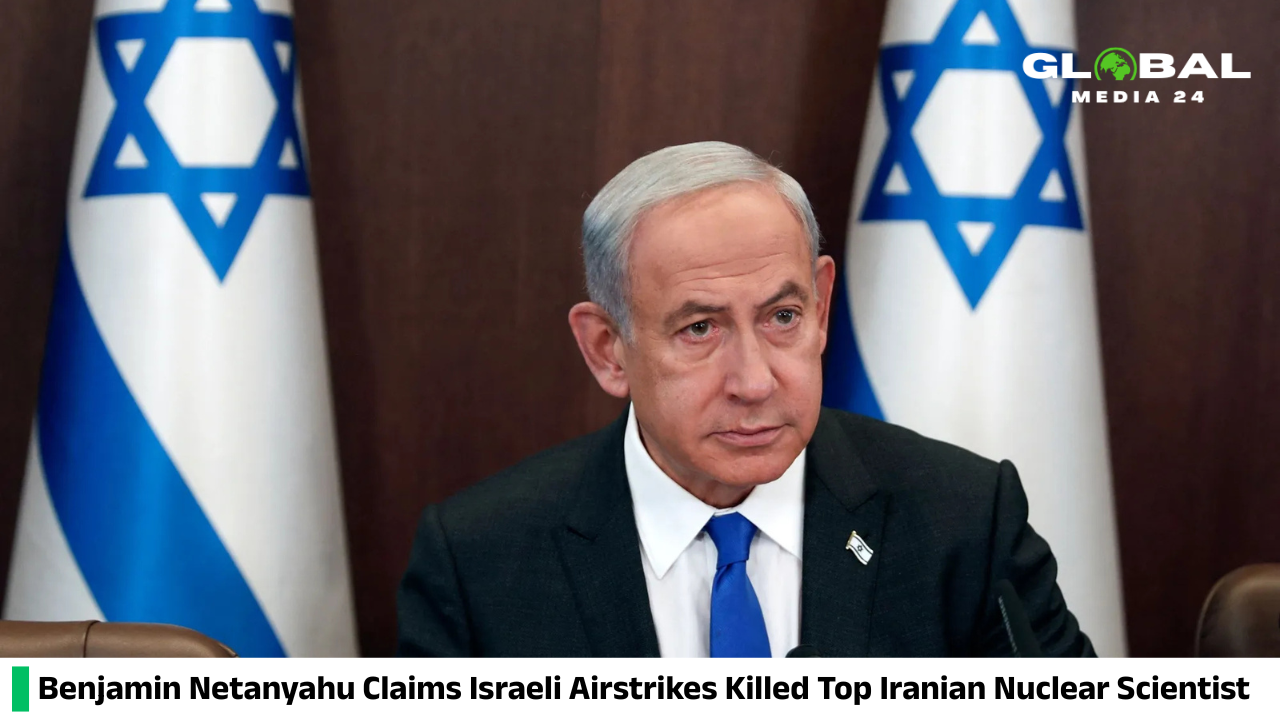
Benjamin Netanyahu, the Prime Minister of Israel, stated that Israeli strikes have resulted in the deaths of several leading Iranian nuclear scientists.
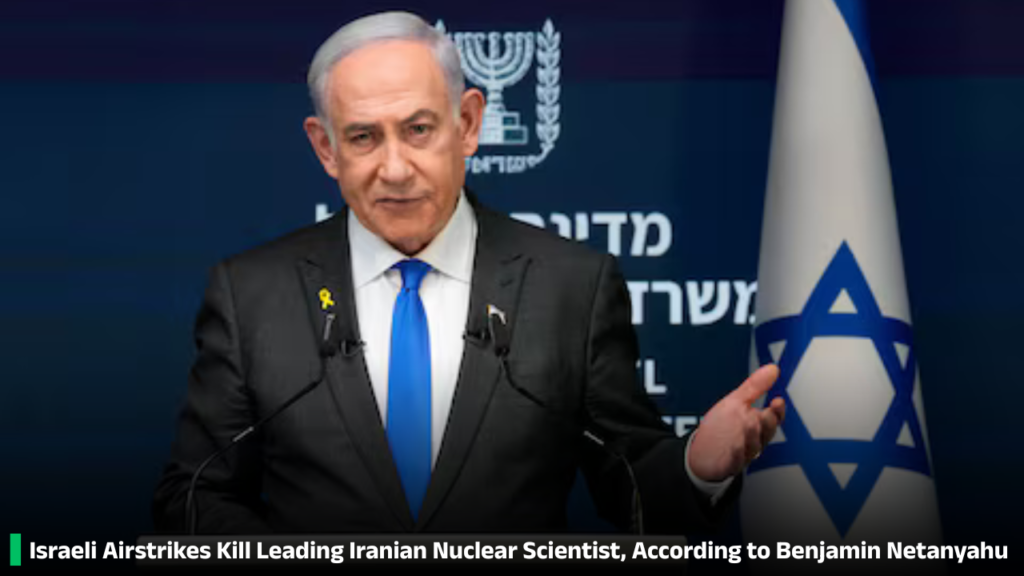
Israeli Prime Minister Benjamin Netanyahu stated that a top Iranian nuclear scientist was killed and several others were injured in Israeli strikes.
Speaking at a news conference on Thursday night, Netanyahu denounced Iran’s new Supreme Leader, Ayatollah Mojtaba Khamenei, describing him as a “puppet of the Revolutionary Guards” who cannot appear in public.
Addressing the Iranian people, he declared that the time for a “new path to freedom” is approaching and that Israel stands with them.
“But ultimately, it depends on you,” he said. “It is in your hands.”
Meanwhile, Iran’s secretive new supreme leader vowed on Thursday to continue attacks against Arab Gulf nations and to leverage the effective closure of the strategic Strait of Hormuz as an advantage against the United States and Israel.
This marked his first public statement since being chosen to succeed his father, who was killed in an Israeli attack.
Supreme Leader Ayatollah Mojtaba Khamenei, 56—whom Israel suspects was wounded during the initial shelling of the conflict—has not been seen in public since that time.
In a statement read by a state television news anchor, he vowed to avenge those killed in the war, including the victims of an attack on a school in which more than 165 people lost their lives.
The statement signaled a determination to continue the conflict, which has disrupted global energy supplies, international travel, and the security of Arab Gulf nations.
Oil prices had previously surged above $100 per barrel due to Iran’s persistent attacks on shipping traffic and energy infrastructure in the Persian Gulf.
U.S. and Israeli strikes have inflicted heavy damage on Iran’s leadership, military, and ballistic missile program, yet they have failed to topple the government—a goal U.S. President Donald Trump has repeatedly stated as his objective.
Iran is attempting to inflict such severe economic damage upon the world that it creates pressure on the U.S. and Israel to halt their bombing campaign, which began on February 28. Those attacks resulted in the deaths of Supreme Leader Ayatollah Ali Khamenei—Mojtaba’s father—and the younger Khamenei’s wife.
Meanwhile, Trump has vowed to “finish the job,” although he claimed that Iran is “nearly finished.” In a social media post on Thursday, he stated that ensuring Iran does not develop nuclear weapons is a priority more critical than rising oil prices.
The U.S. military announced on Thursday that, since the commencement of operations against Iran, U.S. forces have struck more than 6,000 targets to date, including over 30 mine-laying vessels.
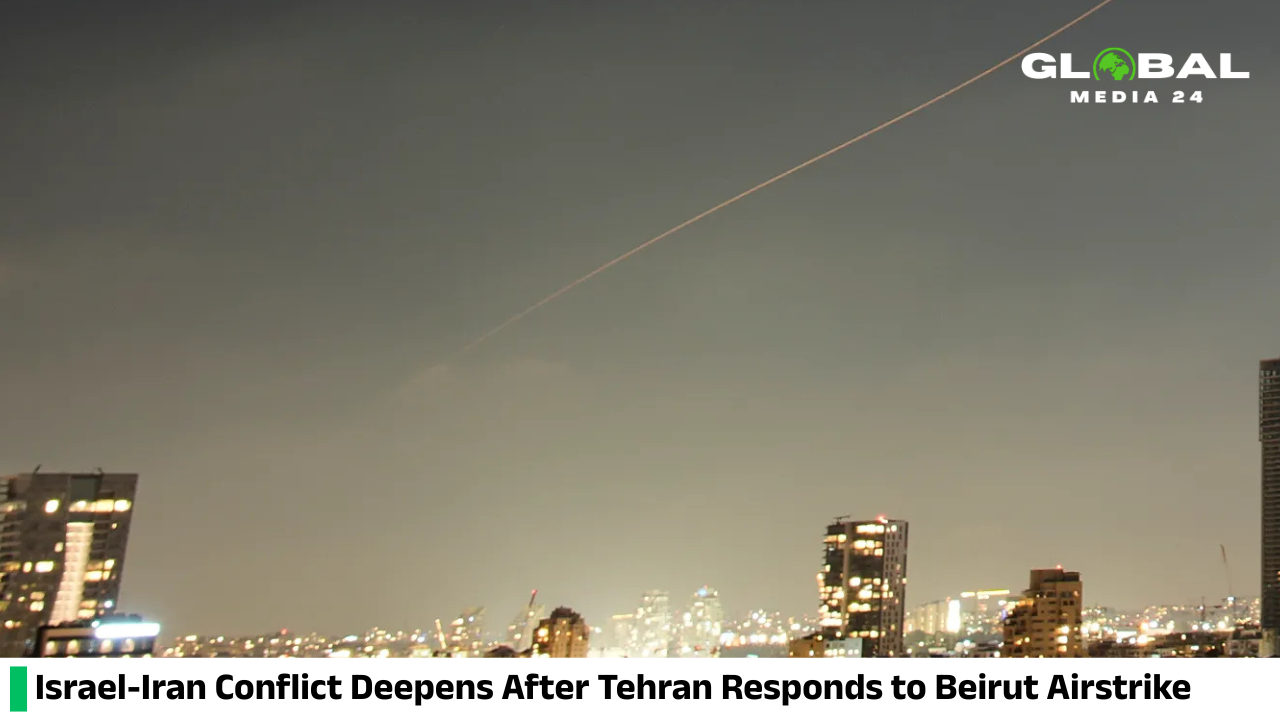
Concurrently, Iran-backed Hezbollah militants fired approximately 200 rockets from Lebanon into northern Israel, while sirens blared in other regions and the loud sounds of Iranian missile interceptions could be heard.
Israel launched another wave of strikes against Tehran and Lebanon, killing 11 people.
The U.N. Refugee Agency reported that the ongoing conflict has left 3.2 million people in Iran displaced. It noted that the majority of these individuals have fled Tehran and other major cities, heading toward the country’s northern regions or rural areas. In Lebanon, approximately 800,000 people have been internally displaced, raising fears of a humanitarian crisis.
Khamenei’s initial statement signaled that he intends to continue his late father’s strategy of confronting the United States and Israel. He appealed to the Arab nations of the Gulf to “close” U.S. bases in the region, stating that Washington’s promise of security is “nothing but a lie.”
He also remarked that Iran has “studied opening other fronts—areas where the enemy has limited experience and would be highly vulnerable should the war persist.” He offered no further details, though Iran’s name has historically been linked to past attacks on U.S., Israeli, and Jewish targets worldwide.
Khamenei is closely aligned with Iran’s paramilitary Revolutionary Guard and is considered even less compromising than his father. His current whereabouts are unknown, and he is likely a primary target for both the U.S. and Israel.
In addition to striking energy infrastructure across the region, Iran has also effectively blockaded the Strait of Hormuz—the vital waterway connecting the Persian Gulf to the Indian Ocean—through which one-fifth of the world’s traded oil flows.
The price of Brent crude oil—the international benchmark—surged another 9% to exceed $100 per barrel, representing an increase of approximately 38% compared to the price at the outbreak of the war. Prices have fluctuated in recent days, at one point climbing to nearly $120 per barrel.
According to the Israeli military, it was a sleepless night for many in both Israel and Lebanon, as Hezbollah fired approximately 200 rockets into Israel. Israeli fighter jets simultaneously launched airstrikes against targets in the southern suburbs of Beirut and struck a vehicle near the capital.
Naama Porat, a resident of the Israeli village of Klil—located about 15 kilometers (9 miles) from the Lebanese border—recounted, “The noise was deafening; it was truly terrifying.” As soon as the sounds of explosions and interceptions rang out, she rushed to a shelter with her son and spent the night there.
Israeli Defense Minister Israel Katz warned Lebanon that if its government fails to prevent Hezbollah from launching attacks, Israel will “occupy the territory and launch an offensive itself.”
The Lebanese government has intensified its demands for Hezbollah to disarm—citing the group’s previous conflict with Israel, which was halted by a 2006 ceasefire—and earlier this month, it declared Hezbollah’s military activities illegal. However, it remains hesitant to confront the militants directly.
Later on Thursday, the Israeli military struck a building in a bustling residential and commercial district of central Beirut, issuing warnings for residents to evacuate. The strike took place in an area situated in close proximity to the Lebanese Parliament, United Nations offices, and international embassies.
The building in Beirut’s Bachoura district was struck twice. It is located parallel to major thoroughfares and busy intersections in the Lebanese capital—an area dotted with newly opened restaurants and bars. This strike marked the closest the ongoing conflict has come to the heart of Beirut.
Israeli military spokesperson Avichay Adraee stated that they were targeting a “site linked to Hezbollah.”
On Thursday, the Israeli military issued warnings to residents across a large swath of southern Lebanon to evacuate their homes. The warnings instructed them to move north of the Zahrani River, a waterway situated approximately 35 miles (56 kilometers) from the Israeli border at its midpoint. On Thursday night, the Israeli military announced that it had launched another wave of strikes targeting Hezbollah in Beirut.
Furthermore, Israel stated that it recently attacked a nuclear facility in Iran, which it had destroyed in October 2024 through an airstrike. Earlier this year, satellite imagery had raised concerns that Iran was actively engaged in work at the site.