The US and Israel are striking satellite and rocket infrastructure in a bid to cripple technologies linked to weapons programs, an Iran expert said.
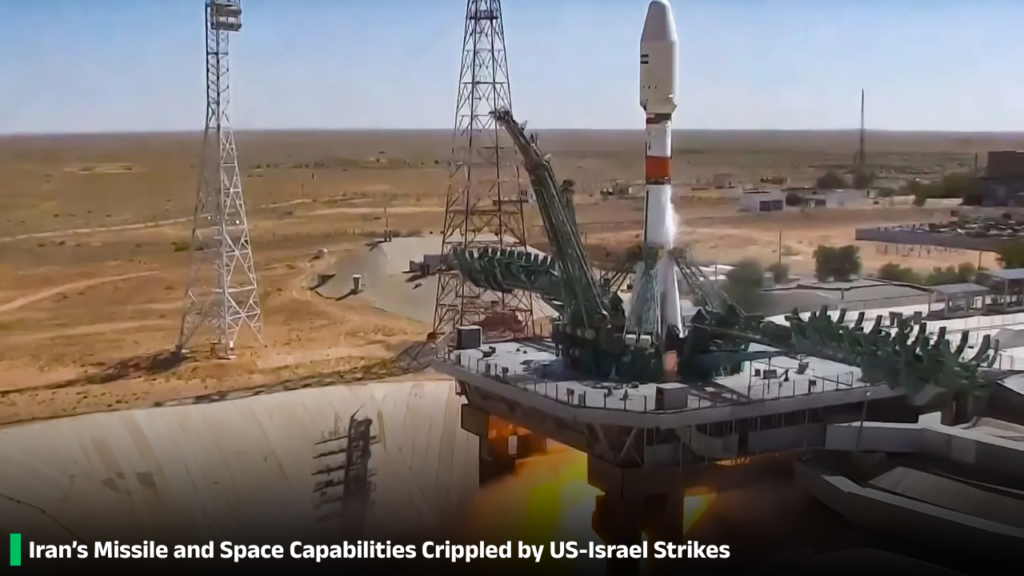
Iran’s space program—one of the most advanced in the Middle East—has suffered significant damage from U.S. and Israeli airstrikes, a situation that may compel Tehran to deepen its cooperation with China and Russia.
According to Jim Lamson, an Iran expert and researcher at King’s College London, the Americans and Israelis have targeted satellite and rocket infrastructure as part of an effort to dismantle technology utilized in the country’s weapons program.
He noted that the targets include Iran’s primary satellite developer, as well as facilities belonging to the Ministry of Defense and the Islamic Revolutionary Guard Corps (IRGC)—entities actively engaged in the development of both weaponry and space launch vehicles (SLVs).
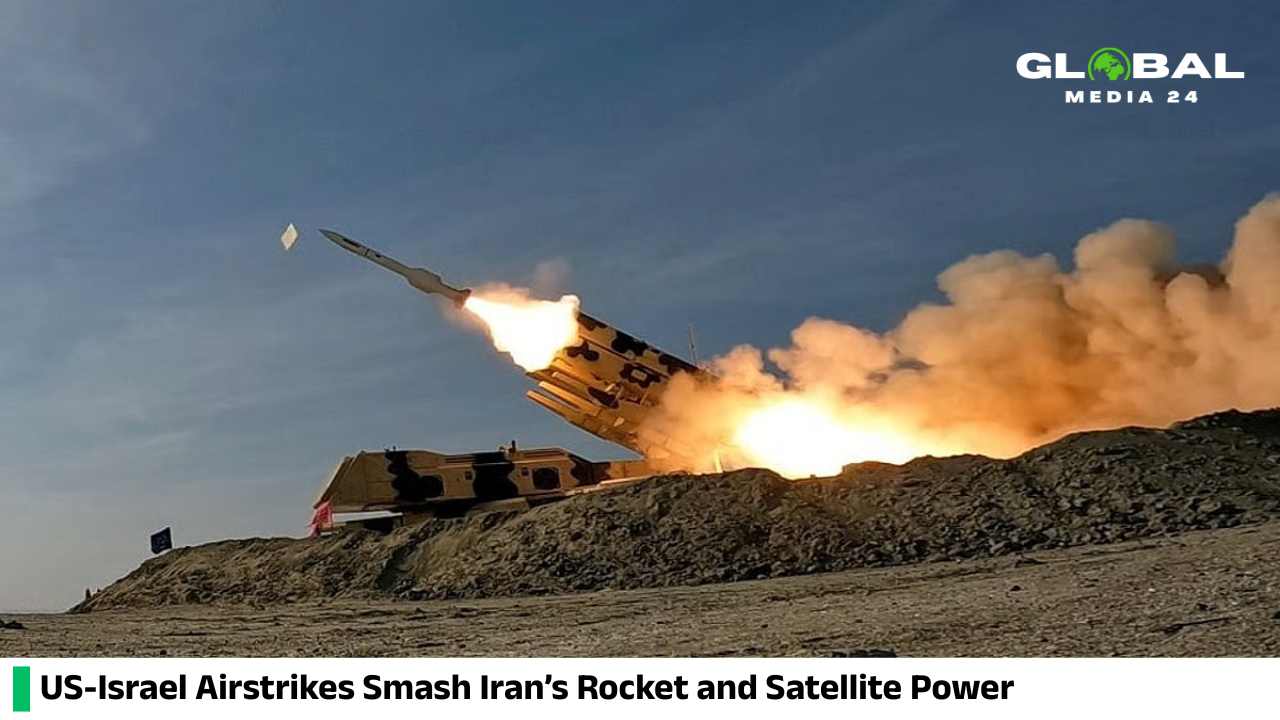
“Within the IRGC and the Ministry of Defense, the very same organizations that build SLVs also construct ballistic missiles; consequently, many of these facilities are co-located,” Lamson stated. “They are going to be hit.”
On March 8, the Israel Defense Forces (IDF) announced that it had struck the command-and-control center for Iran’s Khayyam satellite—a Russian-built surveillance satellite launched in 2022 by Roscosmos, Russia’s counterpart to NASA.
On March 16, the IDF reported that the Israeli Air Force had destroyed a compound in Tehran used to support the development of a military space program, including anti-satellite weaponry.
Lamson added that other sites subjected to attacks include the main research center of the civilian Iranian Space Agency, the Space Command of the IRGC Aerospace Force, and an IRGC facility dedicated to rocket assembly and testing.
Critics of Tehran have long argued that its space program is part of a plan to develop weapons, citing the technological similarities between rockets and long-range missiles; consequently, President Donald Trump’s administration imposed sanctions on the space agency during his first term.
General Anthony Cotton, then-commander of US Strategic Command, testified before US senators in March 2025: “Iran’s work on space-launch vehicles—including its two-stage, liquid-fueled Simorgh satellite carrier rocket—will likely shorten the timeline for developing an ICBM due to technological commonalities.”
John Sheldon, an Abu Dhabi-based founding partner at the space consultancy AstroAnalytica Ltd., stated that a current objective for the US and Israel is to prevent their adversary from achieving access to orbit.
“You can accomplish this by targeting a significant amount of ground infrastructure without ever touching the assets actually present in space,” he noted.
Attacks on Iranian facilities do not necessarily imply that the Islamic Republic can no longer utilize the satellites linked to those stations.
Tal Inbar, a senior research fellow at the Missile Defense Advocacy Alliance, pointed out that, for instance, Iran may possess other control centers for the Khayyam satellite, and Russia could potentially maintain control over the satellite itself.
“One can assume that Russia, not solely Iran, maintains control over the satellite,” he said.
According to a Bloomberg report, Moscow is currently providing Iran with various forms of intelligence—including satellite imagery and tactics for targeting with drones—to assist Iran in conducting retaliatory strikes against US forces in the region.
Lamson, from King’s College London, suggested that the Iranian government would likely emerge from the conflict with a significantly debilitated space program.
He noted that, given a severely diminished capacity to manufacture satellites or launch rockets, Iran would likely become even more reliant on allied nations possessing more advanced space programs.
Referring to space launch vehicles, Lamson remarked, “As a consequence of the conflict, they may become more dependent—or more active—in acquiring satellite and SLV technology from Russia and China.” He said, “This will probably be of better quality than what the Iranians have.”