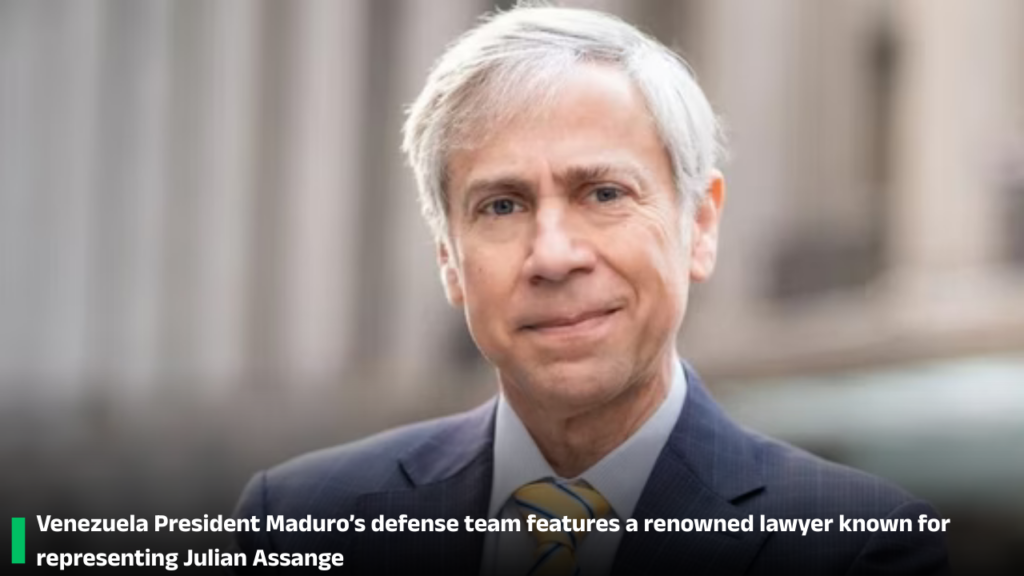
Venezuela President Maduro’s defense team features a renowned lawyer known for representing Julian Assange
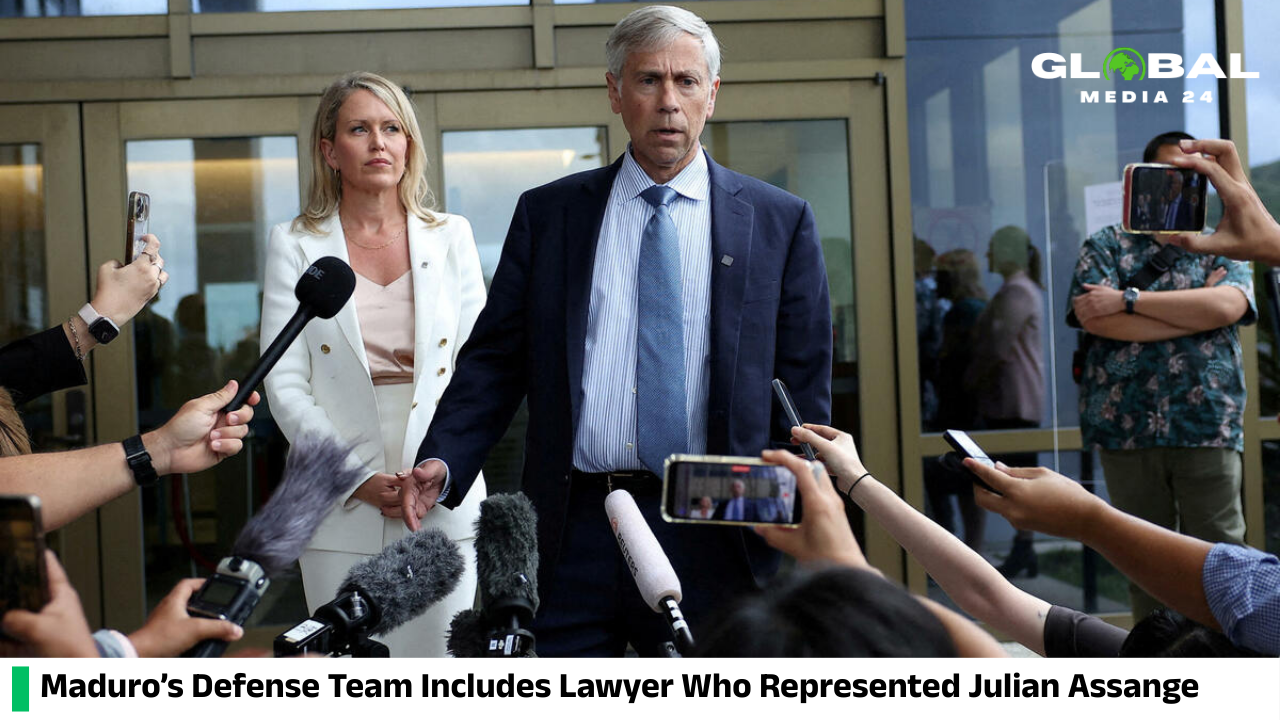
U.S. trial lawyer Barry Pollack will represent the captured Venezuelan president in a private legal capacity.
When Nicolás Maduro appeared in court in New York on Monday, his choice of lawyer was quickly debated.
The captured Venezuelan president was accompanied by Barry Pollack, a high-profile US trial lawyer who spent years representing Julian Assange and ultimately secured the WikiLeaks founder’s release from a UK prison in 2024.
Pollack is a partner at Harris St. Laurent & Wechsler, a law firm based in Lower Manhattan’s financial district on Wall Street in New York, just a few minutes’ walk from the federal courthouse where Maduro pleaded not guilty to criminal charges on Monday.
Pollack will serve as Maduro’s private lawyer in a case that could prove to be as challenging as Assange’s.
Maduro was charged Monday with drug-terrorism conspiracy, cocaine-importation conspiracy, and possession of machine guns and destructive devices, with the U.S. government calling Maduro a “narco-terrorist” and “illegitimate president.” He could face up to life in prison.
Harris St. Laurent & Wechsler did not respond to requests for comment on Pollack’s involvement, but it’s clear that he is highly respected in the legal world.
According to Chambers USA, Pollack is a “comprehensive and thoughtful lawyer” who “lives, breathes, and sleeps trial and has such a natural way with juries.”
In his first appearance representing Maduro, Pollack questioned the legality of Maduro’s dramatic abduction by US forces during a raid on the Venezuelan capital Caracas on Saturday, arguing that Maduro is entitled to immunity as a sovereign head of state, CNN reported.
Winning Maduro’s freedom will present a different challenge for Pollack than his work with Assange.
The lawyer negotiated a plea agreement on Assange’s behalf that allowed the Australian data-freedom activist to be released, ending an international legal saga that has dragged on for more than a decade.
In the deal, Assange pleaded guilty to violating the US Espionage Act in a conspiracy to obtain and disclose US national security documents.
In return, Assange, who spent five years in London’s maximum-security Belmarsh prison and seven years as a fugitive hiding from British and American law enforcement in the UK Ecuadorian embassy, was ultimately sentenced to years in prison, with the US seeking his extradition.
In an interview with Law Dragon last April, Pollack described the difficulty of negotiating a deal with the US, UK, and Australian governments before securing Assange’s release. Pollack also offered some thoughts on what Maduro is currently going through.
“Typically, when I meet with a client, they are facing the worst crisis they have ever faced,” Pollack said.
“It’s very satisfying to guide them through that process. It’s hard to imagine doing anything that has a greater impact on the life of the person you’re dealing with.”
“You spend many hours with your client. In almost every case, I’ve developed a relationship with the client. And at the end of the day, it’s no longer a stranger that I’m watching get through this terrible part of their life. This is someone I know and respect.”
In addition to his work representing Assange, Polk has previously exonerated former Enron accountant Michael Krautz and has also worked to overturn wrongful conviction cases, including helping to secure the release of Martin Tankleff, who spent 17 years in prison after being wrongly accused of murdering his parents.
In an interview with Law Dragon, Polk reflected on his strengths and gave a glimpse into how he might defend Maduro.
Pollack said, “I have the ability to communicate effectively with juries. In some ways, you’re like a translator. You’re taking a lot of technical information from one industry that the jury may not be familiar with and translating it in a way that’s understandable.”
“I’m able to talk to the jury and explain the evidence in a way that makes sense to them—it shows them that the government’s way of looking at the facts isn’t the only way of looking at the facts, and maybe it’s not even the best way of looking at the facts.”
Pollack is an adjunct professor at Georgetown University Law Center, a fellow of the American College of Trial Lawyers, and a former president of the National Association of Criminal Defense Lawyers.