US and Venezuela move to restore diplomatic relations after Maduro’s capture
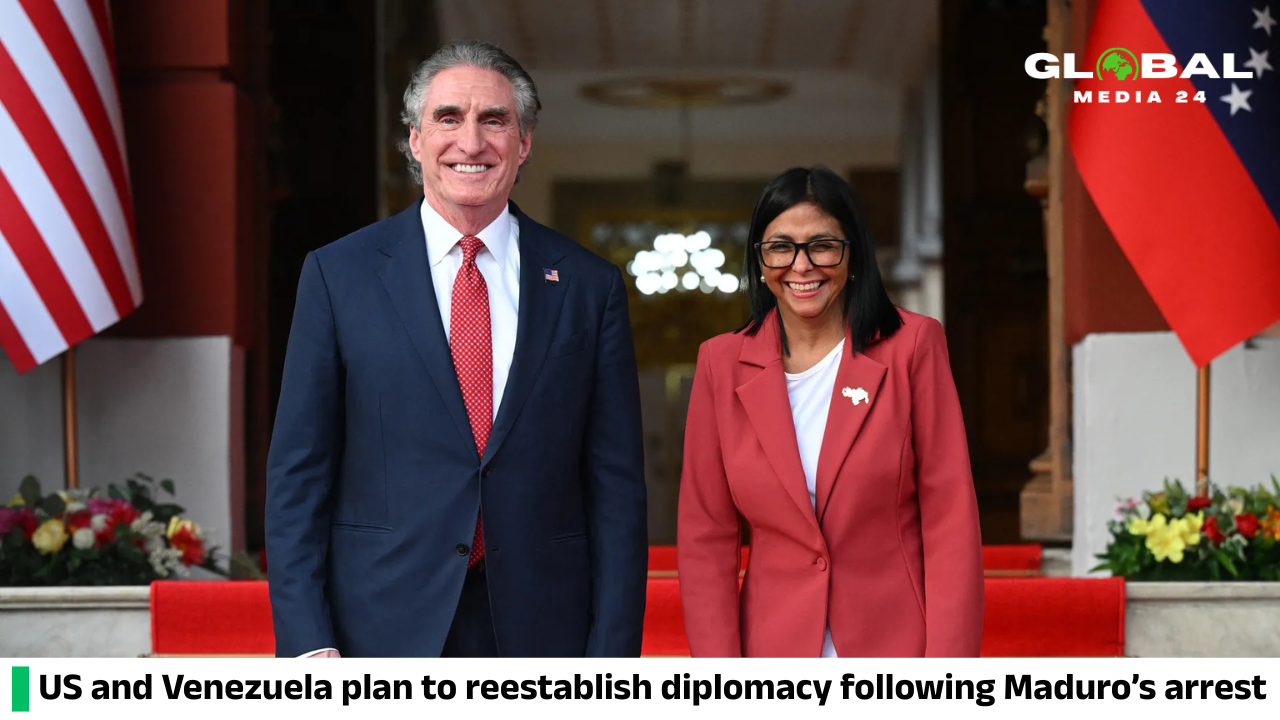
The United States and Venezuela have decided to restore diplomatic and consular ties.
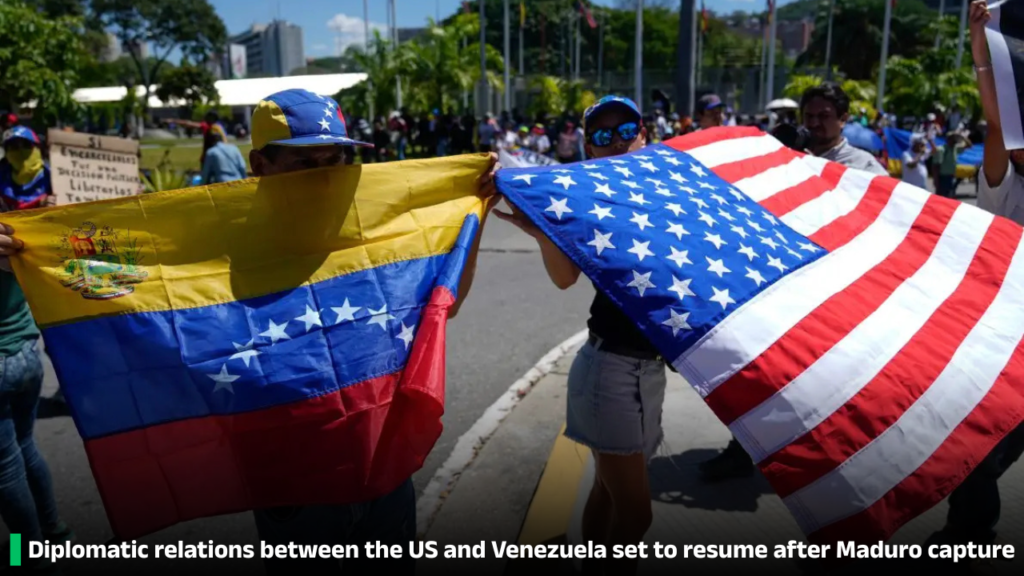
The agency said in a statement that the two sides will work together to promote stability, help economic recovery, and advance political reconciliation.
Diplomatic relations have been improving since the US military caught Venezuelan President Nicolas Maduro in a surprise raid in January, but the announcement of formal bilateral ties is a largely symbolic step.
President Donald Trump ordered troops to arrest Maduro and his wife and arraign them in Manhattan court to face arms and drug crimes, which they deny.
The US Embassy in Caracas, which was closed in 2019, has already reopened, and Washington has appointed a new diplomat to Venezuela.
Venezuela’s government said Thursday it was ready to advance “a new stage of constructive dialogue based on mutual respect.”
It said the relationship should result in “the social and economic happiness of the Venezuelan people.”
But the Caracas statement, unlike the US State Department statement, made no mention of any changes or future elections.
The US has accused Maduro—who is due to stand trial in the US this month—and other members of his government of leading a criminal organization involved in activities such as illegal mining and drug trafficking.
More diplomatic staff from the US Embassy in Bogota, Colombia, are expected to be transferred to Caracas soon, the sources said. This move will make it much easier for officials to interact face-to-face and provide consular service.
The US State Department said its work was focused on helping the Venezuelan people move forward through a “phased process” that creates conditions for a peaceful transition to a democratically elected government.
After a visit to Venezuela, US Secretary of the Interior Doug Burgum told reporters on the runway in Caracas on his return to the US on Thursday that it was a “great strategic move” to intervene in Venezuela before Iran.
The US and Israel launched military action against Iran on February 28. Iran’s Supreme Leader, Ayatollah Ali Khamenei, was killed in the first attack.
Burgum, who leads President Trump’s National Energy Dominance Council, said on Thursday that this intervention would help ensure that “oil comes to America.”
Since the US military attack on Venezuela and the capture of Maduro, the US has signed new oil deals with Venezuela.
Washington has allowed the country to sell oil previously banned under US supervision, and Venezuela has changed its law to allow more foreign investment in the oil sector.
On Wednesday, Venezuela’s interim President Delcy Rodriguez and Burgum said the two countries would work together to develop mining in the country.
In addition to having the world’s largest oil reserves, Venezuela is also rich in gold, diamonds, essential minerals, and rare earth minerals—some of which are used in mobile phones.