Trump’s newly introduced tariff has taken effect at a rate lower than initially anticipated
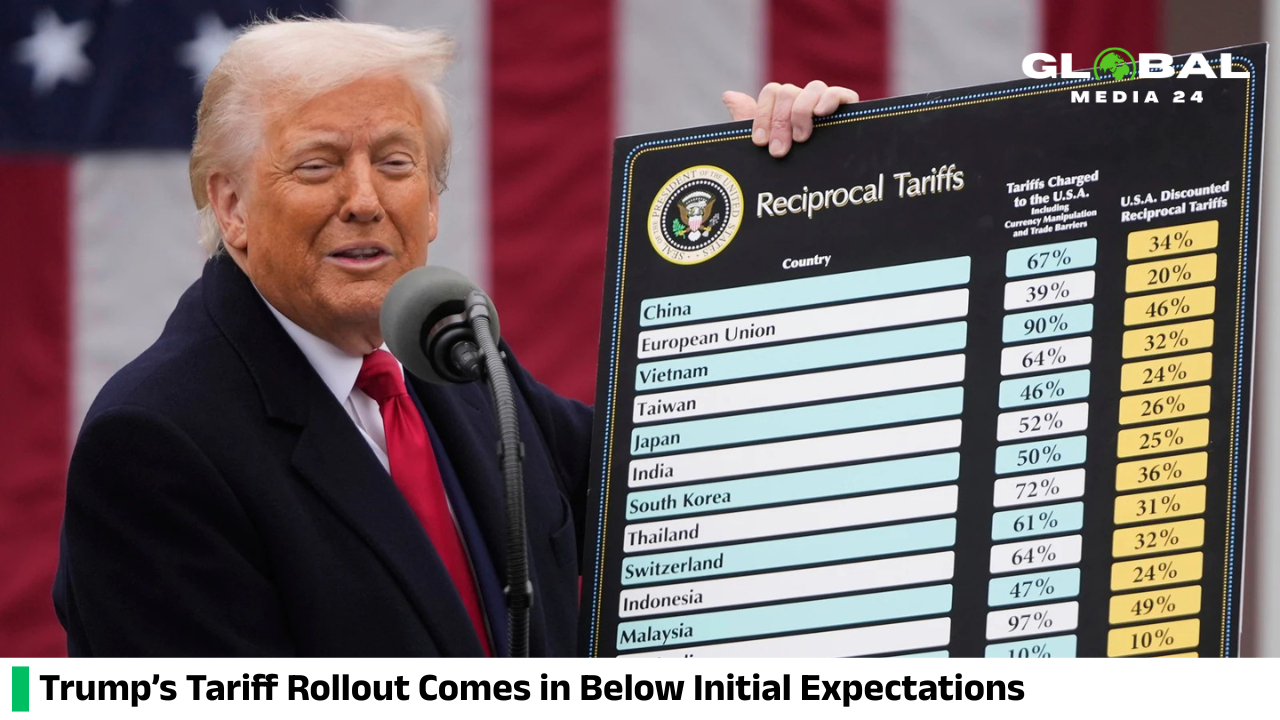
US President Donald Trump’s newly implemented worldwide tariffs are now active at 10%, despite his previous promise to enforce them at a higher percentage.
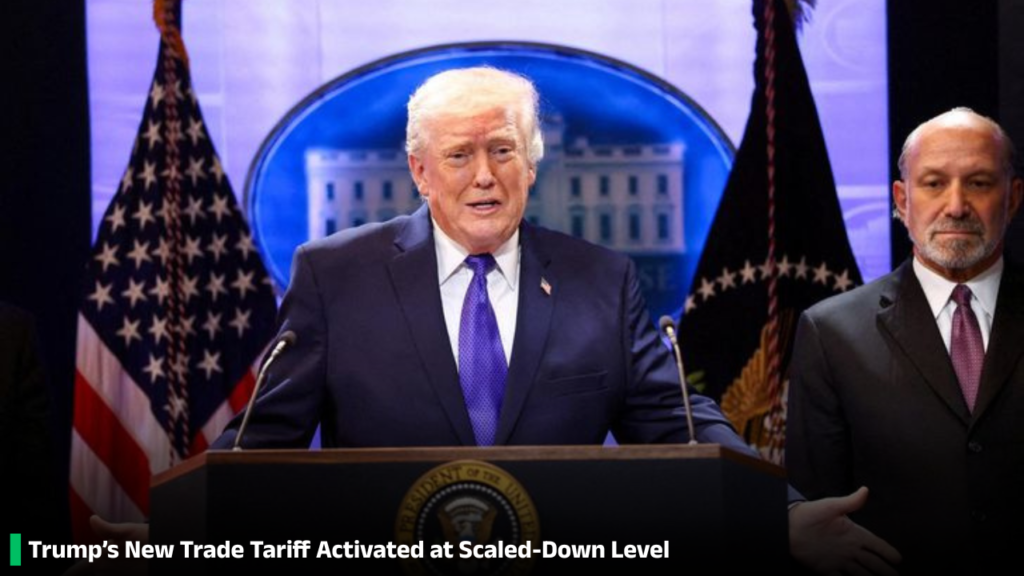
After the Supreme Court blocked several of his major import taxes on Friday, the president said he would impose a 10% global rate. He then announced on Saturday that the rate would be 15%.
However, according to official documents, the tariffs have been set at the lower rate since Tuesday, and no directive to increase the rate has been issued.
A White House official told Reuters that the White House is working on updating the rate to 15% to reflect Trump’s announcement, though he did not specify when the change would take effect.
Carsten Brzeski, an analyst at investment bank ING, said, “I think this just adds to the chaos and confusion,” referring to the rapidly changing tariffs and their impact on businesses. “We’re back to where we were last year in terms of uncertainty,” he told the BBC’s Today program. He also said there’s now a greater risk that US trading partners will retaliate.
He added, “The risk of a full-blown tariff war—a trade war—is clearly higher than last year.”
An executive order signed by Trump on Friday stated that the temporary 10% import duty is intended to “address fundamental international payment problems and continue the administration’s work to rebalance our trade relationships to benefit American workers, farmers, and manufacturers.”
The administration is imposing the levy under Section 122 of the 1974 Trade Act, which allows the president to impose the charge for 150 days without congressional approval.
The president has argued that tariffs are necessary to reduce the US trade deficit—the amount by which imports exceed exports. But last year, the deficit reached a new high, increasing 2.1% compared to 2024 and reaching nearly $1.2 trillion (£890 billion).
According to the most recent official data, the US has already collected at least $130 billion in tariffs using the International Emergency Economic Powers Act (IEEPA) of 1977.
On Friday, the Supreme Court ruled that the president had exceeded his authority by imposing large tariffs using the IEEPA last year, a decision that raises the possibility that businesses could receive billions of dollars in tariff refunds.
Global transportation and postal company FedEx filed a lawsuit on Monday seeking a “full refund” of import taxes paid under the IEEPA.
Meanwhile, the campaign group We Pay the Tariffs said it represents more than 900 US individuals who, in an open letter to the government, are demanding a “full, swift, and automatic refund of the illegal IEEPA tariffs.”
Although experts have cast doubt on the likelihood of the US paying back the money, Trump said on Friday that the case will be fought in court “for the next five years.”
Supreme Court Justice Brett Kavanaugh said in his ruling that the refund process is likely to be “messy.”
Trump has strongly criticized the Supreme Court’s decision, calling it “stupid, poorly written, and deeply anti-American.”
“Good news, but will it stay that way?”
Fraser Smeaton is the chief executive of fancy dress firm Morph Costumes, a UK-based business that manufactures costumes in China and exports them to the US.
The business pays the Chinese tariff rate and says they haven’t been able to invest as productively as they would have liked because they had to set aside money in case the tariff policy changed.
He asked, “The fact that we’re at 10% instead of 20% is better than before, but will it stay that way?”
Like many others, he says his business is trying to get a refund for the illegal IEEPA tariffs and has kept track of “what we paid and when.”
Daniel Graham, managing director of UK tea business Birchal, says the sudden lower tariff rate is welcome, but the lack of clarity is not.
He said, “The good news is that it’s reduced; the bad news is that it keeps changing.” His great-grandfather started the tea business in 1872. It imports tea from Africa, packs it in the UK, and then exports it to other countries, including the US.
He says the firm has been able to deal with tariffs so far because tea is a lower-cost product than cars or other expensive goods, meaning tariffs don’t impact them as much.
However, if Trump’s tariffs become too high, he says the business will consider “different areas.”
‘We have to react’
On Monday, Trump threatened to impose higher tariffs on countries that “play games” with recent trade deals following the Supreme Court’s decision.
His warning came as countries around the world said they were considering tariffs and trade deals following the ruling.
British Business and Trade Secretary Peter Kyle said he was confident the basic 10% tariff deal between the UK and the US would remain in place.
He told a parliamentary committee on Tuesday, “It was the best deal, and it still is the best deal, and the basic terms we agreed with the US still apply.”
The deal also included special conditions for specific industries, such as automobiles and aircraft.
Kyle said higher tariffs were a “lose-lose” situation for both British and American businesses, but he also said the UK would still seek a full trade agreement with the US.
He said, “We have maintained relationships and dialogue with our partners, and we are…looking for other opportunities to move forward quickly.” The European Union said it would hold off on approving the deal reached over the summer.
Brando Benifei, chairman of the European Parliament’s delegation for relations with the US, said, “If the situation worsens, we will have to react.” He also said the EU has asked the US for clarity on tariffs.
“I think you should demand respect,” he said on the Today program. “My appeal is that all countries in the world who don’t like the way we’re being treated…try to work together a little.”
India also said it would postpone previously scheduled talks to finalize the recently reached agreement.