Trump Reverses His Stance on Deploying Ground Troops Following Attack on the U.S. Embassy in Riyadh
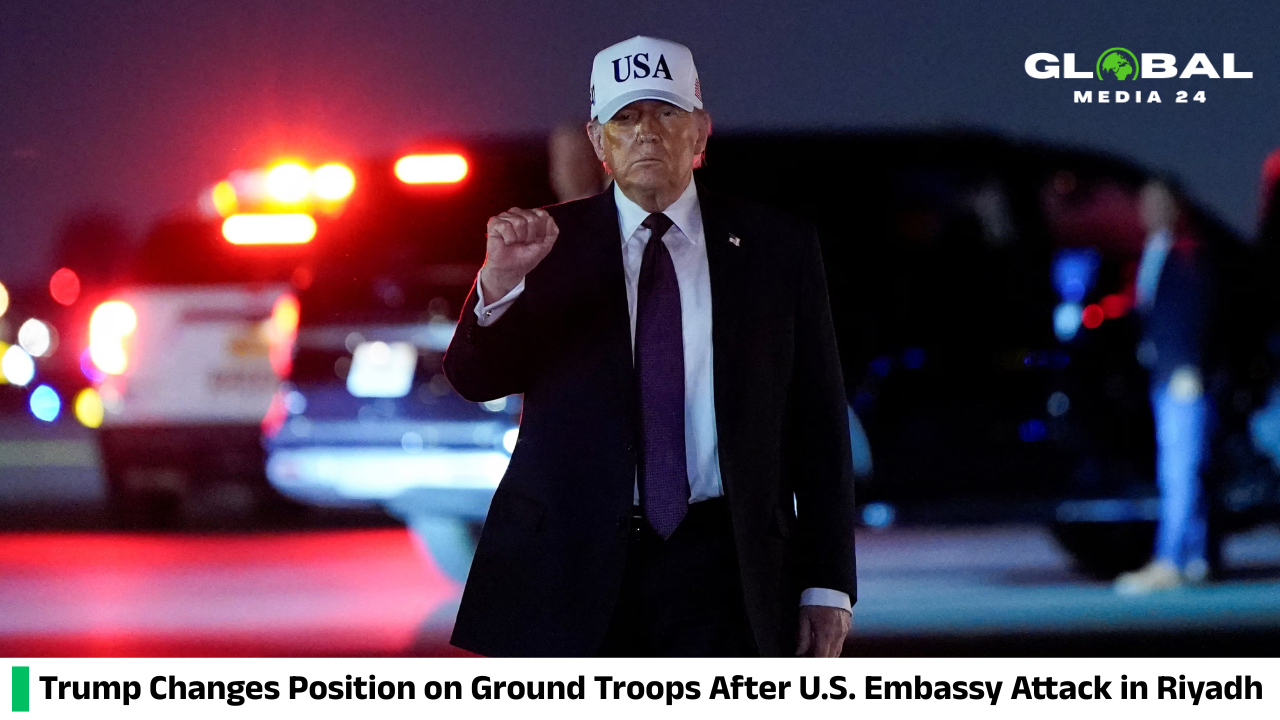
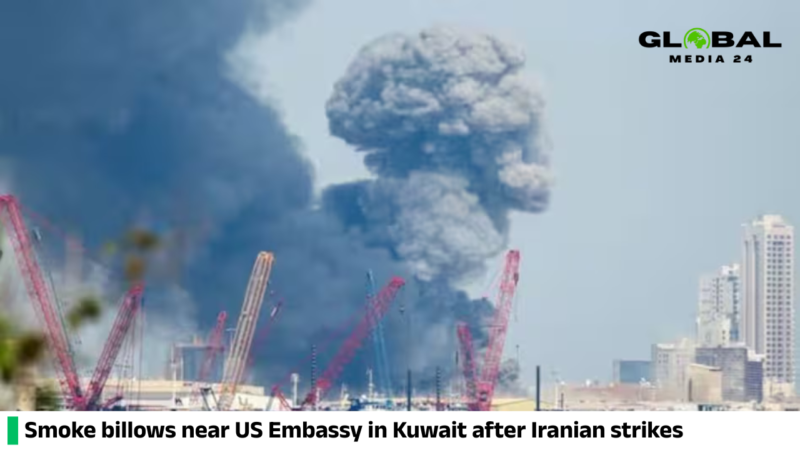
Trump stated in an interview that a response to the attack on the U.S. Embassy in Riyadh, Saudi Arabia, would be coming soon.

US President Donald Trump said on Tuesday that “troops on the ground” may not be needed, as tensions between Washington and Iran are rising in the Middle East.
In an interview with NewsNation journalist Kelly Meyer, Trump said that the attack on the US Embassy in Riyadh, Saudi Arabia, and the deaths of US service members would soon be avenged. As of Monday, six US soldiers had been killed in the operation.
This statement was a departure from Trump’s earlier claim that he was not “nervous” about having troops on the ground.
After the attack on Iran on Saturday, Trump told the NY Post, “Every president says, ‘There won’t be any troops on the ground. I don’t say that. I say, “They might not be needed,” [or] “if they were necessary.”
Follow Israel-Iran War Live Updates
Departing from his campaign promise to end US involvement in wars, Trump also told the NY Post that Washington has even more firepower, saying that “the big wave hasn’t even arrived yet.”
Trump said on Monday that the US has the capability to “last much longer” than the four- to five-week timeframe set for its military operation against Iran, which has so far killed six US service members and 555 people in Iran.
He also outlined objectives for the first time—eliminating Iran’s missile, navy, and nuclear programs and halting its support for armed groups across the region—which did not specifically include toppling the Islamic Republic.
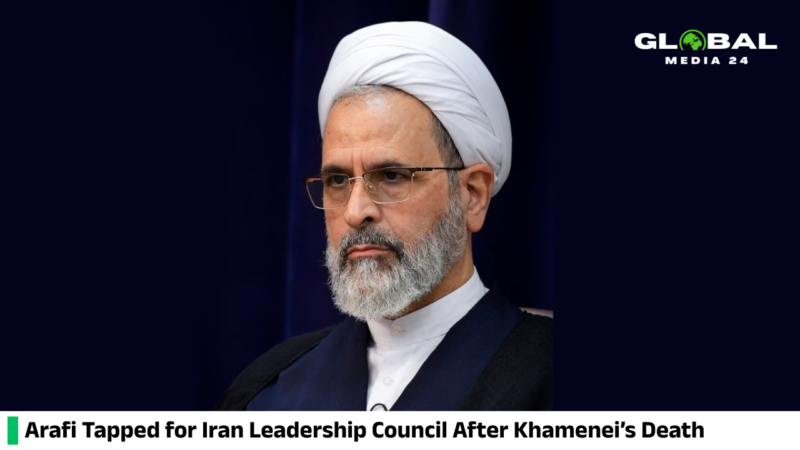
The US and Israel have been carrying out attacks on Iran since Saturday, including the one that killed Iran’s Supreme Leader, Ayatollah Ali Khamenei.
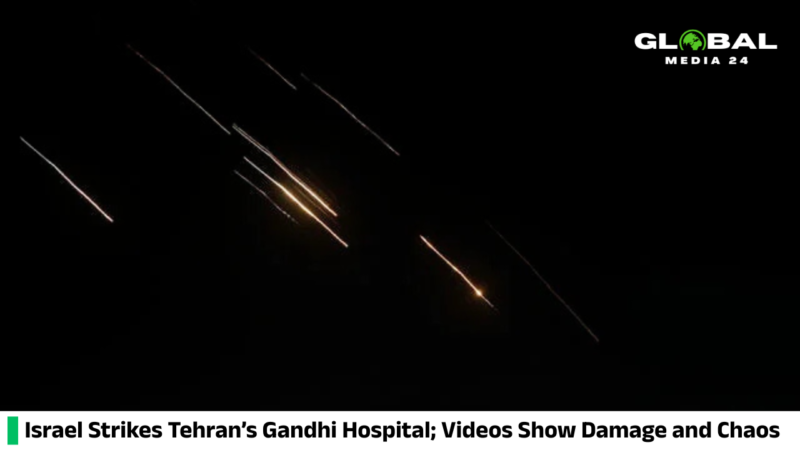
Iran has responded to the attack with missiles and drones across the Middle East, explicitly threatening to raise global energy costs, potentially having a devastating impact on the global economy.
Revolutionary Guards General Sardar Jabbari declared, “We will burn any ship that attempts to pass through the Strait of Hormuz,” referring to the strategic Gulf waterway through which approximately 20 percent of the world’s seaborne oil passes.
Airspace over much of the Middle East is closed, severely disrupting flight operations.
US Secretary of State Marco Rubio said the United States only became involved when it learned that its ally Israel was about to attack Iran, a new story at the beginning of the now four-day-old conflict. “The imminent threat was that we knew that if Iran were attacked—and we believed they would be attacked—they would immediately come after us,” Rubio told reporters before briefing lawmakers.