
Times Square will ring in the New Year with a newly designed ball, marking its biggest version to date
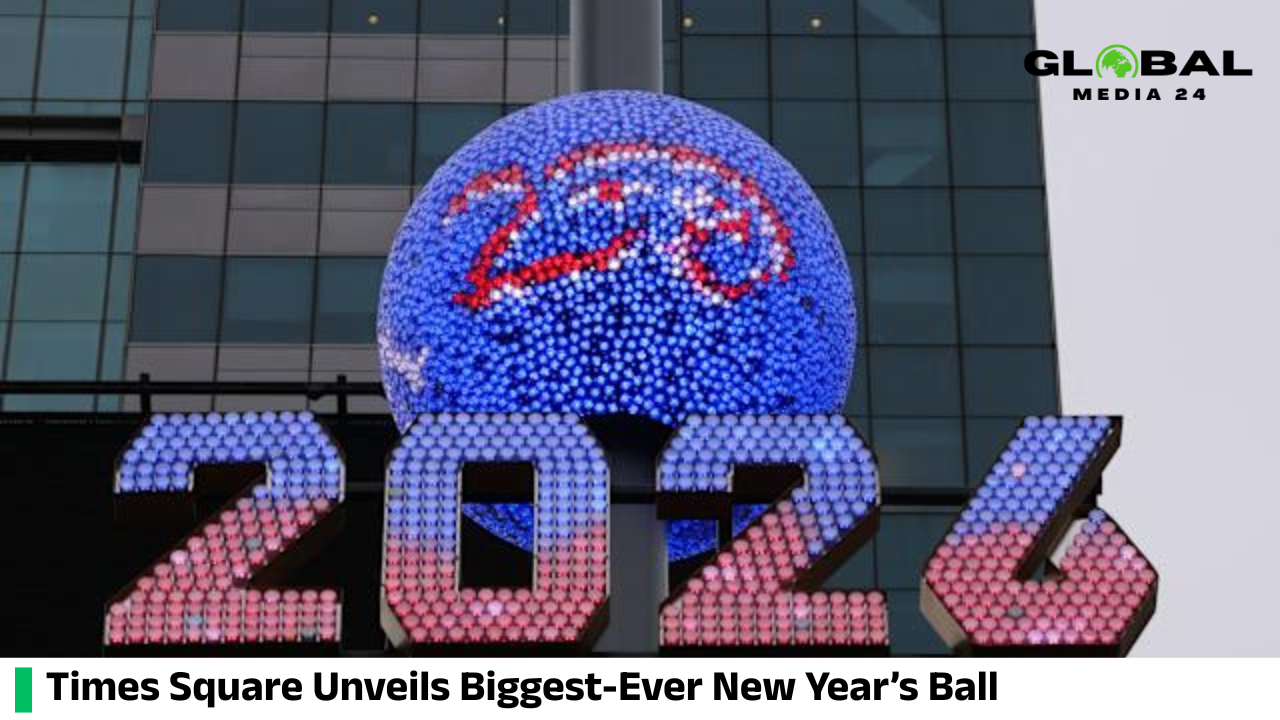
Times Square is ushering in a fresh chapter this year, as the iconic New Year’s Eve celebration welcomes 2026 with a brand-new ball—the biggest ever since the tradition began in 1907.
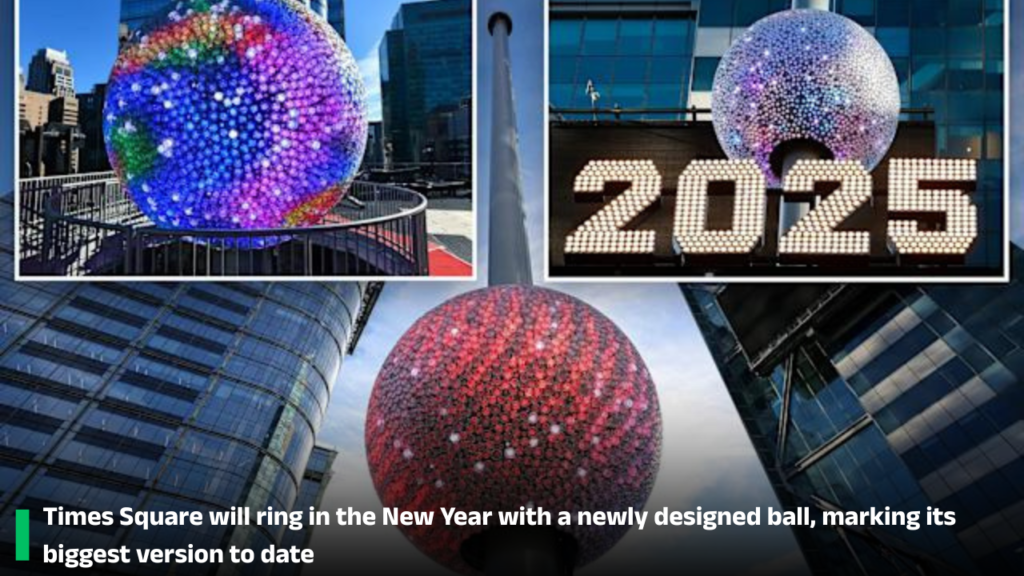
The Constellation Ball, as it’s called, is the ninth ball to ring in the new year at the iconic Midtown Manhattan intersection. It has a diameter of 12.5 feet and weighs just over 12,000 pounds.
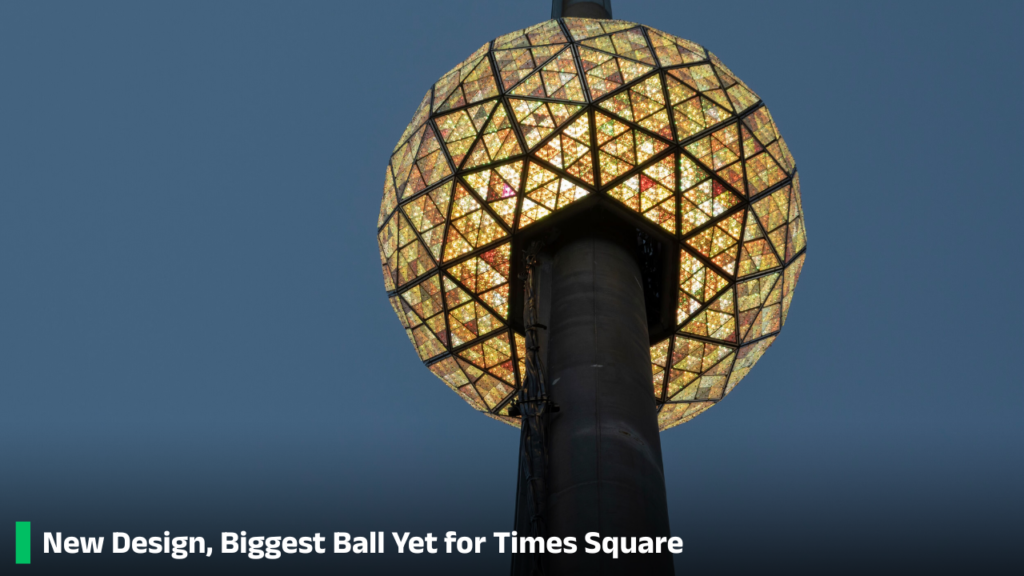
The ball features 5,280 spherical Waterford crystals in three different sizes—1.5 inches, 3 inches, and 4 inches—along with LED light fixtures. The shape of the crystals is a departure from the triangular crystals seen on previous balls since 1999.
“Each new crystal size features a unique design that celebrates the ball’s enduring spirit of positivity,” said a statement from One Times Square, the event’s organizer.
Michael Phillips, president of Jamestown, the firm that owns and operates One Times Square, said the ball is “meant to represent interconnectedness, wholeness, and the cyclical nature of tradition, celebrating the enduring relationship between the past, present, and future.”
The ball drop is an essential part of the New Year’s Eve celebration for those gathered in Times Square, as well as for those watching on television.
At 11:59 p.m., a glittering ball slowly descends down a pole while those present—and millions more tuning in from home—count down from 60. At midnight, the crowd erupts in a cacophony of sound, often pulling their loved ones in for a celebratory kiss.
The Times Square ball was first dropped in 1907, and its creation is credited to Jacob Starr, a Ukrainian immigrant and metalworker, and Adolph Ochs, the former publisher of The New York Times.
The latter had successfully drawn crowds to the newspaper’s skyscraper home in Times Square with fireworks and pyrotechnics to celebrate the coming year, but city officials banned the use of explosives after only a few years of the celebration.
So Ochs commissioned Star, who worked for the sign-making firm Strauss Signs (later known as Artkraft Strauss, a company of which Star was president), to create a new visual display.
Over the past century, that display and New Year’s symbol has evolved from an iron and wood cage adorned with light bulbs to a dazzling Technicolor crystal ball.
The concept was based on time balls, nautical devices that became popular in the 19th century. As timekeeping became more precise, sailors needed a standard way to set their chronometers.
Every day, ports and observatories would raise and lower a metal ball at the same time so that navigators could synchronize their instruments.
Both Ochs and Walter Palmer, the chief electrician for the New York Times, are credited with the idea, which was reportedly inspired by the city’s Western Union building, which dropped a time ball each day at noon.
But Star’s granddaughter, Tama Star, who joined Artkraft Strauss in 1982 and now owns the business, said in a phone interview that she believes it was her grandfather who came up with the concept of lowering the ball at midnight and illuminating it with the new year’s numbers.
“The idea was to… light it up with this new electricity that had just come to the neighborhood,” said Tama, who worked as a foreperson at the Times Square ball drop for many years. “And it was lowered by hand… starting a minute before midnight, and that’s how it was done for many years.”
“It was a transformation of an old, utilitarian thing,” she said. “It immediately became popular. People loved it.”
Although Manhattan had some electric lighting as early as the 1880s, the U.S. National Park Service (NPS) says that by the 1920s, half of American homes were still lit by gaslight and candles.
The sight of a glowing ball descending from the dark sky must have seemed otherworldly.
“When the ball reached the parapet with the sign displaying the year’s numbers, the electrician would pull a switch, turning off the ball and simultaneously turning on the numbers,” Tama said. “So it looked like the descending ball transformed into the set of numbers.”
Everyone in Times Square got in on the act. That first year, waiters in nearby restaurants and hotels wore battery-powered “1908” top hats, which they lit up at midnight.
“People thought it was magical,” Tama said. “One minute to midnight.” Since that first descent, Times Square has seen seven different balls, from a 700-pound iron frame equipped with 25-watt light bulbs to a lighter aluminum frame after World War II and a “Big Apple” during the administration of former mayor Ed Koch.
In 1995, when the ball received a dazzling update with rhinestones, strobe lights, and computer controls, the traditional sign maker was no longer needed—which meant that Artkraft Strauss, the company that brought the ball to Times Square, was also no longer needed.
Nevertheless, Tama fondly remembers her years as a timekeeper on the roof of One Times Square. As the final minute of the year approached, workers would lower the ball using an elaborate pulley system.
Performing this ritual year after year, Tama saw a profound connection between the countdown, which she calls “a minute outside of time,” and making New Year’s resolutions.
“When you’re truly present, time slows down,” she said. “It felt like the longest minute in the world. It felt like you had time to wash your hair, call your mother, and change your life. You really can change your life in a minute—you can decide to be different. You can decide to be kinder and better.”