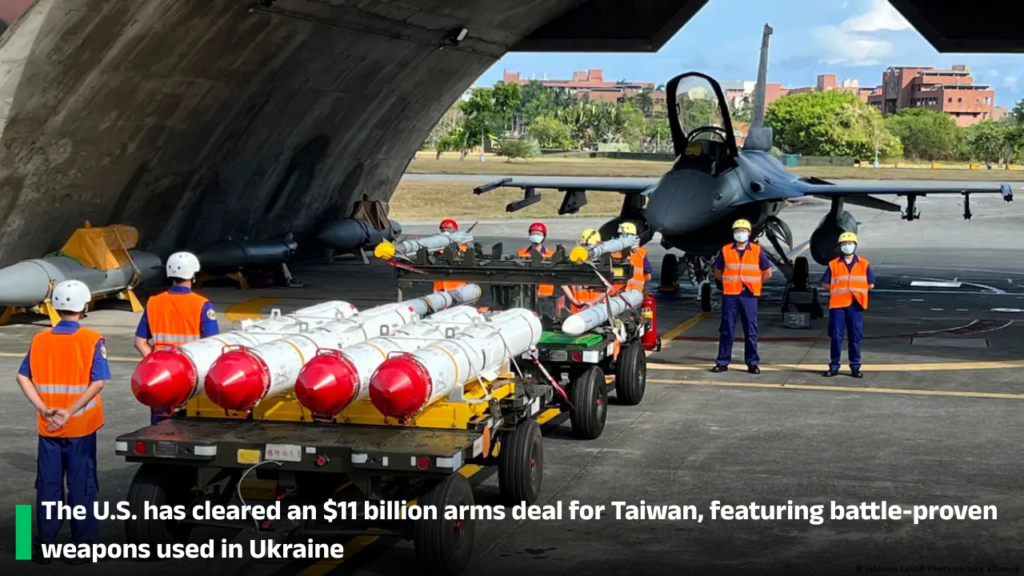
The U.S. has cleared an $11 billion arms deal for Taiwan, featuring battle-proven weapons used in Ukraine
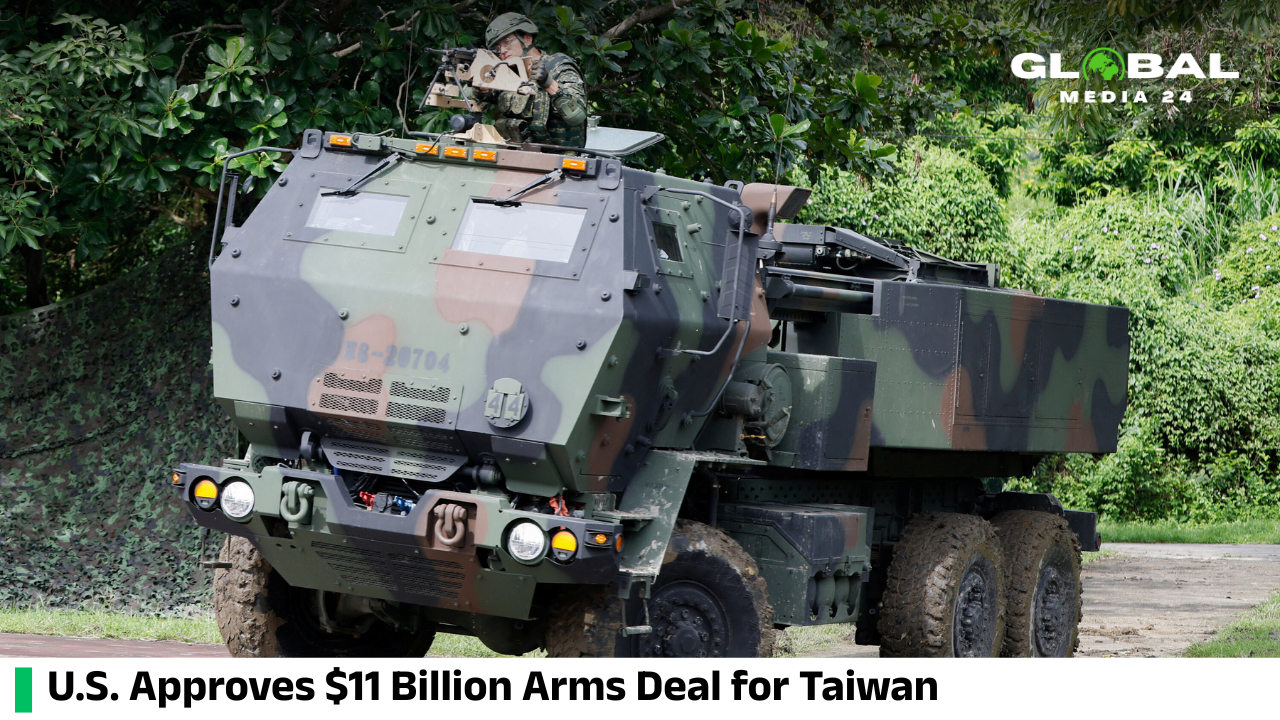
On Thursday, Taipei announced that the Trump administration is pushing forward with its largest-ever weapons sale to the island, worth $11.1 billion, and the second such deal since President Trump resumed office this year.
This comes at a time when China is increasing military exercises and pressure around Taiwan, which it claims is a breakaway province.
Taiwan completely rejects these claims and is working hard to strengthen its defenses, particularly with fast, more mobile systems that can deliver a powerful punch without requiring a large force.
According to Taiwan’s Ministry of National Defense, the package includes “Ukraine-tested” HIMARS mobile rocket launchers, powerful self-propelled howitzers, Javelin and TOW anti-tank missiles, surveillance and combat drones, as well as spare parts and support for existing equipment.
The potential size of this deal is comparable to the agreement reached in 2001 between then-US President George W. Bush and Taiwan for $18 billion in military sales, although that deal was eventually scaled down after commercial negotiations.
Taipei’s Foreign Ministry said, “This is the second arms sale to Taiwan announced during the Trump administration’s second term, once again demonstrating the United States’ firm commitment to Taiwan’s security.”
Its Defense Ministry said the sale is expected to be officially implemented in about a month.
Although this deal still requires approval from the US Congress, given the bipartisan consensus on Taiwan’s defense, it is unlikely to fail.
Taiwan’s President Lai Ching-te’s administration has pledged to increase defense spending amid continued military pressure from China around the island.
Taiwan is attempting to forge new diplomatic ties with Honduras
Taiwanese seafood trader Jay Yen used to import 2,000 tons of shrimp annually from Honduras before Honduras severed diplomatic relations with the democratic island in 2023.
Now, it’s just one or two “containers,” but that could change if Honduras’s next president follows through on their campaign promise to build closer ties with Taiwan.
The country’s decision to switch diplomatic recognition from Taipei to Beijing and terminate its free trade agreement with Taiwan was a major blow to the Honduran shrimp industry.
According to Taiwanese data, imports plummeted from nearly 13,000 tons in 2022 to approximately 4,000 tons in 2024, as a 20% tariff made Honduran shrimp significantly more expensive.
Speaking to AFP at the headquarters of his family company, Yen’s, in Taipei, Yen said the diplomatic shift would be “a good thing” for businesses and Taiwanese consumers. “We will have more choices for sourcing white shrimp… and the end consumers will also have more choices.”
In Honduras, the closely contested presidential race between Nasry Asfura and Salvador Nasralla, where vote counting is still underway, has seen both candidates signal support for switching diplomatic relations from Beijing to Taipei.
China claims Taiwan as part of its territory and has been systematically luring away the island’s remaining diplomatic allies in an effort to isolate it.
A Honduran defection would be a rare diplomatic victory for Taiwan, but Taiwanese officials are responding cautiously. Foreign Minister Joseph Wu recently told lawmakers, in response to their questions, “We are taking a proactive and open approach.”
Lin said Taiwan is in contact with Asfura and Nasralla’s teams but added, “Whatever we do must be beneficial to both them and us.”
Honduras severed decades-old diplomatic ties with Taipei in 2023, a move that followed talks with China on a hydroelectric dam project.
Taiwan said at the time that the shift was part of China’s “pressure and intimidation” campaign against Taipei’s allies. China does not allow countries to maintain official relations with both Beijing and Taipei.
Since then, China has increased its economic influence in Honduras, but it has also faced criticism for flooding the country with cheap goods, employing Chinese workers on infrastructure projects, and failing to purchase sufficient quantities of shrimp.
Javier Amador, executive director of the National Association of Aquaculturists of Honduras, said that the closure of dozens of companies also resulted in the loss of thousands of jobs.
Amador said that shipments to Taiwan were six times greater than those to China, “even with the disadvantage of paying tariffs.” During the campaign, Nasralla said, “Taiwan has been a great partner of ours for more than 60 years. What has China given us?”
But Fabricio Fonseca, an associate professor in the Department of Diplomacy at National Chengchi University in Taipei, said that the Honduran presidential candidates’ support for Taiwan could be a “negotiating tactic.”
“If China feels that they are truly serious about this, then, of course, China could offer several things,” Fonseca said.
He said, “If, in the end, they (Asfura or Nasralla) don’t stick to their campaign promises, they have something to show in return.” He added that if the U.S. helps bring Honduras back to Taiwan, that could be a deciding factor.
Honduran coffee trader Elias Argueta hopes his country will restore relations with Taiwan, where he lives with his wife and young daughter.
Argueta, 34, began importing beans directly from his parents’ farms in Honduras to the Taiwanese market in 2020, where coffee from Guatemala and Colombia is popular.
Since the diplomatic breakup, finding new customers has become difficult because the Taiwanese government has stopped promoting Honduran coffee.
“If relations are restored, people will be more willing to drink Honduran coffee, and certainly the official channels in Taiwan will reopen,” Argueta said. “Our coffee is of very good quality,” he added.
Seafood trader Yen said that a restoration of relations between Honduras and Taiwan doesn’t mean trade volume will immediately increase. However, it would provide a catalyst.
“Even if Taiwan restores relations with Honduras and signs a [free trade agreement], it could still take at least six months to a year for the industry to rebuild and for us to resume business,” Yen said. “But we are looking forward to it.”