Thailand mounts airstrikes against Cambodia as Trump’s peace accord faces uncertainty
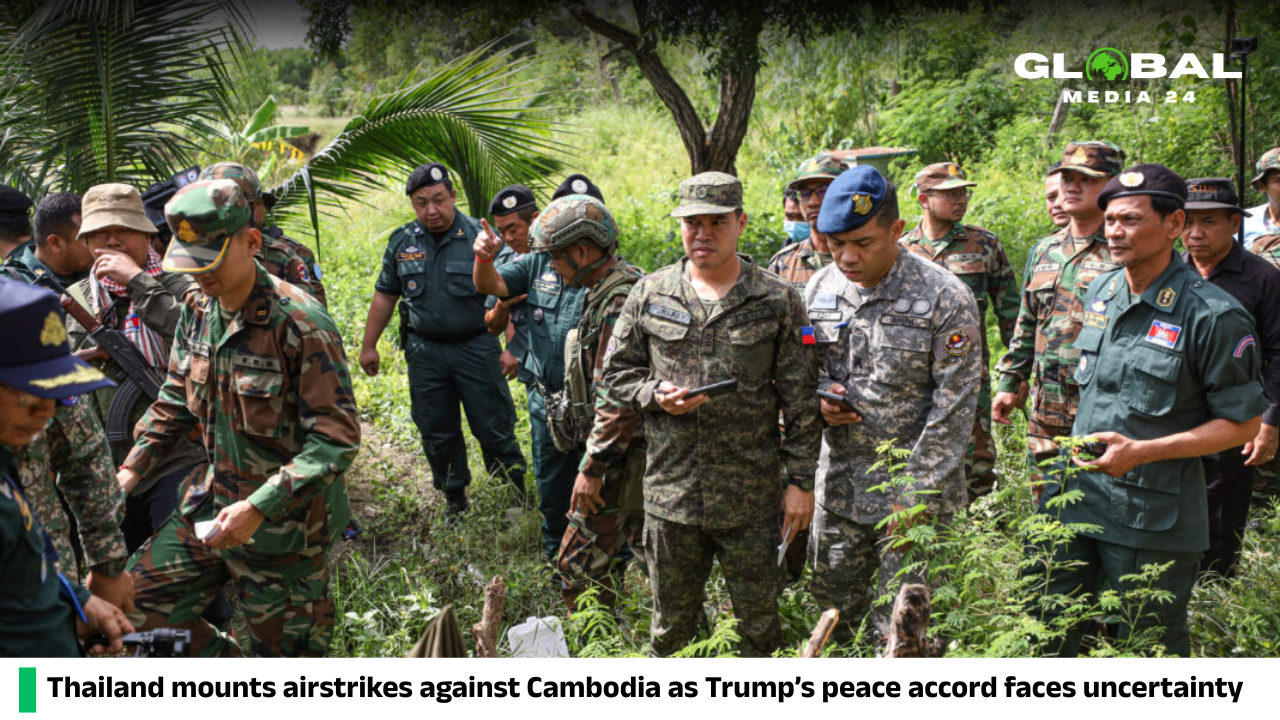
Thailand carried out airstrikes on Cambodia on Monday as fresh clashes broke out between the Southeast Asian neighbors, raising concerns that a peace deal overseen by US President Donald Trump only two months earlier may now be falling apart.
After Thailand earlier suspended progress on a ceasefire agreement, both sides accused each other of launching attacks on the disputed border on Monday morning.
The Royal Thai Air Force (RTAF) said in a statement that the airstrikes had only targeted military infrastructure, including “weapons depots, command centers, and logistical routes that are considered to be directly at risk.”
“Cambodia had amassed heavy weapons, redeployed combat units, and prepared fire-support elements—activities that could escalate military operations and pose a threat to the Thai border area,” the RTAF statement said.
A Thai military official said the airstrikes were in retaliation for an attack on Monday that killed a Thai soldier.
“The target was Cambodian weapon support positions in the Chong An Ma Pass area, as those targets used artillery and mortar launchers to attack the Thai side at the Anupong base, resulting in one soldier being killed and two soldiers being wounded,” Thai Major General Winthai Suwari said.
Cambodia began targeting the Thai border at around 3 a.m. local time on Monday, the Thai military said.
Cambodia’s National Defence Ministry, in a statement on X (formerly Twitter), refuted the RTAF’s allegations, calling them “false information.”
It stated, “In the spirit of peacefully resolving disputes in accordance with international law and respecting all previous agreements, Cambodia did not retaliate during either attack and is monitoring the situation with utmost vigilance and caution.”
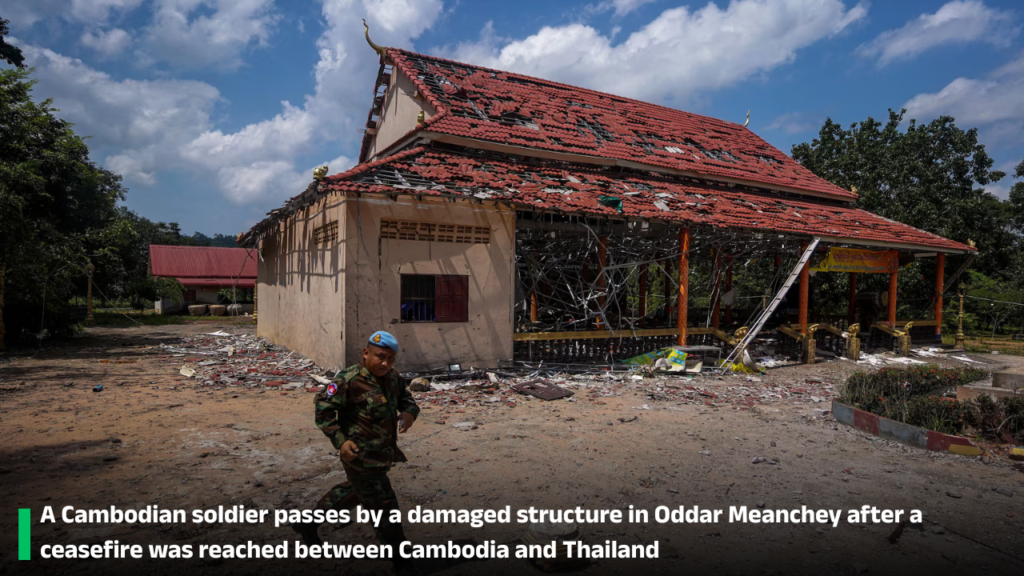
In a separate statement, the Cambodian army accused the Thai army of “attacking Cambodian troops” at 5:04 a.m. local time.
It added, “It should be noted that this attack occurred after several days of provocative actions by the Thai army.”
The Thai statement said that about 70% of Thai citizens had been evacuated from border towns. One civilian died during the evacuation process due to a “pre-existing medical condition,” it added.
In July, Thailand and Cambodia fought a five-day border conflict that left dozens dead on both sides of the border and displaced about 200,000 people. An initial ceasefire was agreed to between the two sides on July 28 after Trump spoke by phone with their respective leaders.
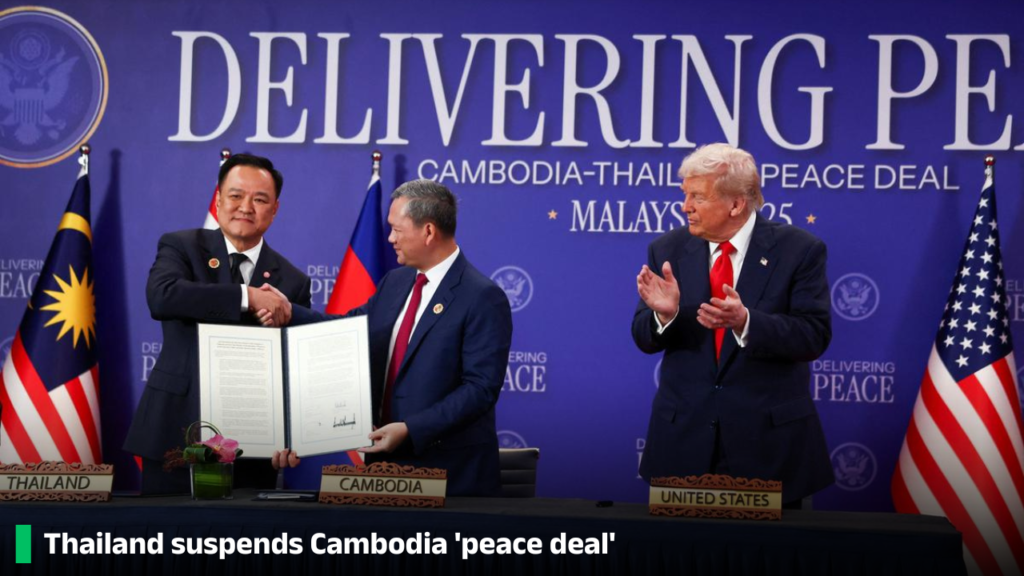
Thailand and Cambodia then signed an expanded ceasefire declaration in late October in a ceremony in Kuala Lumpur witnessed by Trump and Malaysian Prime Minister Anwar Ibrahim.
Trump hailed the moment as a major diplomatic victory and a further boost to his much-vaunted—and often controversial—campaign to end multiple wars.
However, less than a fortnight after it was signed, the agreement between Thailand and Cambodia began to crack.
Thailand said it was halting progress on the agreement after a landmine explosion on the border injured several Thai soldiers.
Thailand and Cambodia have had brief skirmishes along their disputed border in recent decades, and the previous fighting was the most serious in years. Both sides accused each other of starting the latest border violence and exchanged blame for the clashes.