Tehran lists 8 Gulf bridges as potential targets after the U.S. destroys Iran’s largest bridge
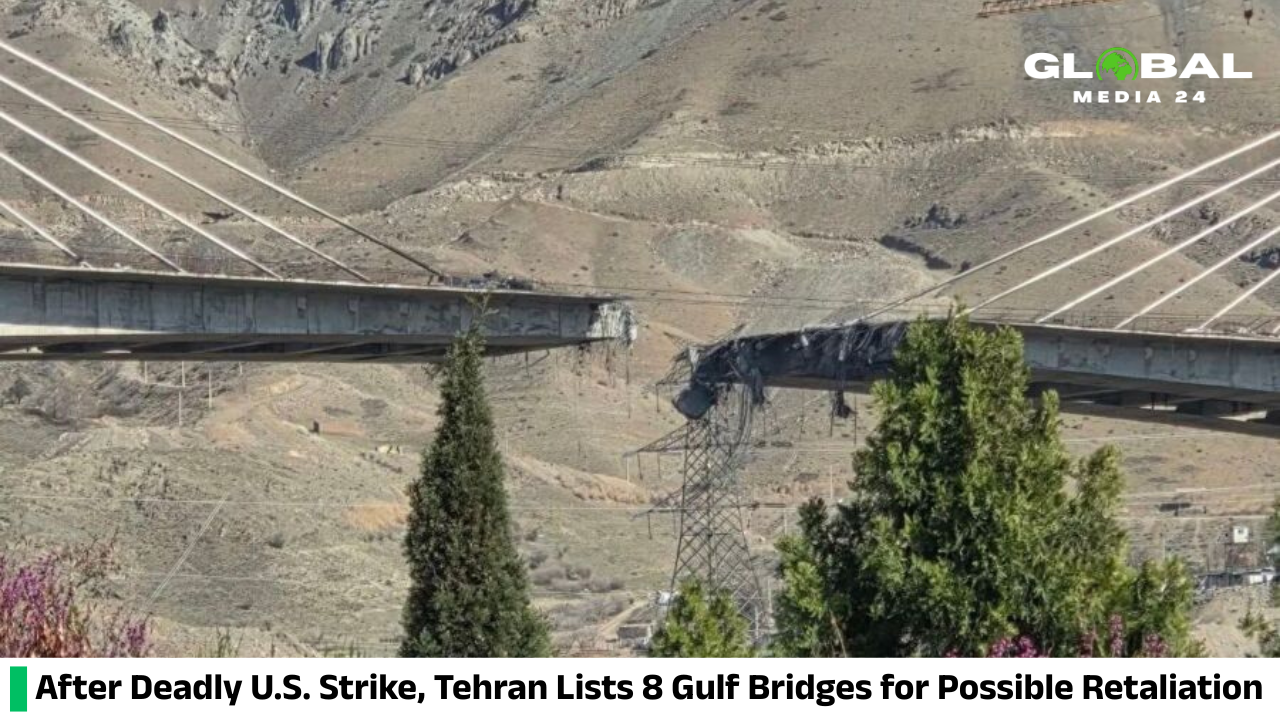
On Thursday, joint US-Israeli strikes partially damaged the tallest bridge in the Middle East, leaving several people injured. The attack followed President Donald Trump’s warning that Iran could be bombed ‘back to the Stone Age.
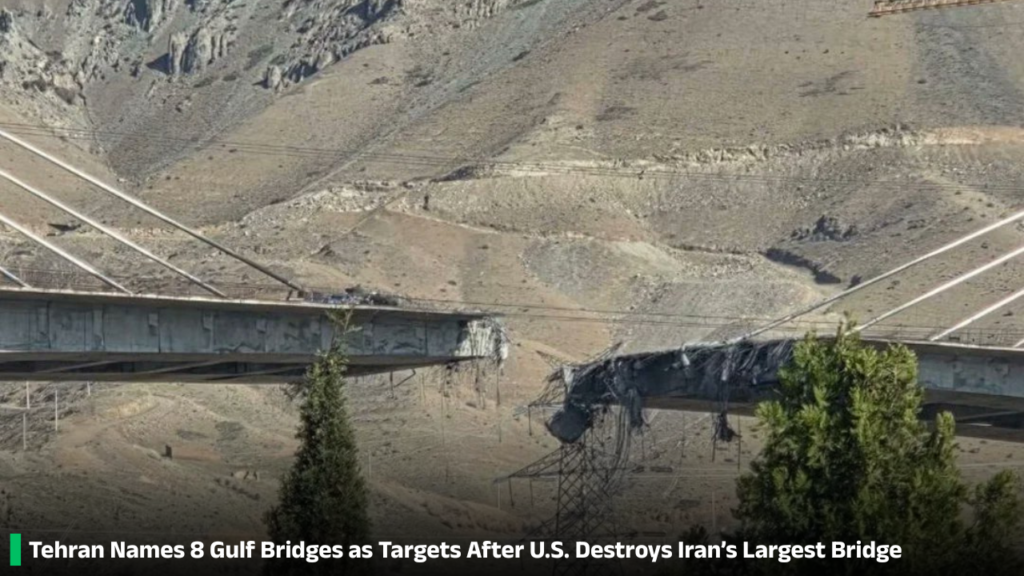
Iran has released a list of eight major bridges in the Middle East region, signaling a “tit-for-tat” retaliatory response following a US-Israeli attack on critical infrastructure in the northern city of Karaj.
While publishing the ‘hit list,’ Iran’s semi-official Fars News Agency stated that, following two attacks on Iran’s tallest structure—the B1 Bridge—on Thursday, several prominent bridges across Gulf nations and Jordan could become potential targets for the Islamic Revolutionary Guard Corps.
According to a report by Anadolu Agency, the Iranian list includes the Sheikh Jaber Al-Ahmad Al-Sabah Causeway in Kuwait; the Sheikh Zayed Bridge, Al Maqta Bridge, and Sheikh Khalifa Bridge in the United Arab Emirates (UAE); and the King Fahd Causeway, which connects Saudi Arabia to Bahrain. The list also features the King Hussein Bridge, Damya Bridge, and Abdoun Bridge in Jordan.
Attack on Iran’s Tallest Bridge
On Thursday, US-Israeli strikes caused minor damage to the Middle East’s tallest bridge. Several people were injured in the attack. This assault followed a warning from President Donald Trump regarding the bombing of Iran, in which he stated that Iran would be “sent back to the Stone Age.”
The 136-meter-high B1 Bridge was still under construction and was intended to connect Tehran with the western city of Karaj.
According to state TV and the Fars News Agency, Ghodratollah Seif, the deputy governor of Alborz province, where the B1 Bridge is located, stated that eight people were killed and 95 others were injured in the attack.
Videos circulating on social media show large sections of the bridge collapsing in the aftermath of the attack.
US President Donald Trump also posted footage showing smoke rising from the B1 Bridge, situated 35 kilometers southwest of Tehran, and warned that if Iran does not come to the negotiating table to end the five-week-long conflict, further destruction will ensue.
Trump stated, “Iran’s largest bridge has collapsed and will never be used again—there is much more to come! It is time for Iran to make a deal before it is too late and before there is nothing left of what could have been a great nation!”
In a post on X, Iranian Foreign Minister Abbas Araqchi remarked: “Attacking civilian infrastructure—including unfinished bridges—will not force Iranians to surrender.” He added, “This merely demonstrates the enemy’s defeat and moral bankruptcy.”
Tensions in the region have escalated since February 28, when the US and Israel launched a joint attack on Iran; the conflict has claimed the lives of over 1,340 people to date, including the then-Supreme Leader, Ali Khamenei.
In retaliation, Tehran has launched drone and missile strikes targeting Israel, as well as those Gulf nations hosting US military assets.