South Korea’s former president Yoon has been sentenced to five years in prison over his attempt to impose martial law
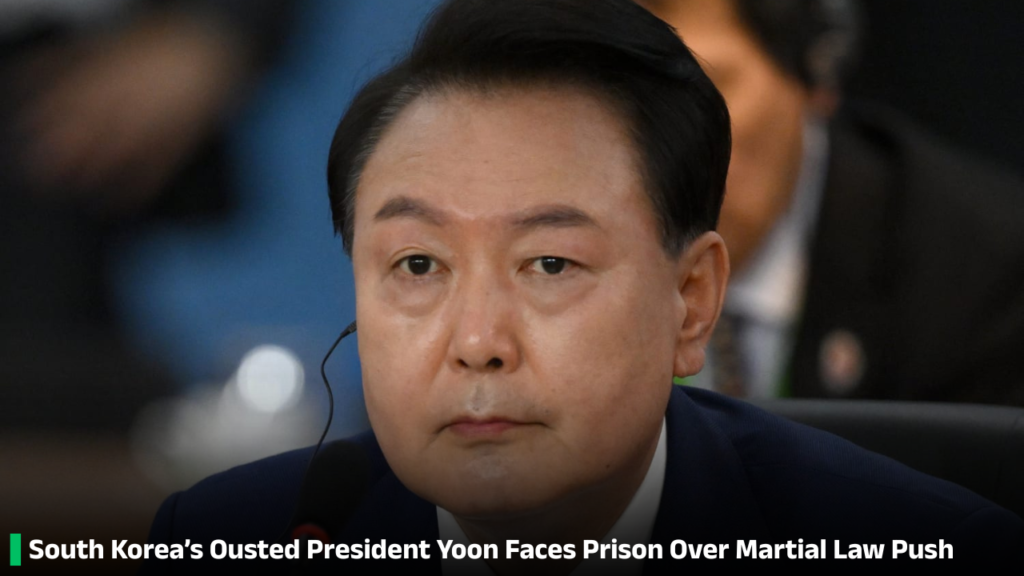
South Korea’s former president Yoon Suk Yeol has been sentenced to five years in prison after being impeached for abuse of authority, obstruction of justice, and document forgery linked to his failed 2024 martial law attempt.
This is the first verdict in four trials stemming from his shocking martial law declaration.
The move, though short-lived, sparked outrage across the country, prompting lawmakers to convene the National Assembly to overturn Yoon’s decision and triggering protests.
A judge said Friday that Yoon’s actions had “plunged the country into a political crisis,” adding that Yoon had “consistently shown no remorse.”
Friday’s verdict offers a glimpse into how Yoon’s remaining trials might unfold. The charges against him range from abuse of power to violating campaign finance laws.
The most serious charge is insurrection, for which prosecutors have sought the death penalty. A verdict in that trial is expected in February.
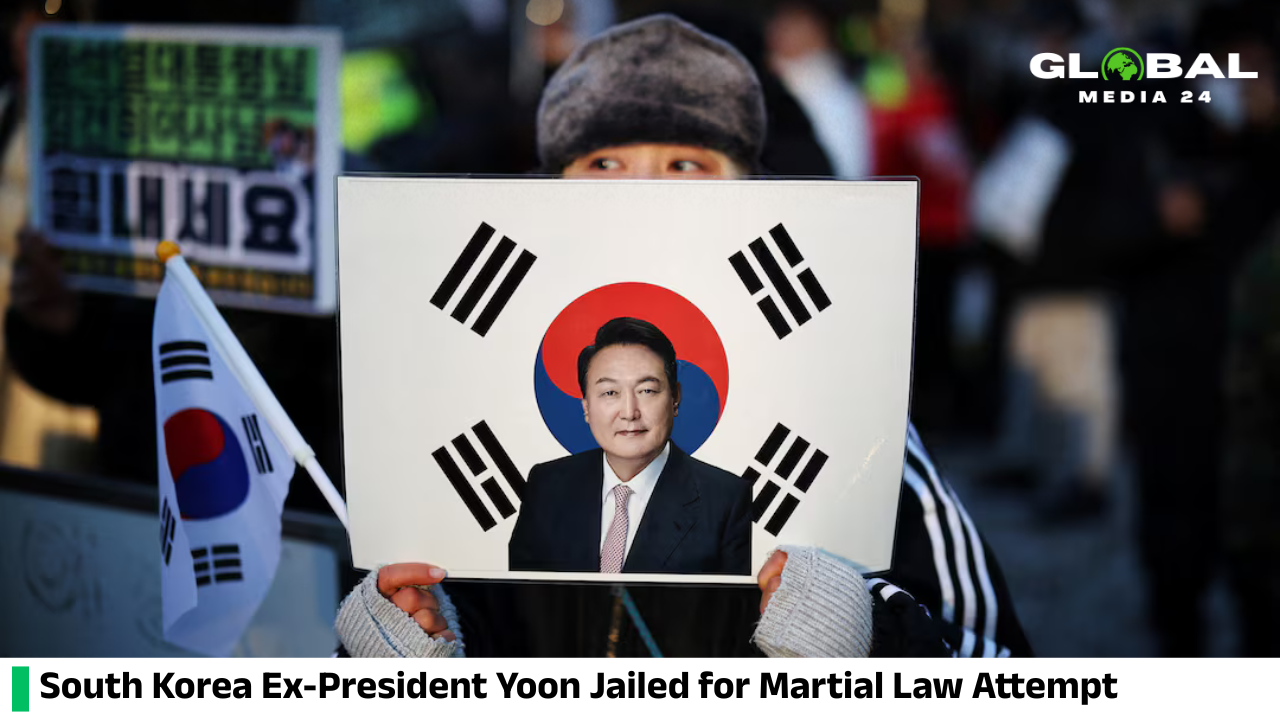
Nearly 100 of Yoon’s supporters gathered outside the courthouse Friday to watch the proceedings, which were livestreamed on a large screen.
Some held red banners that read: “Yoon, again! Make Korea great again.” As the judge delivered the guilty verdict, several could be heard shouting at him, while others looked somber.
On Friday, Yoon was found guilty of using presidential bodyguards to prevent his arrest and failing to consult his entire cabinet before declaring martial law, as well as creating and then destroying a falsified document claiming that the martial law attempt had been approved by the prime minister and the defense minister.
“The defendant had a duty to protect the constitution and the law, but he turned his back on them,” the judge said.
In Friday’s verdict, prosecutors had sought a 10-year prison sentence for these charges. Both sides have seven days to appeal.
Yoon denied the charges, saying the arrest warrant itself was invalid and that he was not required by law to consult every cabinet member before using emergency powers.
He maintained throughout his trials that investigators had no legal basis to investigate or arrest him.
He argues that most of the charges against him are unfounded because there were no procedural irregularities when he declared martial law.
South Korean courts often show leniency when defendants admit guilt or responsibility. But lawyers say Yoon’s lack of remorse is grounds for an even harsher sentence.
Park Geun-hye, who was sentenced to 20 years in prison in 2021 for abuse of power and bribery, was the last former president to be jailed on criminal charges. However, she was pardoned and released from prison shortly afterward.
Six months after Yoon’s attempted martial law declaration, voters handed a decisive victory to opposition leader Lee Jae-myung.
But Yoon’s trial has drawn renewed attention to deep divisions in South Korea, where the former president has strong supporters who consider him a martyr.
According to a survey conducted last December, nearly 30% of South Koreans did not believe that Yoon’s declaration of martial law amounted to rebellion.
Although his attempted martial law declaration brought thousands of protesters into the streets, his supporters also held counter-protests, albeit in smaller numbers.