Saudi-UAE Strains Linger as Yemen Separatist Leader’s Fate Stirs Crisis
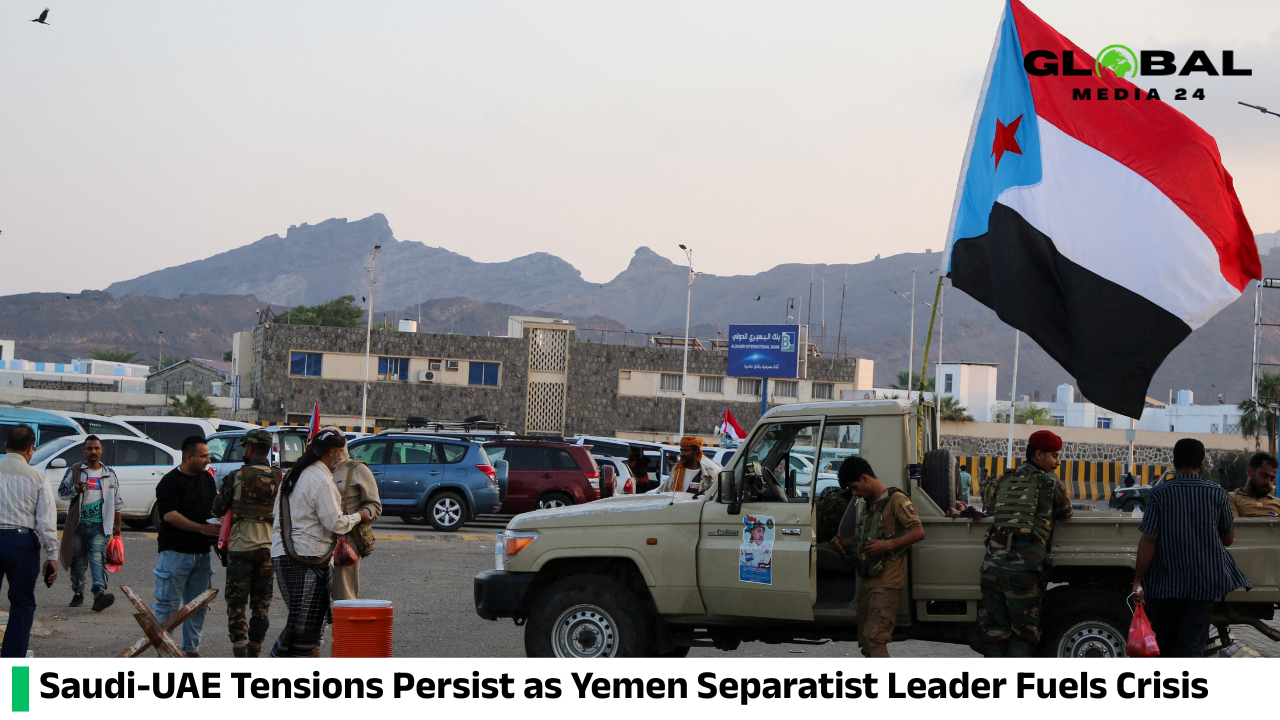
Yemen’s southern separatist leader Aidarous al-Zubaidi was in the port city of Aden on Wednesday, according to his group, after he chose not to travel to Riyadh for talks on a crisis that triggered a serious rift between Saudi Arabia and the United Arab Emirates, the Gulf’s two most influential oil-rich nations.
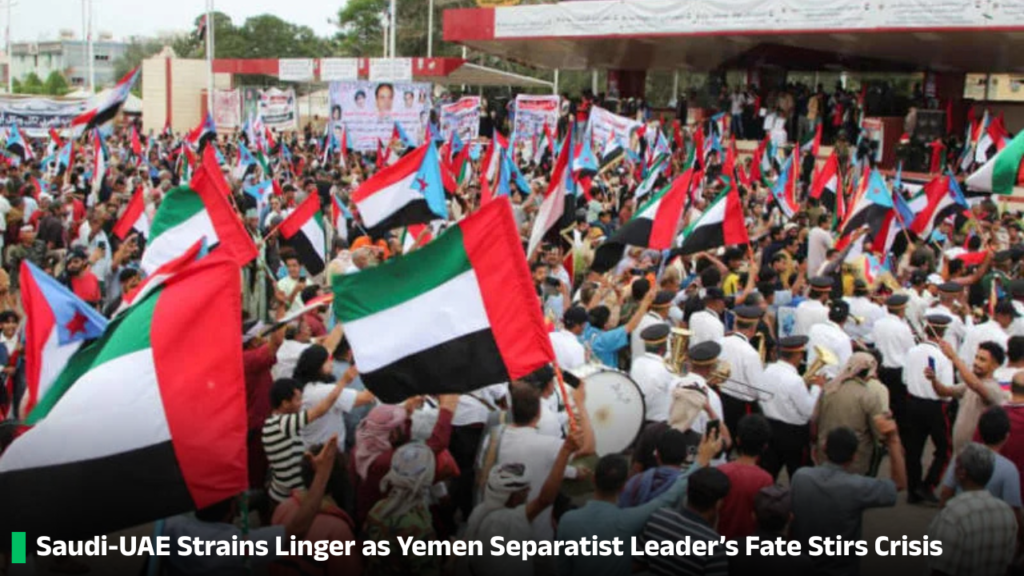
After the unexplained absence of its leader, the Southern Transitional Council (STC) said it was in Aden to monitor military and security operations, while it lost contact with its delegation in the Saudi capital, Riyadh.
An STC official told Reuters that Zubaidi had not fled but was in a safe place in Aden and that it was inappropriate for him to travel to Riyadh in the current security situation, adding that the security of the political delegation in Riyadh was now in Saudi hands.
Saudi state television reported that Saudi-backed Yemeni government forces were advancing towards Aden. Zubaidi’s whereabouts could not be independently verified.
The dramatic turn of events dashed hopes for a quick resolution to the recent unrest in Yemen’s south, causing a deep rift among Gulf powers, leading to the collapse of a coalition to fight the Iran-aligned Houthis in a civil war that has been going on for more than a decade.
Major oil producers Saudi Arabia and the UAE, both close allies of the United States, have been at odds for years on a range of volatile geopolitical issues, from Sudan to energy policy, with the latest crisis in Yemen exposing sharp rifts, where they now support opposing sides.
The UAE has pursued a robust foreign policy and carved out a sphere of influence in the Middle East and Africa, a strategy that has been under debate since its rare military standoff with Saudi Arabia in Yemen.
A regional hub for trade and commerce, the country has used alliances and financial support with states or proxies primarily to counter what it sees as a destabilizing, existential threat from political Islam.
Earlier, Turki al-Maliki, a spokesman for the Saudi-backed coalition, hinted at the disappearance of the UAE-backed al-Zubaidi in a statement.
Maliki said at the time that a flight carrying several senior leaders of the separatist group had departed more than three hours late without them, and their whereabouts were unknown.
Maliki said that during the delay, there were indications that Zubaidi had deployed a large number of troops.
He accused Zubaidi of distributing weapons and ammunition to dozens of people in Aden to foment unrest.
Maliki said the coalition had asked the STC’s vice president, Abdulrahman al-Mahrami, also known as Abu Zara, to enhance security, stop the clashes, and protect civilians and property.
In a statement carried by the state news agency SABA, Yemen’s Presidential Leadership Council, the Saudi-backed ruling authority, said it had dismissed Transport Minister Abdul Salam Humaid and Planning Minister Wa’ed Badhib.