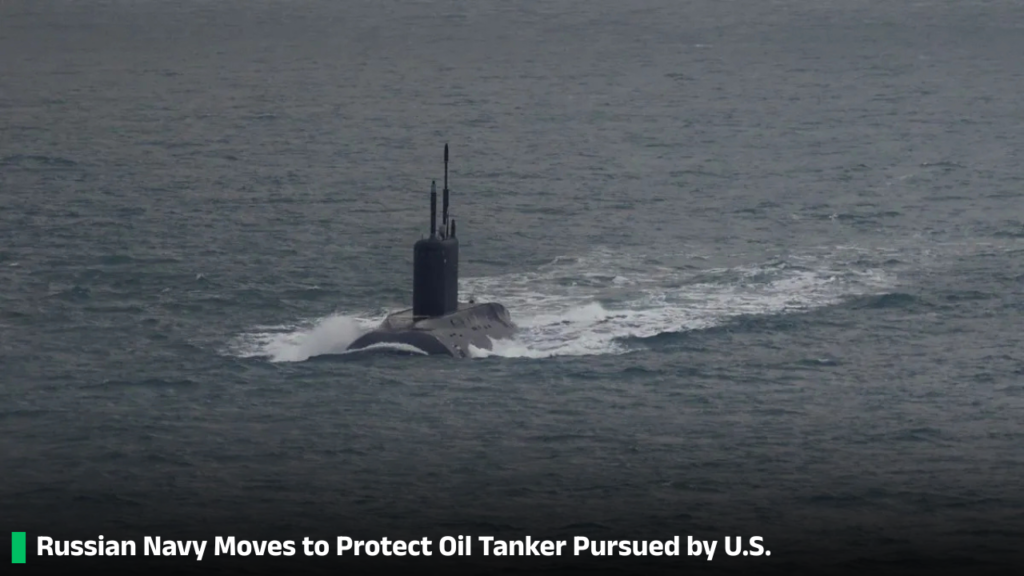
Russian Navy Moves to Protect Oil Tanker Pursued by U.S.
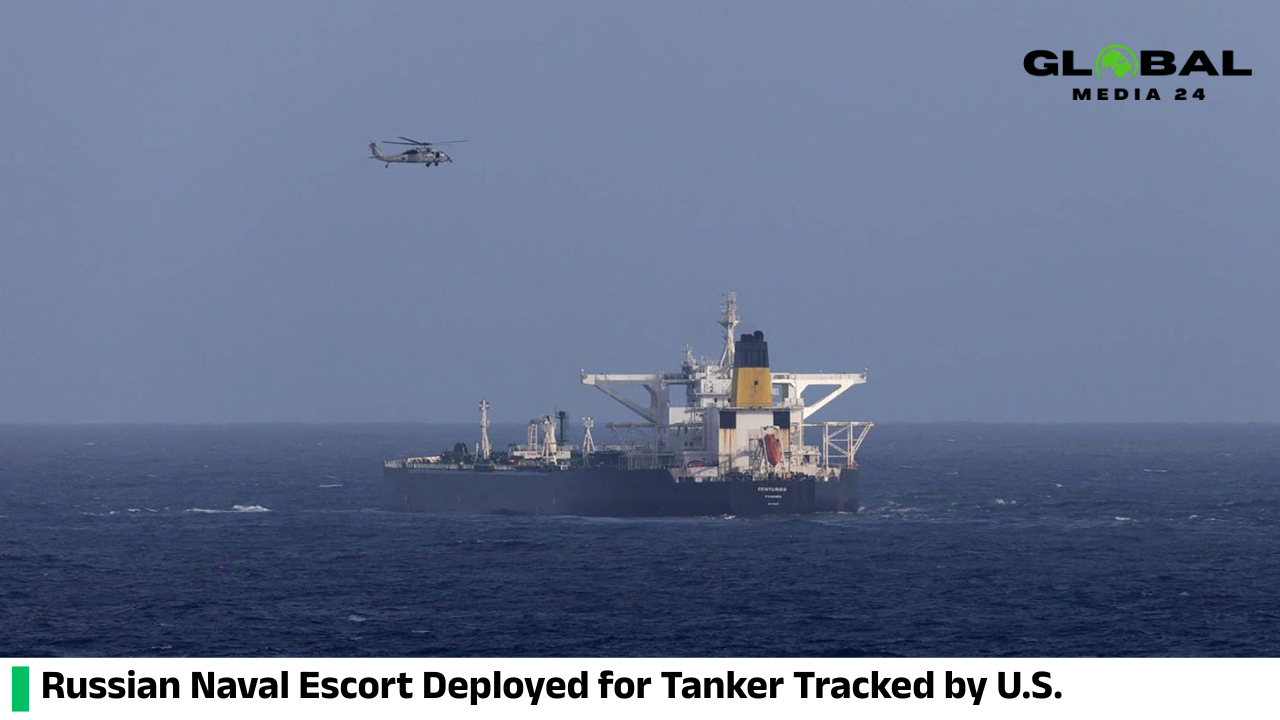
Russia has sent naval forces to protect an oil tanker that US forces are also tracking across the Atlantic, according to CBS News, the BBC’s US media partner.
The ship, which is currently not carrying anything, has historically transported Venezuelan crude oil and was believed to be between Scotland and Iceland on Tuesday.
President Donald Trump said last month that he was ordering a “blockade” of banned oil tankers entering and leaving Venezuela, a move the government there described as “theft.”
Before the US arrest of the country’s former leader Nicolas Maduro on Saturday, Trump had repeatedly accused the Venezuelan government of using ships to smuggle drugs into the US.
Last month, the US Coast Guard in the Caribbean attempted to board the Bella 1 while it was believed to be heading towards Venezuela. It had a warrant to seize the ship, which was accused of violating US sanctions and carrying Iranian oil.
It then dramatically changed course—and renamed the Marinera—from a Guyanese vessel to a Russian vessel, according to reports.
Its approach to Europe coincides with the arrival of about 10 US military transport planes as well as helicopters. Russia says it is “carefully monitoring” the situation around the ship.
Two US officials told CBS News on Tuesday that US forces were planning to board the ship and that Washington preferred to capture it rather than sink it.
On Tuesday, the US military’s Southern Command posted on social media that it was “prepared to support our US government agency partners in confronting prohibited vessels and actors transiting this area.
“Our maritime services are vigilant, agile, and ready to track vessels of interest. When the call comes, we will be there.”
The Marinera was believed to be between Scotland and Iceland on Tuesday night, with boarding proving difficult due to distance and weather conditions.
Before any US military operation is launched from the UK, Washington is expected to inform its ally. For now, the UK Ministry of Defence says it will not comment on the military activities of other countries.
US officials, quoted by CBS, said the US could conduct an operation similar to one last month, when US Special Operations Forces, working with Marines and the Coast Guard, seized a large crude oil tanker, the Skipper, after it departed a Venezuelan port, having sailed from Guyana.
AIS (Automatic Identification System) tracking data for the tanker, which can be spoofed or faked, indicates it was in the North Atlantic on Tuesday, approximately 2,000 km (1,200 miles) west of continental Europe.
Under international law, ships flying a country’s flag are under that country’s protection, but Dimitris Ampatzidis, a senior risk and compliance analyst at maritime intelligence firm Kepler, told BBC Verify that changing the ship’s name and flag would likely change little.
“US action is determined by the vessel’s underlying identity [IMO number], ownership/control network, and sanctions history, not by the markings painted on it or the flag it claims to fly,” he said.
Ampatzidis added that a change to the Russian registry could lead to a “diplomatic confrontation,” but it would not deter any US action.
Russia’s Foreign Ministry said, “Currently, our vessel is sailing in the international waters of the North Atlantic under the flag of the Russian Federation and in full compliance with the norms of international maritime law.”
It added, “We are unclear as to the reasons why the US and NATO militaries are paying increased and clearly excessive attention to the Russian vessel, given its peaceful status.”
“We hope that Western countries, which profess their commitment to freedom of navigation on the high seas, will themselves begin to adhere to this rule.”
The potential confrontation over the oil tanker comes just days after the US surprised the world by seizing a tanker belonging to Maduro’s regime off the coast of Caracas. The seizure occurred during an operation to rescue two Americans suspected of carrying weapons and drugs, which involved bombing targets in the city.