Russia, US Set To Resume Military Talks During Ukraine Discussions
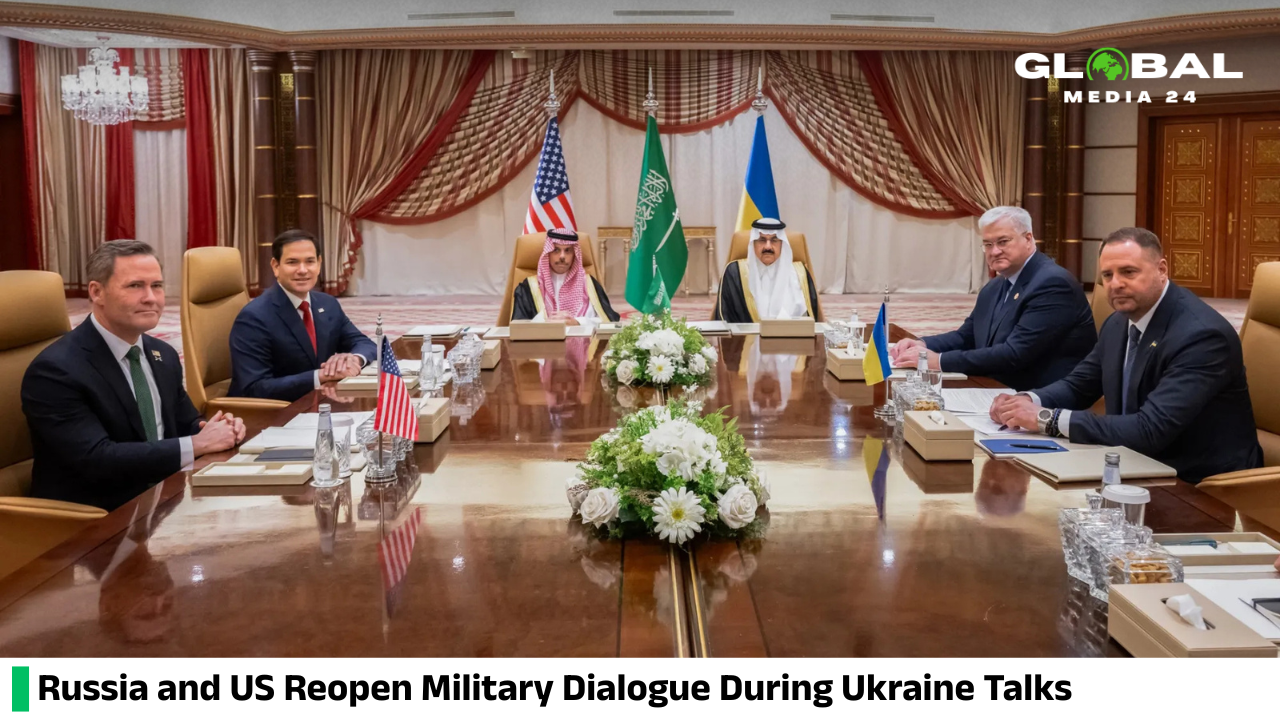
Moscow and Washington had halted high-level military talks just weeks before Russia launched its invasion of Ukraine in 2022, after then-US President Joe Biden cut off nearly all communication with Russia.
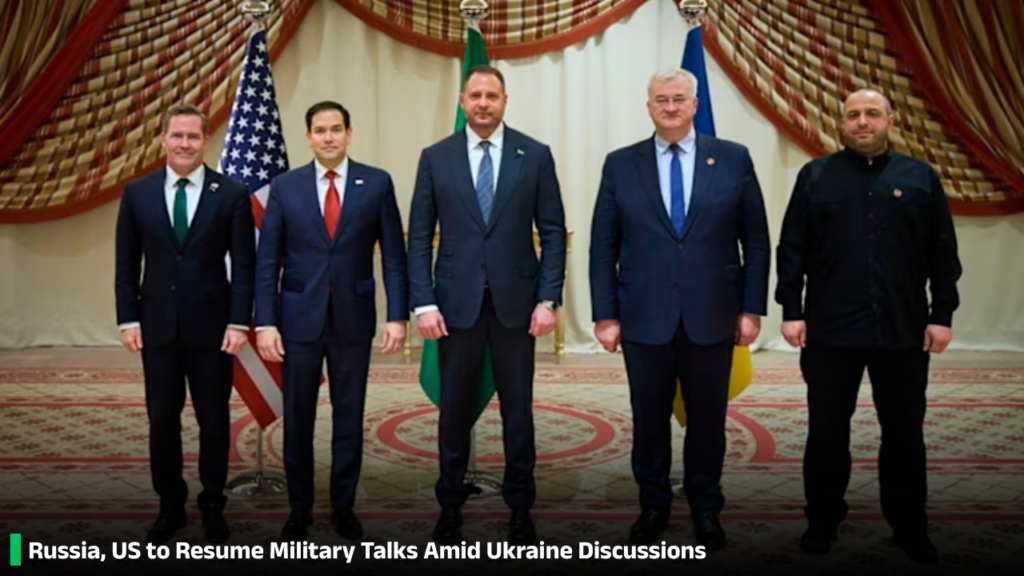
Russia and the United States agreed on Thursday to resume high-level military contacts during two days of talks in Abu Dhabi on Ukraine, a significant step toward rapprochement between the world’s top nuclear powers.
Moscow and Washington had suspended senior military talks shortly before Russia’s invasion of Ukraine in 2022, and then-US President Joe Biden had severed almost all contact with Russia.
However, since returning to the White House last year, US President Donald Trump has resumed communication with Moscow, holding several conversations and a summit with Russian leader Vladimir Putin.
The agreement to resume military contacts came after two days of talks in Abu Dhabi between US, Russian, and Ukrainian delegates, which sought a deal to end the war in Ukraine.
Those talks resulted in the first prisoner exchange in four months, but Ukrainian President Volodymyr Zelenskyy described the negotiations as difficult and appealed for faster progress.
The announcement came just hours after the expiration of the New START treaty—the last remaining nuclear arms agreement between Moscow and Washington—raising fears of a global arms race.
“The U.S. and the Russian Federation agreed today in Abu Dhabi to resume high-level military-to-military talks,” the U.S. European Command said in a statement, adding that “the parties continue to work toward a lasting peace.”
It further stated, “Maintaining dialogue between the militaries is a crucial factor for global stability and peace, which can only be achieved through strength, and provides a means for greater transparency and de-escalation.”
Moscow and Kyiv agreed to a prisoner exchange involving more than 300 captives in talks held in Abu Dhabi, but there were no immediate signs of progress on the thorny territorial issue.
“It’s certainly not easy, but Ukraine has been and will continue to be as constructive as possible,” Zelenskyy said of the talks.
“We want quick results,” he added at a press conference in Kyiv with Polish Prime Minister Donald Tusk.
US mediator Steve Witkoff acknowledged that “significant” work remains in the search for a comprehensive deal to end the war, dampening hopes for a quick breakthrough.
The talks are the latest in a series of diplomatic efforts to halt the fighting—the most dangerous conflict in Europe since World War II, which has killed hundreds of thousands of people, displaced millions, and devastated large parts of eastern and southern Ukraine.
Even as the talks were underway, large parts of the Ukrainian capital remained without heating in sub-zero temperatures, as repeated Russian attacks had disrupted energy supplies to hundreds of apartment blocks.
Kyiv Mayor Vitali Klitschko warned that more than 1,000 apartment blocks could be without heating for up to two months after a key power station was destroyed in a Russian attack earlier this week.
Territorial impasse
The main sticking point in the negotiations is the long-term future of the territory in eastern Ukraine.
Moscow demands that Kyiv withdraw its troops from large areas of the Donbas region, including heavily fortified cities built over significant natural resources, before any deal can be reached.
It also wants international recognition of its annexation of the occupied territories.
Kyiv insists that the fighting must stop at the current front lines and has refused to withdraw its forces.
Trump has been pressuring both sides to negotiate an end to the war since returning to office, claiming he could broker a deal within hours. Zelenskyy said the role of the US president is crucial, telling French television in an interview on Wednesday that “Putin is only afraid of Trump.”
In a rare official acknowledgment of battlefield losses, Zelenskyy said on Wednesday that at least 55,000 of his country’s soldiers have been killed since Russia’s invasion in February 2022—a figure lower than many independent estimates.
Russia has not disclosed how many of its soldiers have been killed. Tracking of obituaries and family announcements by the BBC and the independent Mediazona outlet has identified the names of more than 160,000 Russian soldiers killed in the conflict.
Russia occupies approximately 20 percent of Ukraine’s territory. It claims the Donetsk, Luhansk, Kherson, and Zaporizhzhia regions and also holds parts of at least three other Ukrainian regions in the east.
Kyiv still controls about a fifth of the Donetsk region, which Moscow wants it to relinquish. Ukraine has warned that ceding territory would embolden Moscow and that it will not sign any deal that does not prevent Russia from attacking again.