Myanmar heads into final election stage under airstrike threat and exclusions
The third and final round of voting is being held on Sunday in the village, just days after a military airstrike claimed 21 lives.
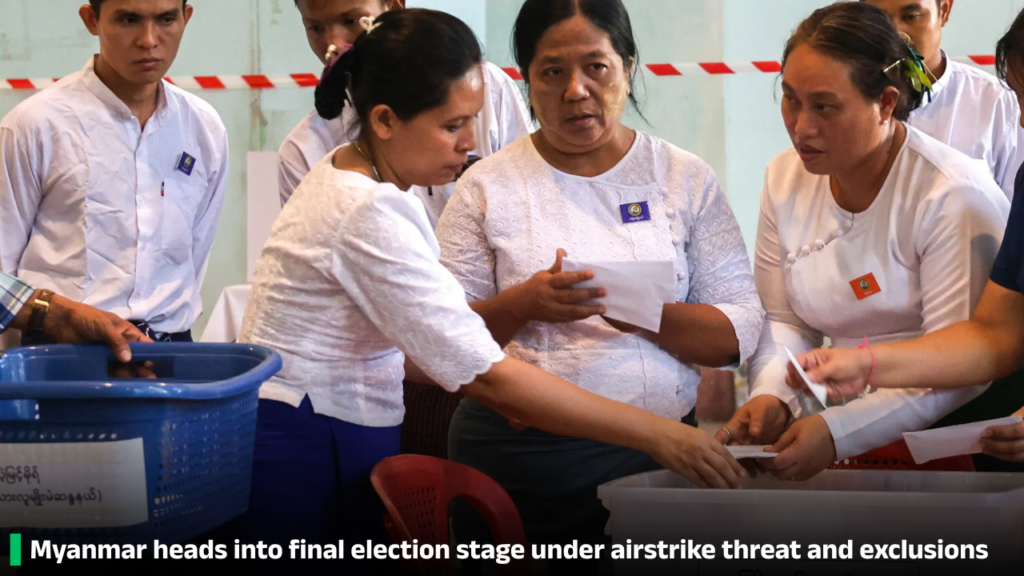
Polling stations opened Sunday for the final stage of Myanmar’s three-phase elections. The vote has been widely criticized as a sham, marred by the imprisonment of leaders, the banning of the main opposition party, and ongoing fighting in many parts of the country.
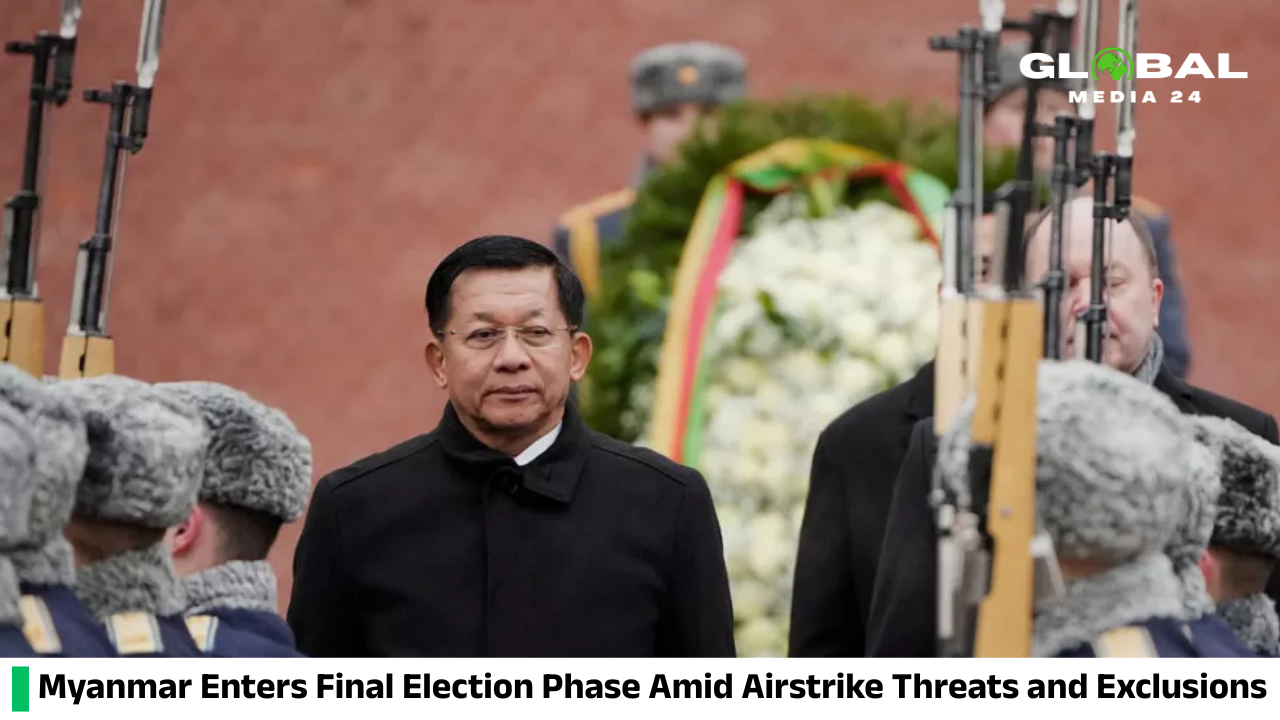
Junta leader Min Aung Hlaing defended the vote as “free and fair,” portraying it as a return to democracy and stability.
The elections come nearly five years after the military seized power in a coup, ousting Aung San Suu Kyi’s elected government and triggering widespread conflict.
The 80-year-old Suu Kyi has been under detention since her removal, and her party has been banned.
The UN, human rights experts, and some Western governments have dismissed the elections as lacking legitimacy.
Tom Andrews, the UN Special Rapporteur on the human rights situation in Myanmar, said the vote was orchestrated by the military to ensure a landslide victory for its political proxy, the Union Solidarity and Development Party (USDP).
“The junta is counting on the world’s fatigue, hoping the international community will accept military rule in civilian clothing,” he said. “Governments must not let this happen.”
According to the Associated Press, just days before the vote, a military airstrike killed 21 people and injured 28 in a village in Bhamo, northern Kachin State, where displaced people were sheltering. Voting is scheduled to take place in Bhamo on Sunday.
In total, 57 parties are competing, although only six are contesting seats nationwide, and analysts say none of the parties on the ballot represent anti-military sentiment. The USDP is fielding the most candidates. According to the election monitoring group ANFREL, 57% of the parties that participated in the 2020 general election no longer exist, even though they received more than 70% of the vote and 90% of the seats.
Malaysia has stated that the regional bloc, the Association of Southeast Asian Nations (ASEAN), will not endorse the poll or send observers.
However, it remains unclear whether individual member states will increase their engagement with Myanmar’s leadership after the vote. China, a key military partner, is supporting the election, which it views as a path to stability. The election was held in three stages, with the first phase taking place in December and the second in January.
Voter turnout in the early stages of voting in Yangon appeared lower than usual, and the pre-election period lacked the large rallies and enthusiasm seen in previous elections.
Many voters in Yangon declined to be interviewed by the media, saying it was not safe to discuss politics openly.
A new election security law was enacted in July, which stipulates a minimum of three years in prison and even the death penalty for any criticism of the vote.
Voting is taking place in densely populated cities like Mandalay and Yangon, but analysts estimate that roughly a third of the country is excluded from the process because it is under the control of anti-junta groups or is affected by fighting.
The 2021 military coup triggered a brutal conflict that continues across the country, with a diverse range of opposition groups fighting against the junta.
ACLED, which monitors conflicts worldwide, has described it as “the world’s most fragmented conflict” and ranked the country second on its conflict index. This index measures conflicts based on their lethality, threat to civilians, geographical spread, and the number of armed groups involved.
Su Mon, ACLED’s senior analyst for Asia Pacific, said that while the military has attempted to portray the elections as a managed exit from the political crisis and conflict, its counter-offensives have intensified ahead of the vote.
“In an attempt to regain territory, the military continued to conduct frequent airstrikes on civilian areas throughout 2025, resulting in the highest number of airstrikes and related fatalities in any single year since 2021,” she said.
Estimates of the death toll from the post-coup conflict in Myanmar vary, although ACLED has recorded 92,000 deaths since 2021.
Su Mon added, “As the final stages of the election unfold, several outcomes are predetermined: the junta-backed Union Solidarity and Development Party will win by a landslide, and the conflict will escalate further.”