Is Trump planning a strike on Iran? The U.S. has deployed over 50 F-35 and F-16 fighter jets to the Middle East
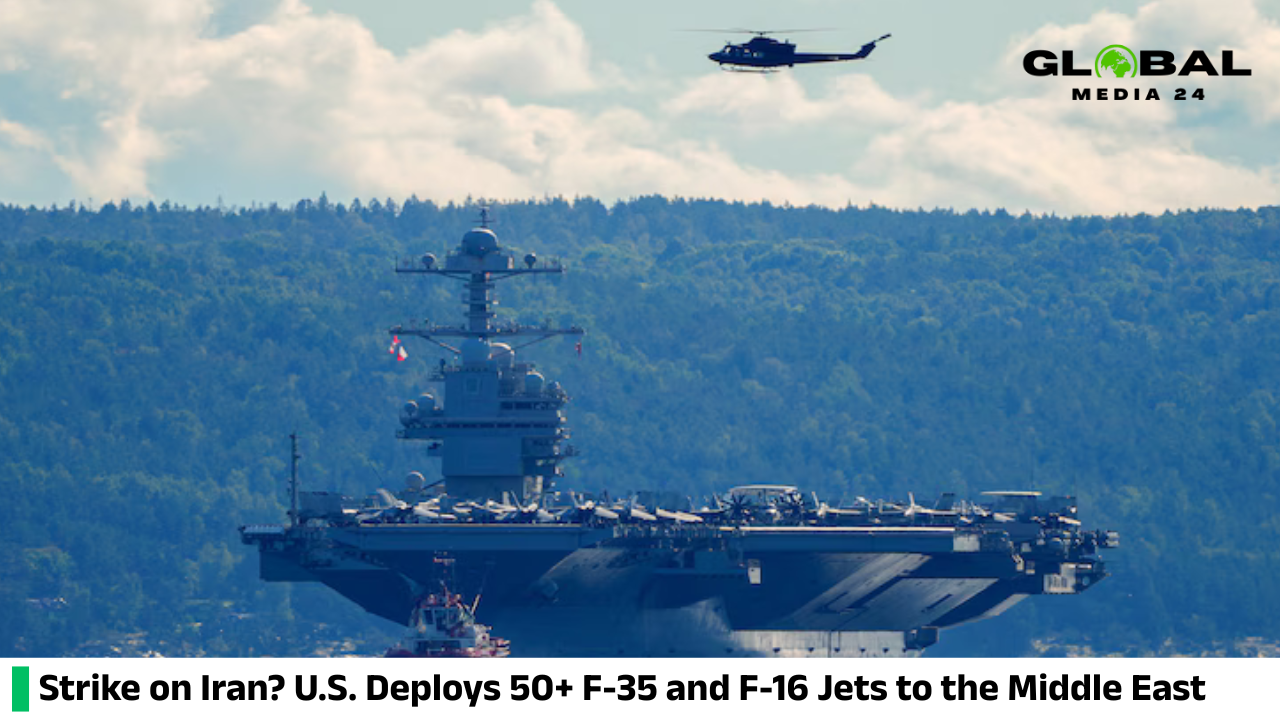
Iran has announced plans to temporarily shut down a section of the Strait of Hormuz—a critical passage for global energy shipments from the world’s leading oil-producing region—for several hours as part of military exercises.
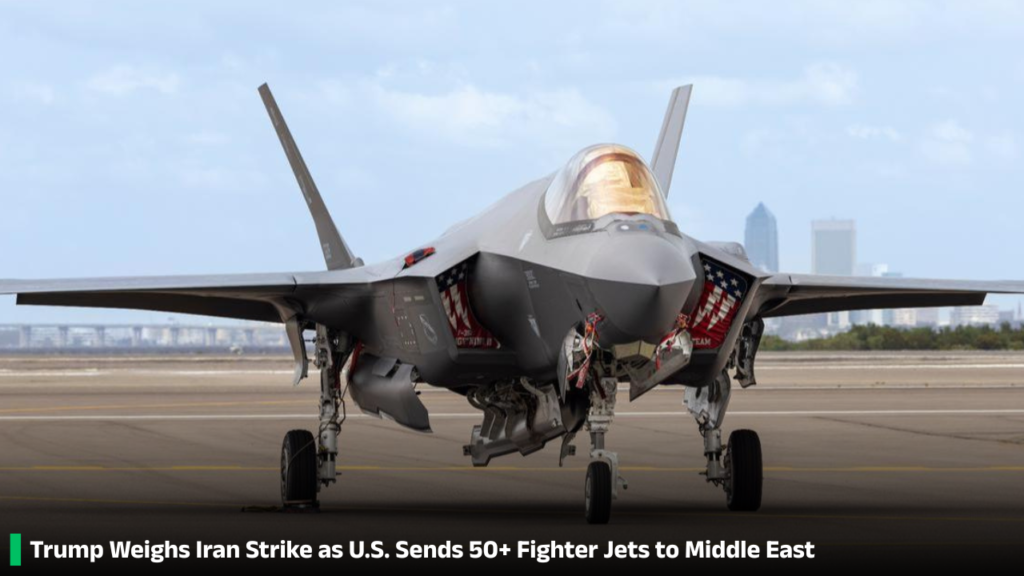
The United States military is rapidly building up its air and naval assets near Iran, while Tehran officials have agreed to return to talks with a new proposal in two weeks.
According to the US publication Axios, more than 50 US fighter jets, including F-35s, F-22s, and F-16s, have flown to West Asia in the past 24 hours.
This comes after US officials said Washington and Tehran had made “progress in nuclear talks” in Geneva on Tuesday.
However, they stressed that “many details remain to be worked out,” suggesting the possibility of a military clash remains.
Iranian Foreign Minister Seyyed Abbas Araghchi also said Tuesday’s talks were more “constructive” than the first one in Muscat earlier this month. He claimed that both sides had agreed on “guiding principles” for a potential deal on Iran’s nuclear program.
US Military Deployment Near Iran
The ongoing US-Iran talks come as the Trump administration has amassed a significant military force near the Islamic Republic for a possible operation. This comes amid Washington’s increasing pressure on Tehran over its nuclear plans and the violent crackdown on January protests.
Amid rising tensions, the US leader had already sent its aircraft carrier, the USS Abraham Lincoln, to the Arabian Sea in late January.
Later, in the first week of February, the BBC reported that a dozen F-15 fighter jets, an MQ-9 Reaper combat drone, and several A-10C Thunderbolt II ground attack aircraft also arrived at Muwaffaq Salti Air Base in Jordan.
Satellite imagery also showed that the guided-missile destroyer USS Delbert D. Black was transiting the Suez Canal in Egypt from the Mediterranean Sea to the Red Sea, and a US Navy MQ-4C Triton surveillance drone was operating over the Gulf.
Earlier, an E-11A communications aircraft, a P-8 Poseidon, and an E-3G Sentry surveillance and reconnaissance aircraft were also reported in the area. The US has also sent a second aircraft carrier to the region.
Iran has also said it will close a section of the Strait of Hormuz for several hours due to the military drills, a key obstacle to energy exports from the world’s largest oil-producing region. Tehran has previously threatened to close the Strait of Hormuz completely but has never done so.
US-Iran Talks Move Forward
According to Iranian Foreign Minister Araghchi, Washington and Tehran have agreed to draft and exchange texts for a nuclear deal before setting a date for the third round of talks. However, he warned that the next stage would be “more difficult and detailed.”
Success in the talks could pave the way for a significant agreement between Tehran and Washington, lifting several stringent sanctions on Iran’s oil industry and broader economy in exchange for significant curbs on its nuclear program.