
India’s inflation edged up to 0.71% in November as the drop in food and fuel prices lost momentum
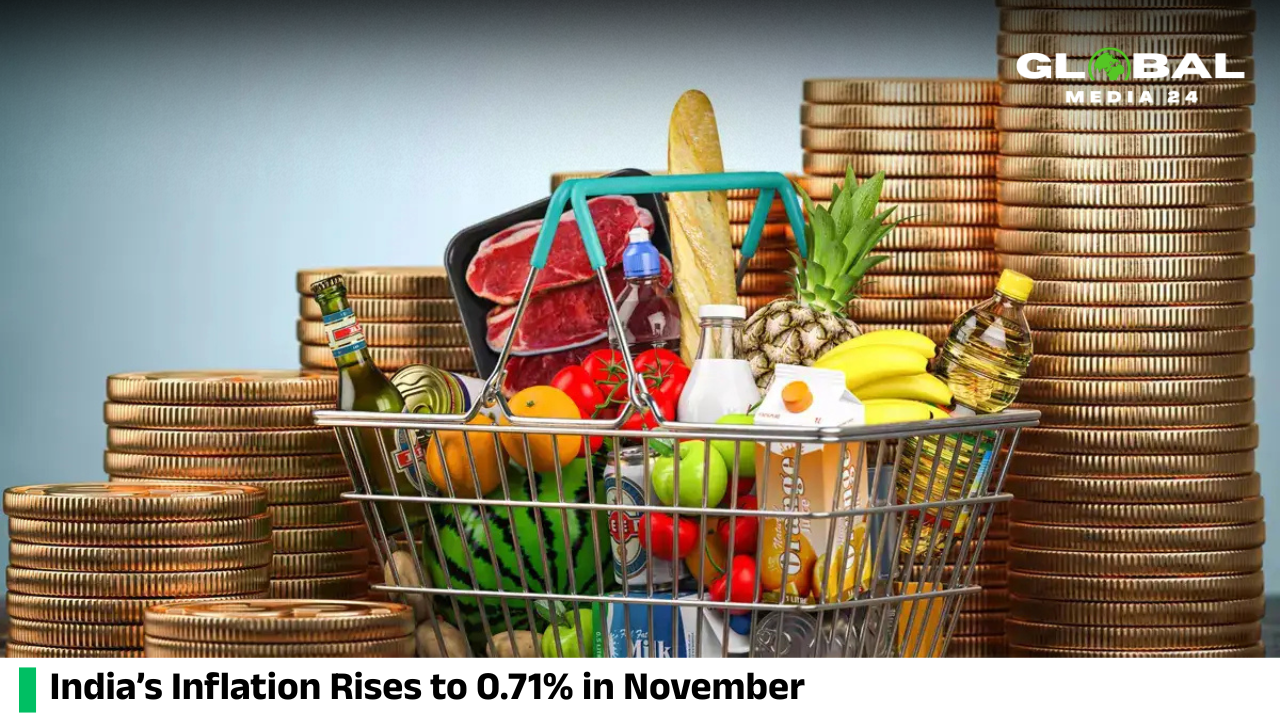
India’s consumer inflation touched 0.71% in November, up from October, and broadly in line with the forecasts in a Reuters poll.
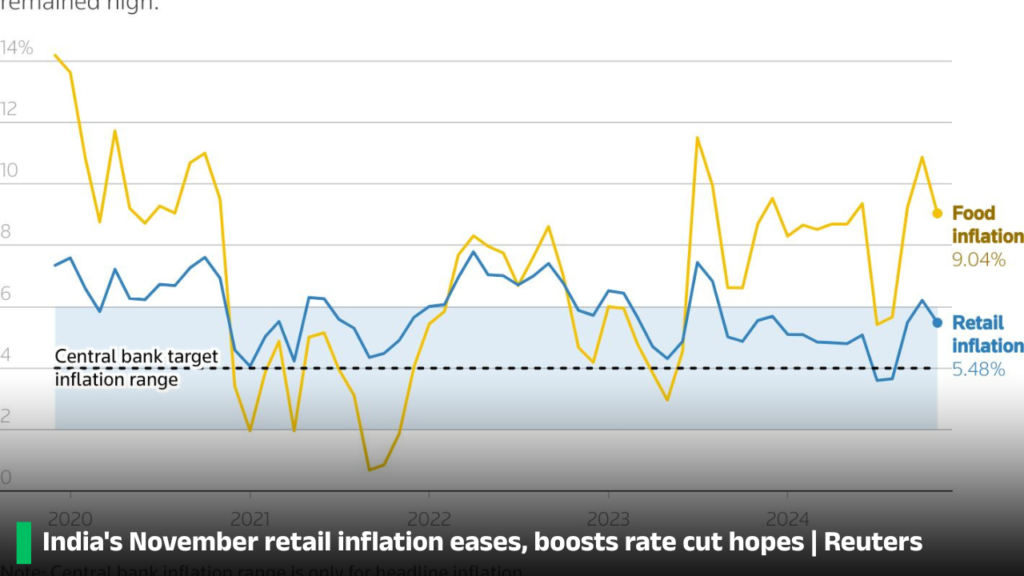
Consumer inflation climbed as prices of vegetables, eggs, meat and fish, spices, and fuel went up.
India’s consumer inflation climbed to 0.71% in November, rising from 0.25% recorded the month before.
According to a Reuters survey of economists’ median estimates, the headline inflation figure was in line with the 0.70% rise in the Consumer Price Index.
The government said in a release on Friday that the rise in consumer inflation was due to higher prices of vegetables, eggs, meat and fish, spices, and fuel. Fuel and light prices also rose 2.32% in November, compared to 1.98% in October. Inflation increased in both urban and rural areas.
In response to a low inflation environment and weakening key economic indicators, India’s central bank cut its policy rates by 25 basis points last week, boosting the country’s already strong economic growth.
The Reserve Bank of India expects consumer inflation to be 2% in the financial year ending March 2026, down from the 2.6% forecast in October. It estimates CPI at 2.9% in the three months to March, rising to 4.0% in the quarter ending September 2026.
The central bank said after its monetary policy meeting last week, “The growth-inflation balance, especially the positive inflation outlook on both headline and core, continues to provide policy space to support growth momentum.”
RBI Governor Sanjay Malhotra said that low inflation expectations have helped the central bank remain “supportive of growth” and added that the central bank will “continue to proactively address the productive needs of the economy.”
Given Malhotra’s dovish signals, experts are divided on whether the 25 basis point rate cut will be the last in this easing cycle or whether the RBI may ease further.
Following the monetary policy announcement last week, HSBC Research said in a report, “We believe that further weak growth, prolonged low inflation, and tight fiscal policy may necessitate a growth-supportive monetary policy stance into 2026.”
In August, the U.S. imposed an additional 25% tariff on Indian imports, bringing the total duty to 50%. This was one of the largest duties Washington has imposed on its trading partners, with textiles, gems and jewelry, and marine products being the most affected.
Although exports to the U.S. account for about 2% of India’s GDP, prolonged weakness in these labor-intensive sectors could lead to job losses and impact overall growth.
To cushion the blow, New Delhi on September 22nd refined its Goods and Services Tax system and reduced taxes on several items to boost domestic demand ahead of the month-long festive season. The tax cuts lowered prices of consumer goods, vehicles, and agricultural inputs, boosting consumption.
While consumption increased, exports to the US, one of India’s main trading partners, fell for the second consecutive month in October, falling 8.5% to $6.3 billion from a year earlier. Overall, outbound shipments also fell 11.8% to $34.38 billion in October.
The Indian rupee has hit a record low against the dollar in the past few days, trading below 90 rupees per dollar on Friday, as the prospect of a deal between New Delhi and Washington remains elusive and exports have slumped.
Inflation rose slightly to 0.71 percent in November due to a slight increase in vegetable prices and a weakening effect of a good base.
Inflation in October was the lowest in recent years and is now expected to rise slightly in the coming months as the base effect shifts.
“However, given the GST rate cut and abundant food supplies, inflation is expected to average below 3% for the rest of FY26 and below 4% in the first half of FY27. This should provide room for the RBI to implement another rate cut in the February policy as growth shows signs of slowing after the festive season.”