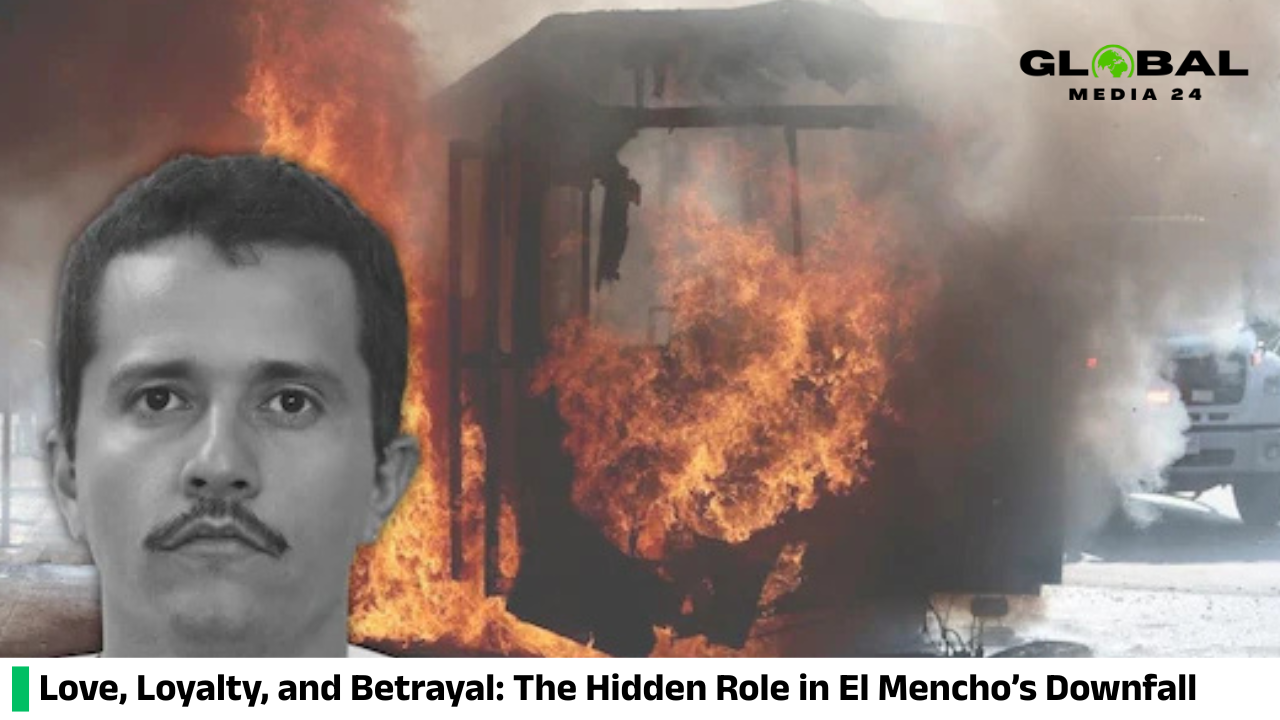
How El Mencho’s Girlfriend Played a Crucial Role in Bringing Down the Drug Lord
Overall, over 70 individuals lost their lives during the operation and the violence that followed, including security personnel, alleged cartel members, and civilians.

Mexican officials said Monday that tracking a romantic partner helped the Mexican army locate Nemesio Oseguera Cervantes, the notorious leader of the Jalisco New Generation Cartel known as “El Mencho,” who was captured and killed on Sunday.
Mexican Defense Secretary General Ricardo Trevilla said that a Mexican special forces operation, supported by US intelligence, ended Sunday when special forces found Oseguera Cervantes “hiding in the bushes” in his home state of Jalisco.
After several shootouts, eight gunmen were killed, and the drug lord and two of his bodyguards were wounded. Trevilla said he was taken into custody and died en route to Mexico City.
In total, the operation and subsequent violence killed more than 70 people, including security forces, suspected cartel members, and others.
According to Mexican authorities, the capture of the country’s most powerful cartel leader and one of the United States’ most wanted fugitives happened like this:
Both Mexico and the United States had spent years tracking “El Mencho,” against whom numerous arrest warrants were issued in both countries for organized crime and drug trafficking.
However, this time, intelligence efforts were successful. Trevilla explained that military investigators identified a trusted associate of one of Oseguera Cervantes’ romantic partners and began following him.
This man took the woman to Tapalpa, Jalisco, on Friday to meet with the drug lord. The military official stated that the exact location was confirmed by “very important and precise information” received from US intelligence.
When the woman left after spending the night with “El Mencho,” the special forces finalized their plan, confirming that he would remain in the area with a security detail.
Mexican Army and National Guard units established a ground cordon, while six helicopters and additional special forces were deployed in states bordering Jalisco.
Trevilla said the Mexican Air Force provided reconnaissance and aircraft support. The operation began early Sunday morning, once their presence was confirmed.
Mexican President Claudia Sheinbaum, who was visiting northern Mexico, was kept informed of all developments throughout the mission.
General Trevilla described the criminals’ response as very violent.
He said that during the confrontation, “El Mencho” attempted to flee with two bodyguards, while a heavily armed group remained behind to prevent the military from advancing. The death toll at the scene rose to eight, which Trevilla said was four more than initially reported on Sunday.
Among the weapons seized were two rocket launchers, one of which was the same model used by the CJNG to down a military helicopter in 2015.
That 2015 attack marked a major milestone, demonstrating that the cartel was prepared to face Mexican authorities with dangerous, full-force force.
Oseguera Cervantes attempted to hide in a wooded area dotted with cabins on the outskirts of Tapalpa. Although the criminals were heavily armed with rocket launchers, Trevilla reported that they were unable to use them.
Special forces eventually “found him hiding in the bushes,” leading to another intense gunfight that left “El Mencho” and two of his bodyguards injured.
During the chaos, a military helicopter was forced to make an emergency landing after being fired upon, and two men were captured on the scene. Three soldiers were injured in the encounter.
Once the scene was secured, the cartel leader and his bodyguards were put on a helicopter for emergency transport to a nearby hospital. However, Trevilla confirmed that he died en route, stating that his condition was already “critical.”
Following his death, the flight plan was diverted. Instead of landing in the Jalisco state capital, the bodies were flown to Mexico City to prevent any violent retaliation from the criminal organization.
Trevilla said that a logistics and financial operator named “El Tuli,” about 100 kilometers (62 miles) west of Tapalpa, had allegedly offered gunmen a bounty of 20,000 pesos—more than $1,000—for each soldier killed.
The Defense Minister also said that “El Tuli”—allegedly Oseguera’s right-hand man—was the mastermind behind numerous roadblocks, arson attacks, and attacks on government targets in Jalisco state.
Security Secretary Omar García Harfuch said the heaviest violence occurred in Jalisco, where 25 National Guard members, a prison officer, a prosecutor’s office employee, and a civilian woman, along with 30 suspected criminals, were killed.
Four more gunmen were killed in neighboring Michoacan, while 15 security personnel were wounded. A paratrooper rifle brigade tracked down “El Tuli” and killed him in a shootout, seizing long and short guns and approximately $1.4 million in mixed US and Mexican currency. Nevertheless, cartel retaliation continued in several Mexican states.