Chinese state media describes Starmer’s visit as a move driven by economic pragmatism
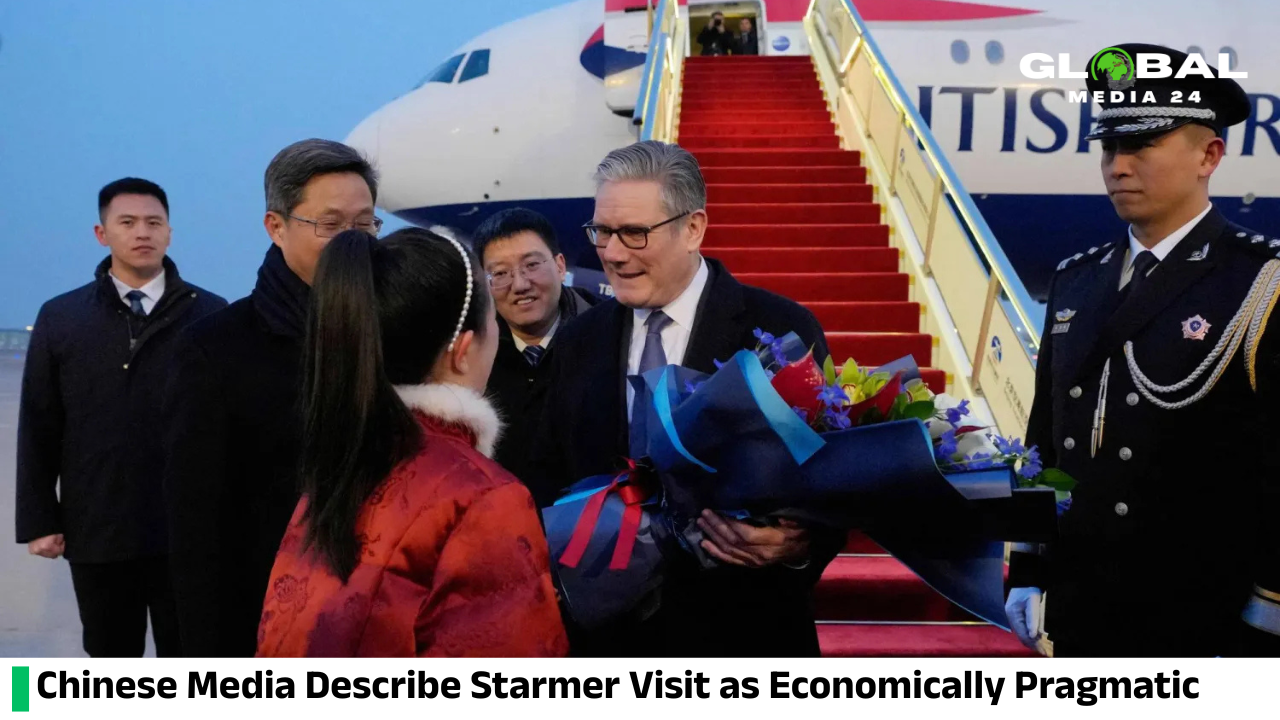
The Prime Minister has been commended for avoiding pressure on Xi regarding his relationship with Putin during a visit widely viewed as prioritizing business interests over political issues.
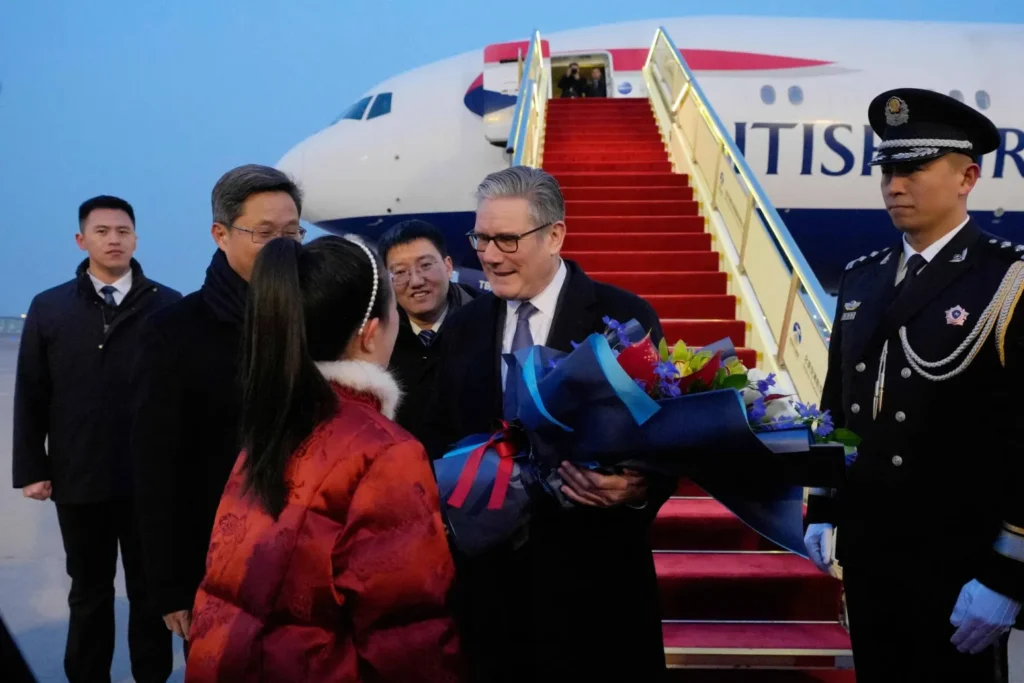
Keir Starmer’s visit to Beijing has been cautiously welcomed by Chinese state media, which described it as a pragmatic economic move by the embattled British prime minister.
The presence of 50 business and cultural leaders accompanying Starmer was seen as a sign that the UK is prioritizing its struggling economy over political considerations. Starmer is the first British Prime Minister to visit China in eight years.
The state-run Guancha news website seized on reports that Starmer refused to confirm whether he would pressure President Xi Jinping over his relationship with his Russian counterpart, Vladimir Putin.
The site suggested the Prime Minister “didn’t fall into the trap” of Western journalists who might have wanted to derail the visit.
Starmer told reporters in Beijing that he wanted a “much better” relationship and announced economic agreements to make it easier for British businesses to “expand their presence in China.”
A social media account linked to the state-run Beijing Daily newspaper wrote, “If the characteristic of China-UK relations in the past few years has been ‘prioritizing politics and neglecting economics,’ this time it is ‘prioritizing economics and neglecting politics.’”
An account linked to the state-run outlet China.org.cn echoed this sentiment, describing Starmer’s visit as a necessary move driven by current pressures, rather than a return to the “golden era” of relations initiated by David Cameron in 2015.
The account stated, “Against the backdrop of increasing global economic uncertainty, strengthening practical cooperation between China and the UK is in line with the practical needs of both sides.
“China is advancing high-quality development and high-level opening up, and British companies have great opportunities in this process.”
“Starmer’s visit to China is not a change of heart but rather a way of rebalancing himself under economic pressure. For the UK, it means capital, order, and a faster pace of growth; for China, it means stable expectations, mutually beneficial cooperation, and a strategic advantage over Europe.”
“Both sides understand that security and other issues will not disappear, but neither wants these issues to dominate the agenda.”
The account stated that the UK is demonstrating a degree of independence from Donald Trump’s White House leadership. It added, “It is clear that London has begun to reassess its relationship with China, and this reassessment is not entirely based on Washington’s perspective.”
Yin Zhiguang, a professor of international politics at the School of International Relations and Public Affairs at Fudan University, said, “Britain had to make this diplomatic shift due to reality, in order to cope with external threats from the Trump administration and address internal difficulties such as a sluggish domestic economy and weak governance.”
Hu Xijin, former editor-in-chief of the state-run Global Times newspaper, also said that the UK’s approach is not a result of Chinese lobbying but rather a reaction to Trump’s recent behavior on the global stage.