Carney travels to Beijing as Trump’s “America First” policy pushes Canada to reconsider its trade strategy
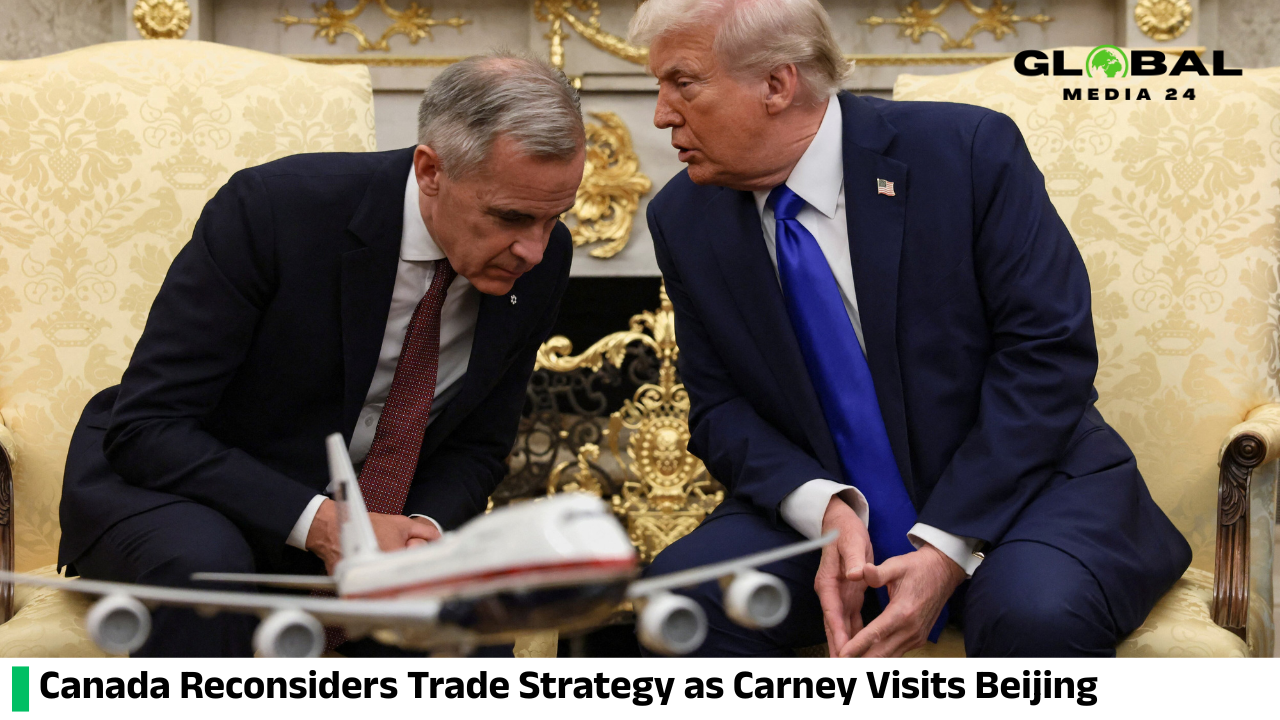
Canada’s prime minister is working to mend strained ties with China as the trade war begins to have an impact.
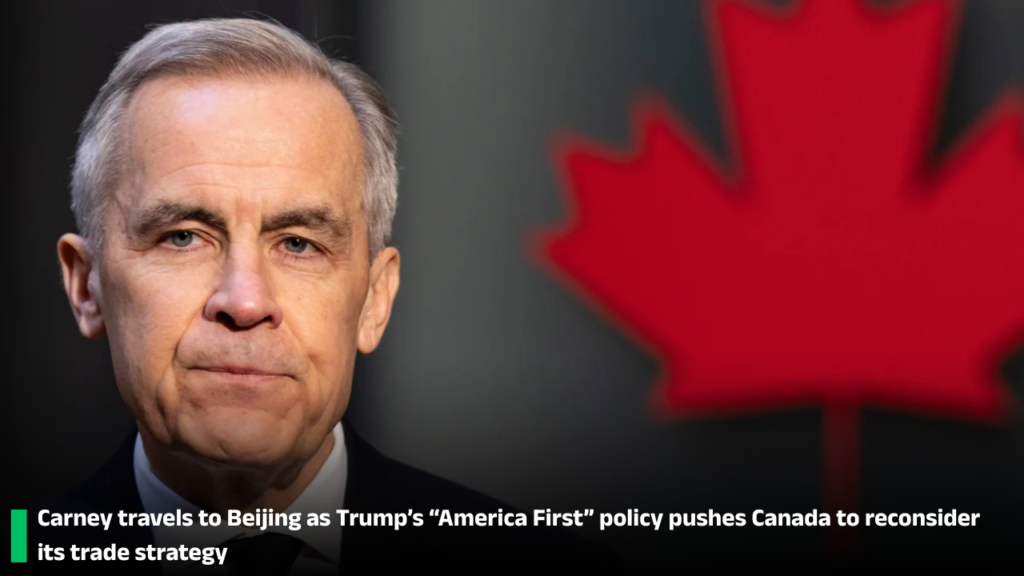
In the final stretch of Canada’s spring election campaign, Mark Carney told a debate audience that China was the country’s “biggest geopolitical risk.”
He pointed to its attempts to interfere in the elections and its recent efforts to undermine Canada’s Arctic claims.
When Carney’s government plane touches down in Beijing this week, it will mark the first time in nearly a decade that a Canadian prime minister has been welcomed there.
The trip, undertaken amid the fracturing of global economic and political alliances, reflects Ottawa’s desire to mend a broken relationship with a global superpower that uses its vast and lucrative market to both entice and punish countries.
But Carney’s state visit, the result of careful diplomatic calculations, also underscores the pain of the trade war with the U.S. and the urgent need to boost Canadian exports to offset the growing economic penalties imposed by its neighbor and largest trading partner.
“There’s a risk that China will see Canada as weak, struggling, and being taken advantage of by the Trump administration—and see an opportunity to present itself as the sensible and stable actor in this situation,” says Michael Kovrig, a former diplomat and senior Asia adviser at the International Crisis Group think tank.
“The Communist Party has given up on trying to convince people that they’re good. Instead, they offer competence and predictability. But this also gives Mark Carney an opportunity to say, “If you think our relationship with the United States is deteriorating, what are you prepared to offer us?”
“Despite the outward diplomatic cordiality, Carney’s briefers are under no illusions about the kind of leader they are dealing with,” Koverig says. “It’s a tense relationship.”
Covering himself illustrates the dangers of this relationship. In 2018, Chinese authorities ordered the detention of Koverig and his fellow Canadian, Michael Spavor, and imprisoned them for more than 1,000 days in retaliation for the “political frame-up” and “harassment” of telecom executive Meng Wanzhou.
These arrests and the ensuing diplomatic standoff effectively ended any hope of Canada negotiating a long-desired free trade agreement with China.
For years, Ottawa has viewed China as a crucial market for its heavy oil, metallurgical coal, lumber, and agricultural products.
Despite allegations of Chinese interference in Canada’s electoral system in recent years, Carney has framed his visit to Beijing as an attempt to build a “stable” relationship with China, although it is widely believed that any Chinese attempts to influence the last two elections had no impact on the results.
China has also demonstrated a willingness to take punitive measures against key Canadian industries.
In 2024, when Canada joined the US in imposing tariffs on Chinese electric vehicles, Beijing slapped a 100% duty on Canadian canola oil and meal and, a few months later, added a further 75.8% anti-dumping tariff, effectively shutting Canadian producers out of their second-largest market.
Moving Away from the ‘America First’ Approach
Since becoming prime minister, Carney has signaled his desire to mend relations between the two countries and is pushing a “Reliance to Resilience” plan to diversify trade away from the United States, which until recently purchased 76% of Canada’s exports.
But the White House’s “America First” economic policy has forced Carney to rethink the fundamentals of his country’s economy.
While the Canadian federal government has focused on its new Indo-Pacific strategy to forge new partnerships, Canada also seeks to expand its presence in China, which currently accounts for only 4% of its exports.
Following several meetings between senior Canadian ministers and their counterparts, Carney met with Chinese Premier Li Qiang in September, and a month later, he spoke with President Xi Jinping during a global summit in South Korea, telling reporters that relations between the two countries had reached a “turning point.”
Roland Paris, director of the Graduate School of Public and International Affairs at the University of Ottawa, said the January state visit represents a “very deliberate and slow diplomatic dance” between the two parties.
Paris, who also served as a foreign policy advisor to former Prime Minister Justin Trudeau, says Beijing and Ottawa share many common interests, and the talks are expected to focus on energy, agriculture, international security, and trade between the two countries.
However, the hope that the meeting will lead to the removal of retaliatory tariffs on Canadian industries requires careful diplomatic maneuvering.
He said, “[The previous two Canadian governments’] argument was that it’s possible to trade with China while also trying to work through points of disagreement between the two countries.” “You can walk and chew gum at the same time.”
Canada has long viewed its liberal values as a core component of its laws and institutions, and by extension, its foreign policy – something that has frustrated Chinese officials.
Among the difficulties for Canada are China’s human rights abuses, persistent allegations of election interference, and China’s actions in the Arctic.
“It’s important to remember that China is not our friend,” says Margaret McCuaig-Johnston, a senior fellow at the University of Ottawa’s Graduate School of Public and International Affairs. “This is not a country that speaks thoughtfully and wants to have friendly relations. The geopolitical and transnational pressures and threats that Canada has long been concerned about have not changed.”
She points to China’s decision to execute four Canadian citizens despite protests from Canadian officials, Ottawa’s concerns about the sentencing of pro-democracy activist Jimmy Lai, and China’s growing presence in the Arctic, including the placement of monitoring buoys in waters considered by Canada to be its own.
“It makes sense that the prime minister is looking for other markets. We need to diversify—that’s very clear,” McCuaig-Johnston said, adding that Chinese investment in Canada’s oil and gas industry was “safe,” but there are concerns about Beijing’s involvement in the clean energy sector.
Her research has found several examples of joint ventures where Canadian companies “walk away in frustration and despair,” and their Chinese partners retain Canadian intellectual property, technology, and equipment.
“The reality is, we should be staying miles away from any discussions of aerospace technology, artificial intelligence, and critical minerals,” she says. “This is a very challenging diplomatic trip, and I hope we can secure some safe deals on trade, but we must be careful not to put other sectors at risk by opening them up.”
Analysts say that a successful visit by Carney could soon lead to several agreements that would benefit both sides. But Kovrig hopes that behind closed doors, Carney will also use the summit to press Xi on the long-standing issues of political prisoners and human rights abuses, warning that Beijing officials might use Carney’s reputation to “burnish” China’s own image.
“The perception is that China is big; therefore, it must offer lots of commercial opportunities,” Kovrig says. “But very few foreign companies actually make reliable profits there that they can repatriate. What Canada mostly sells to China is energy and commodities.”
“Beijing’s power rests on fear, and its legitimacy rests on myths. We can challenge all of that. We can, and we must.”